
Phrygian knapweed
Centaurea phrygia
Description
How to tell it apart
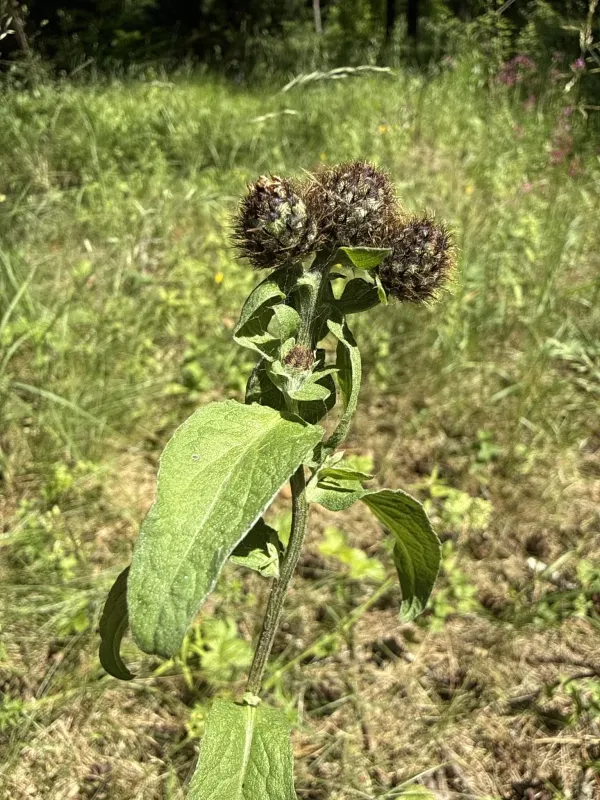
Phrygian knapweed (Centaurea phrygia) is a perennial herbaceous plant belonging to the Asteraceae family. It typically grows to a height of 30 to 100 centimeters.
The stems of the plant are upright, often branched in the upper sections, ribbed, and covered with fine, soft hairs that give the plant a distinct texture.
The leaves are lanceolate or oval in shape, with lower leaves being petiolate and upper leaves sessile, allowing for efficient light absorption.
The most distinctive feature is its large flower heads, which are wrapped in dark brown or blackish appendages that form a fringed, comb-like appearance.
The florets within the flower head are vibrant purple or pink, making the plant visually striking during its flowering period in mid-summer.
Where it grows
This weed species is commonly found in moist meadows, forest clearings, and edges, where it thrives due to stable soil moisture conditions.
In agricultural settings, Phrygian knapweed is frequently observed in pastures, hay fields, and perennial forage crops, often spreading from natural habitats.
It can also infiltrate cereal crops if soil preparation is inadequate or if fields are adjacent to uncultivated, infested patches of land.
The plant demonstrates high adaptability to various soil types, particularly favoring loam soils that provide the necessary nutrients for its long-term survival.
Wind-dispersed seeds allow this species to colonize new fields rapidly, making it a persistent concern in regions with diversified crop rotations.
Harm it causes
The weed causes significant crop damage by competing aggressively for essential water and soil nutrients, thereby reducing overall yields.
Due to its perennial nature and robust root system, it creates dense growth that shades out younger, smaller crop plants, hindering their development.
Its presence in forage crops is particularly problematic, as the tough stems and prickly floral bracts make the vegetation unpalatable for livestock.
Heavy infestation levels complicate mechanical harvesting, often increasing the moisture content of the harvested grain and necessitating costly drying processes.
By consuming local resources, it alters the competitive balance in a field, forcing producers to allocate more funds toward manual or chemical control.
How to control
Cultural control is centered around thorough primary tillage, which aims to uproot the perennial taproot and exhaust the plant's nutrient storage capacity.
Implementing a diverse crop rotation is a highly effective strategy to disrupt the life cycle of the weed and minimize the impact on soil health.
Chemical control usually involves the application of systemic herbicides, such as 2,4-D or sulfonylureas, which can effectively translocation to the roots.
Treatment is most successful when applied during the rosette stage, when the plant is actively growing and highly susceptible to chemical uptake.
- Regular mowing of field margins to prevent seed set and spread.
- Strict inspection of seed stocks to avoid introducing weed seeds.
- Timed herbicide applications aligned with the plant's vegetative growth phases.
Taxonomy
- Latin name
- Centaurea phrygia
- Family
- Сложноцветные (астровые)
- EPPO code
- CENPH