
Lesser knapweed
Centaurea nigra
Description
How to tell it apart
Lesser knapweed (Centaurea nigra) is a perennial herbaceous plant of the Asteraceae family, often considered a persistent weed in pastures and meadows.
The plant grows from 30 to 90 cm in height, featuring a rigid, branched stem that allows it to compete effectively in dense plant communities.
The leaves are lanceolate and alternate, with lower leaves often forming a basal rosette, providing the plant with a strong starting position.
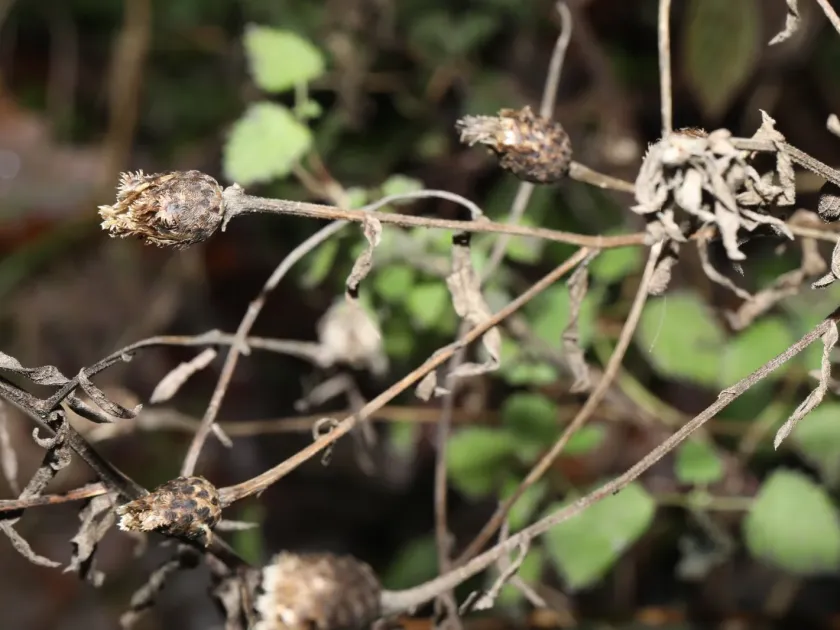
The purple-pink flower heads are distinctive, protected by dark brown or blackish fringed bracts, which are a key identification feature.
It possesses a strong, deep taproot system, which contributes to its resilience and survival during adverse conditions or mechanical disturbance.
Where it grows
Lesser knapweed is commonly found in damp grasslands, pastures, roadsides, and open woodland areas where moisture is readily available.
In agricultural settings, it infests hay fields and perennial crop stands, often becoming established in areas where soil management is inconsistent.
It thrives in a variety of soil types but tends to prefer heavier, loamy soils that hold moisture throughout the growing season.
The seeds are easily transported by wind, machinery, and livestock, facilitating the rapid colonization of new cultivated fields.
Once established in a field, the plant can persist for many years, as its perennial roots regrow annually after mowing.
Harm it causes
This weed is a significant competitor for resources, depriving crops of essential water and nutrients, which results in reduced yield.
Its growth pattern leads to the shading of younger, smaller crop plants, which limits their access to sunlight and stifles their establishment.
It reduces the quality of hay and forage crops, as its fibrous stems become woody and are unpalatable to grazing livestock at maturity.
The plant can act as an alternative host for several crop pests and fungal pathogens, potentially increasing the disease pressure on the farm.
The presence of knapweed increases harvesting costs, as it complicates the mowing process and requires additional processing to remove seed contamination.
How to control
Effective management begins with deep plowing in the autumn to bury and kill the root systems before they can establish deep reserves.
Regular and frequent mowing before the plant enters the flowering stage is essential to prevent seed production and spread.
Integrated weed management, including competitive crop rotation, helps to minimize the space available for knapweed to take hold.
Herbicides, particularly those designed for perennial broad-leaved weeds, should be applied during the active growth phase for maximum efficiency.
- Deep cultivation to disrupt root systems.
- Mowing before seed head maturation.
- Application of selective systemic herbicides.
Taxonomy
- Latin name
- Centaurea nigra
- Family
- Сложноцветные (астровые)
- EPPO code
- CENNI