
Brown knapweed
Centaurea jacea
Description
How to tell it apart
Brown knapweed (Centaurea jacea) is a perennial herbaceous plant belonging to the Asteraceae family. It typically grows to a height of 30 to 90 centimeters, featuring a stout taproot system.
The leaves are alternate, lanceolate or oval, and exhibit a rough texture due to fine hairs. The basal leaves often form a rosette, while the stem leaves are sessile and usually smaller.
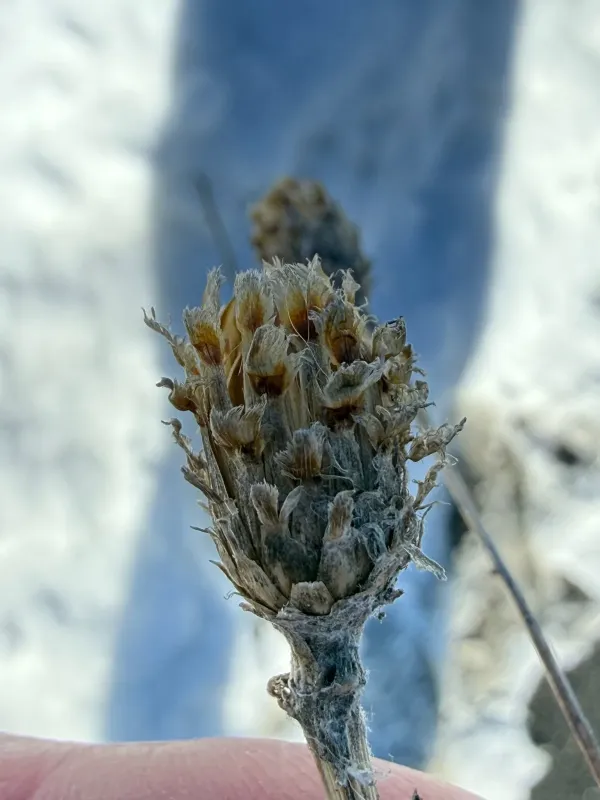
The inflorescences consist of solitary, purple to pink flower heads. The bracts of the involucre are distinctively marked with dark brown, papery appendages, which serves as a primary identifying characteristic.
It reproduces primarily via seeds, which are equipped with a short pappus. These seeds are easily dispersed by wind, water, and agricultural equipment, allowing the plant to spread rapidly across landscapes.
The plant is highly resilient and capable of vegetative regrowth if the main root system remains intact during cultivation processes.
Where it grows
Brown knapweed is widely distributed across temperate regions of Eurasia. It commonly occurs in meadows, pastures, forest edges, and along roadsides, preferring open and sunny habitats.
In agricultural settings, it frequently invades hayfields, perennial pastures, and arable lands. It thrives in well-drained, fertile soils but is adaptable to various soil types.
The presence of this weed in fields is often a result of neglected management or insufficient weed control practices. It quickly colonizes disturbed soil, posing a threat to crop health.
Once established, it forms dense patches that compete aggressively for light and nutrients. Its ability to tolerate different environments makes it a persistent nuisance in modern farming systems.
Seeds can remain viable for several years, creating a persistent seed bank that requires long-term management strategies for effective field eradication.
Harm it causes
The primary damage caused by Brown knapweed is the direct competition with agricultural crops for limited resources such as soil moisture and nitrogen, leading to stunted crop development.
In forage crops, the presence of this plant reduces the nutritional value of hay. The rough and fibrous stems are often avoided by livestock, causing a significant loss in fodder quality.
Shading caused by dense populations reduces the photosynthetic efficiency of neighboring crops, which translates to a measurable decrease in grain or biomass yield at harvest time.
It acts as an alternative host for various agricultural pests and pathogens. This interaction can exacerbate disease outbreaks and pest infestations within the primary crop cycle.
The presence of knapweed complicates harvesting operations and necessitates post-harvest cleaning of grain, which adds to the overall production costs and reduces marketability.
How to control
Mechanical control is effective if performed consistently. Deep plowing and frequent cultivation help to weaken the plant by exhausting its root system reserves before the flowering stage.
For chemical control, selective herbicides are recommended. Products containing 2,4-D, dicamba, or sulfonylureas are generally effective against this broad-leaved perennial when applied during the active growth phase.
Implementing a diverse crop rotation is a key strategy to disrupt the life cycle of the weed. Ensuring a healthy, dense crop canopy can naturally suppress the growth of knapweed by limiting light availability.
Monitoring field edges and non-crop areas is essential to prevent the spread of seeds into the primary production zones. Timely mowing before seed set is a vital prevention technique.
- Regular mechanical cultivation.
- Application of systemic herbicides.
- Diverse crop rotation cycles.
- Mowing before seed maturity.
Taxonomy
- Latin name
- Centaurea jacea
- Family
- Сложноцветные (астровые)
- EPPO code
- CENJA