
Centaurea diluta
Centaurea diluta
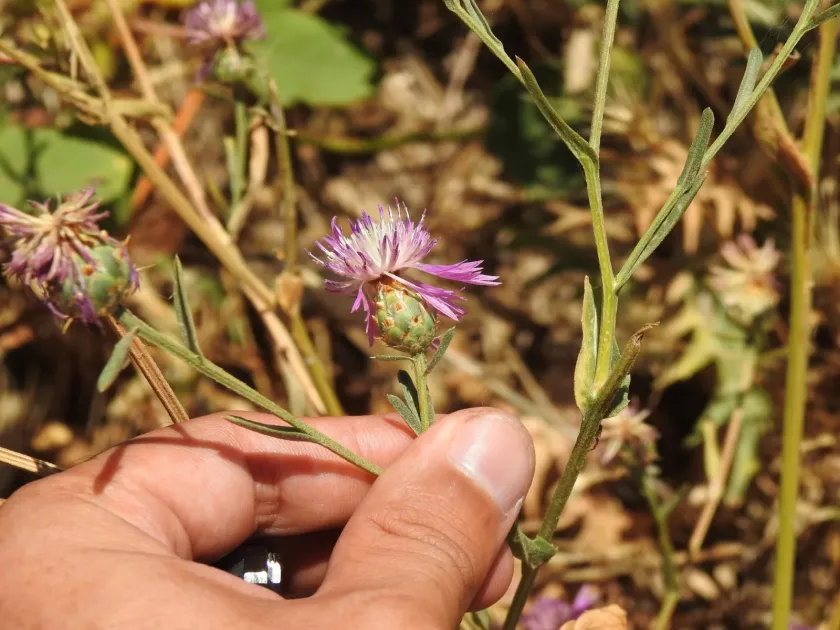
Description
How to tell it apart
Centaurea diluta belongs to the Asteraceae family. It is an annual herbaceous plant with a branched stem that typically grows to a height of 30 to 80 centimeters.
The leaves are alternate, with the lower ones often lyrately lobed, while the upper leaves remain entire or linear-lanceolate in their general morphology.
The inflorescences are typical heads with involucres, characterized by membranous appendages with fringed margins that give the flower head a unique appearance.
The flowers display shades of purple, pink, or light violet, and the entire plant may feature a fine, cobwebby pubescence covering the stems and foliage.
The root system is tap-rooted and reaches deep into the soil profile, providing the plant with excellent resilience against drought conditions throughout the growing season.
Where it grows
This weed is a common inhabitant of open, sunlit areas, frequently found in steppes, forest-steppes, and regions with moderate moisture levels.
It acts as a significant segetal weed, invading cereal grain fields, legumes, and various row crops across diverse soil types including calcareous soils.
Centaurea diluta is often found along field margins, roadsides, and abandoned lands, serving as a constant reservoir for re-infestation of nearby agricultural plots.
The species is highly adaptive to various disturbance levels, making it a persistent competitor in both cultivated fields and unmanaged rural landscapes.
Its ability to thrive in poor soils and disturbed areas allows it to colonize new territory rapidly, especially where soil cover is fragmented or damaged.
Harm it causes
The primary harm caused by Centaurea diluta is intense competition with crops for essential nutrients, soil moisture, and vital photosynthetic radiation.
By overtopping crops, the weed reduces the efficiency of sunlight use, which significantly stunts the development of cultivated plants and lowers the final grain yield.
Dense infestations create localized microclimates with increased humidity, which may promote the incidence of fungal pathogens within the main crop stand.
Presence of the weed at harvest time results in contamination of grain lots, necessitating additional cleaning costs and potentially reducing the market value of the produce.
Furthermore, the deep taproot depletes subsoil water reserves, which is particularly detrimental to crops during periods of low precipitation or prolonged dry spells.
How to control
Effective management begins with an integrated crop rotation strategy that disrupts the lifecycle of the weed and prevents seed bank buildup in the field.
Mechanical operations, including high-quality primary tillage and consistent inter-row cultivation, are essential for physically destroying the weed before flowering.
Chemical control involving systemic herbicides, particularly those targeting broadleaf weeds in early growth stages, provides high efficacy in commercial farming.
- Utilizing clean, certified seed to prevent the introduction of weed seeds to new areas.
- Managing field borders and non-crop areas to minimize external seed pressure.
- Applying competitive seeding rates to ensure the crop shades out emerging weeds.
Long-term control requires systematic monitoring of field edges and adopting a zero-tolerance policy towards mature individuals to prevent seed dispersion.
Taxonomy
- Latin name
- Centaurea diluta
- Family
- Сложноцветные (астровые)
- EPPO code
- CENDL