
Two-colored knapweed
Centaurea dichroantha
Description
How to tell it apart
Two-colored knapweed (Centaurea dichroantha) is a perennial herbaceous plant belonging to the Asteraceae family, known for its persistence in diverse agricultural landscapes.
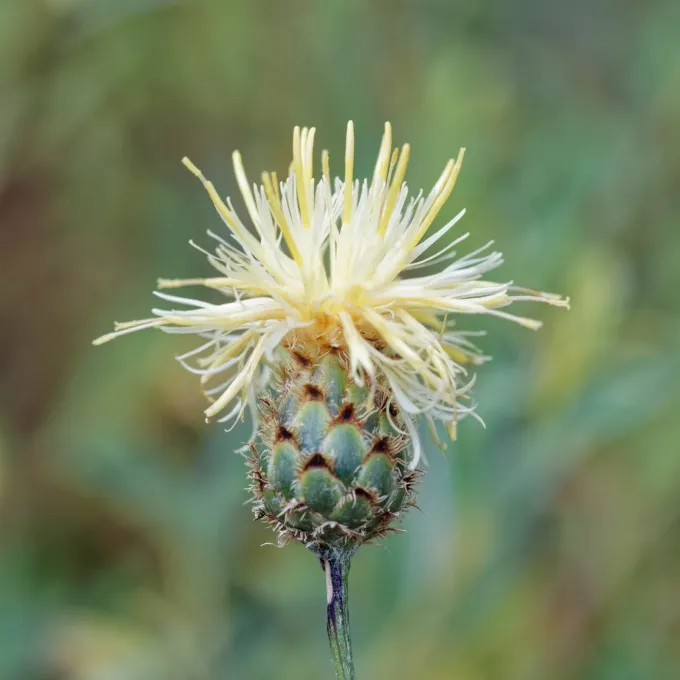
The plant features an erect, branched stem reaching heights of 50–90 cm. The leaves are typically oblong and covered with a fine, grayish tomentum, which is a key diagnostic feature.
Its inflorescences are flower heads with involucral bracts possessing distinct appendages, which helps differentiate this species from other knapweeds.
The florets usually display a vibrant purplish-pink color, often with a two-tone gradient, contributing to its common name and distinct visual appearance.
It propagates effectively through both seed production and an extensive root system, allowing it to regenerate from fragments left in the soil after tillage.
Where it grows
This species primarily inhabits open, dry areas, steppe regions, and field margins. It thrives in well-drained soils and is highly adaptable to various environmental stressors.
In farming, it acts as a troublesome weed in cereal grain fields, perennial forage crops, and cultivated land, often invading areas after soil disturbance.
Due to its ecological plasticity, it can establish itself in disturbed habitats quickly, expanding from roadsides into primary production areas.
High levels of nitrogen in the soil often encourage more vigorous growth, making the plant a stronger competitor against intended crops.
The plant's ability to survive in both sunny and semi-shaded areas ensures it remains a constant threat across different parts of the field landscape.
Harm it causes
The primary damage caused by two-colored knapweed is the intense competition for soil moisture and nutrients, which significantly stunts the development of surrounding crops.
By consuming water stored deep in the soil, the weed lowers the yield potential of cereals, especially in arid climates where water availability is the limiting factor.
The weed's presence can harbor various agricultural pests and pathogens, serving as a secondary host that facilitates the spread of diseases to valuable crops.
Large infestations increase harvesting difficulty, leading to higher fuel consumption, reduced combine speed, and potential damage to harvesting machinery.
Contamination of harvested grain with weed seeds and plant parts decreases the quality and market value of the produce, often necessitating extra cleaning costs.
How to control
Managing two-colored knapweed requires a multi-faceted approach focusing on both the suppression of existing infestations and the prevention of new seed dispersal.
Mechanical control through deep autumn plowing is crucial, as it disrupts the root system and prevents the weed from regenerating in the following spring.
The application of systemic herbicides in the rosette stage is the most effective chemical method to ensure the active ingredients reach the root zone.
Crop rotation with competitive, dense-canopy plants can help shade out the weed and reduce its vitality over several growing seasons.
- Early detection and spot treatment of weed patches.
- Use of certified, weed-free seeds.
- Integrated pest management (IPM) practices.
- Consistent monitoring of field edges to prevent expansion.
Taxonomy
- Latin name
- Centaurea dichroantha
- Family
- Сложноцветные (астровые)
- EPPO code
- CENDC