
Centaurea decipiens
Centaurea decipiens
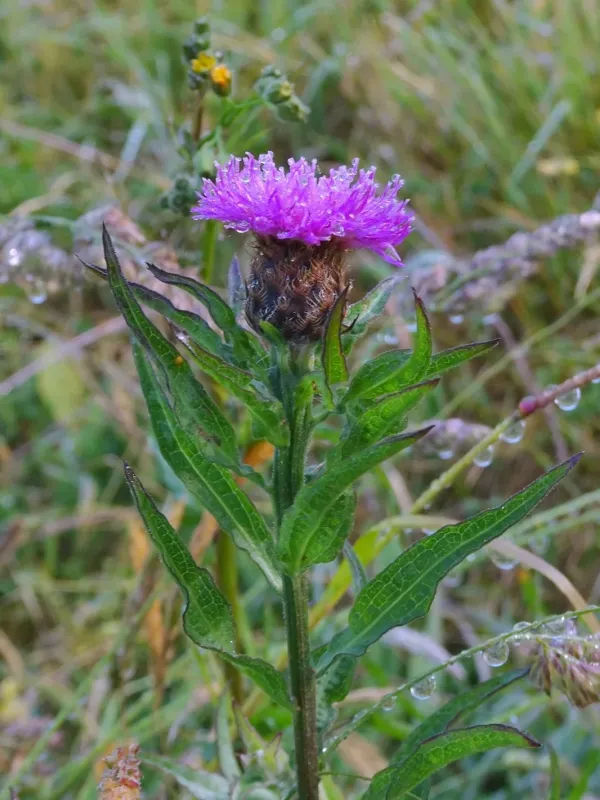
Description
How to tell it apart
Centaurea decipiens is a perennial herbaceous plant belonging to the Asteraceae family. It is recognized as a persistent weed that shares many morphological characteristics with other species of the Centaurea genus, often causing identification challenges.
The plant features an erect stem and leaves that are often deeply lobed or divided. The flower heads are typical for the genus, but the specific structure of the bract appendages on the involucre is the key diagnostic feature to distinguish it from similar species.
Biologically, it behaves as a hardy perennial with a strong, well-developed root system capable of vegetative regeneration. This trait makes it particularly difficult to eradicate once it has established itself in a field.
The plant produces a significant amount of seeds, which are easily disseminated by wind, water, or agricultural machinery, allowing it to rapidly colonize new areas if not monitored closely.
Its ability to adapt to different soil types and environmental conditions makes Centaurea decipiens a resilient competitor in various agricultural settings, necessitating integrated management approaches.
Where it grows
This weed is commonly found in permanent pastures, meadows, fallow lands, and along roadsides. It thrives in open, sunlit areas with moderate fertility and is often seen as a colonizer of disturbed sites.
In cropping systems, Centaurea decipiens is particularly problematic in cereal crops and row-cropped fields. It often starts by establishing itself on field margins, slowly migrating into the main crop area over several growing seasons.
The weed is highly adaptable, showing success on both loamy and sandy soils. Its resilience allows it to persist even in fields with low-input management, where it can quickly become a dominant species if left unchecked.
The migration of this weed into fields is often accelerated by the use of contaminated seed lots or the movement of soil via cultivation tools that transfer root fragments or seeds from infested neighboring areas.
Fields with minimal tillage or improper crop rotation are especially vulnerable to infestation, as the lack of soil disturbance allows the perennial roots to persist and expand throughout the season.
Harm it causes
The primary damage caused by Centaurea decipiens is the aggressive competition for soil moisture and essential nutrients. As a perennial, its established root system outcompetes many annual crops for resources during critical growth stages.
By shading out young crop seedlings, this weed significantly reduces the final yield and vigor of the crop. This competition for light is especially detrimental during the early stages of cereal crop establishment.
The presence of this weed complicates harvest operations. The stiff, woody stems can cause increased wear on harvesting equipment and can lead to increased grain losses and higher operational costs during the threshing process.
Centaurea decipiens also acts as a reservoir for various crop diseases and pests, which can transfer to cultivated plants, thereby increasing the overall phytosanitary burden of the field.
In addition to direct losses, the persistent nature of the weed leads to a long-term decline in field quality, requiring more intensive management and increasing the overall production costs for the farmer over time.
How to control
Effective control requires a combination of cultural practices and chemical intervention. Deep plowing remains a primary method to disturb and exhaust the root system, preventing the weed from regenerating.
Crop rotation with competitive species can help suppress the weed population. Planting dense, fast-growing crops minimizes the light available to Centaurea decipiens, limiting its establishment and growth in the field.
Chemical control relies on the use of systemic herbicides, particularly those effective against perennial broadleaf weeds. Application should target the rosette stage to ensure maximum translocation of the active ingredient to the roots.
Timely maintenance of field margins and non-cropped areas is essential to prevent the weed from seeding and re-infesting the main fields. Manual removal may be effective in early-stage infestations.
- Conducting deep primary tillage to physically damage perennial roots.
- Using herbicide applications during the active growth phase to ensure systemic effect.
- Implementing competitive crop rotations to naturally suppress weed growth.
- Ensuring seed purity to prevent the introduction of new weed populations.
- Monitoring fields regularly to identify and treat small patches before they spread.
Taxonomy
- Latin name
- Centaurea decipiens
- Family
- Сложноцветные (астровые)
- EPPO code
- CENDN