
White knapweed
Centaurea alba
Description
How to tell it apart
White knapweed (Centaurea alba) is a perennial herbaceous plant belonging to the Asteraceae family, known for its deep and resilient taproot system.
The plant features upright stems that can reach heights of 60 to 80 centimeters, often branching at the top during the flowering phase.
Its leaves are deeply lobed or divided, which is a key identification characteristic separating it from other common knapweed species in fields.
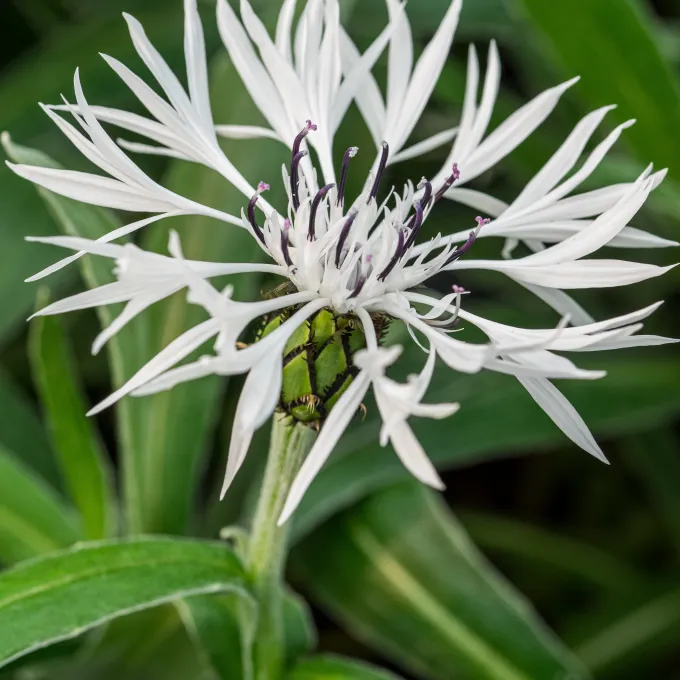
The inflorescences consist of flower heads with white to pale cream-colored florets, which distinguish this plant during its blooming period.
The plant reproduces via seeds and also through its robust root system, allowing it to persist in agricultural lands despite tillage efforts.
Where it grows
This species thrives in dry, well-drained, and often calcareous soils, making it common in pastures, roadsides, and abandoned fields.
In agricultural settings, white knapweed frequently invades winter cereals and pulse crops, particularly in regions with limited rainfall.
It prefers sunny, open environments where it can compete effectively with young crop seedlings for sunlight and soil resources.
White knapweed is often found in areas with reduced tillage practices, as the lack of deep soil disruption allows the root systems to spread.
Its seeds are easily transported by wind or contaminated agricultural machinery, facilitating rapid colonization of new patches within a farm.
Harm it causes
The primary damage caused by white knapweed is the intense competition for water and soil nutrients, which significantly suppresses the growth of cultivated crops.
High densities of this weed interfere with harvesting operations, increasing the moisture content of harvested grain and requiring additional cleaning.
It serves as a potential host for various pests and diseases, which can spread to commercial crops and complicate integrated pest management programs.
In hayfields, the presence of this plant reduces the nutritional value of forage, as its tough stems and flowers are poorly digested by livestock.
If left unmanaged, the weed can dominate areas of the field, causing patchiness in the crop stand and reducing the overall economic yield.
How to control
Cultural control involves implementing robust crop rotations that include competitive crops capable of shading the soil surface to suppress weeds.
Deep autumn plowing is an effective method to disturb the established root systems and prevent the emergence of new growth from deep soil layers.
Chemical control focuses on the use of systemic herbicides applied during the active growth phase, targeting the rosette stage of the weed.
Maintaining optimal soil pH and fertility levels helps crops outcompete the weed, as many knapweed species prefer specific nutrient environments.
- Utilizing clean, weed-free seed lots for sowing to prevent initial infestation.
- Regular mechanical cultivation in row crops to disrupt root expansion.
- Applying herbicides at the correct growth stage for maximum efficacy.
- Cleaning machinery after working in infested areas to avoid spreading seeds.
Taxonomy
- Latin name
- Centaurea alba
- Family
- Сложноцветные (астровые)
- EPPO code
- CENAB