
Calyptocarpus vialis
Calyptocarpus vialis
Description
How to tell it apart
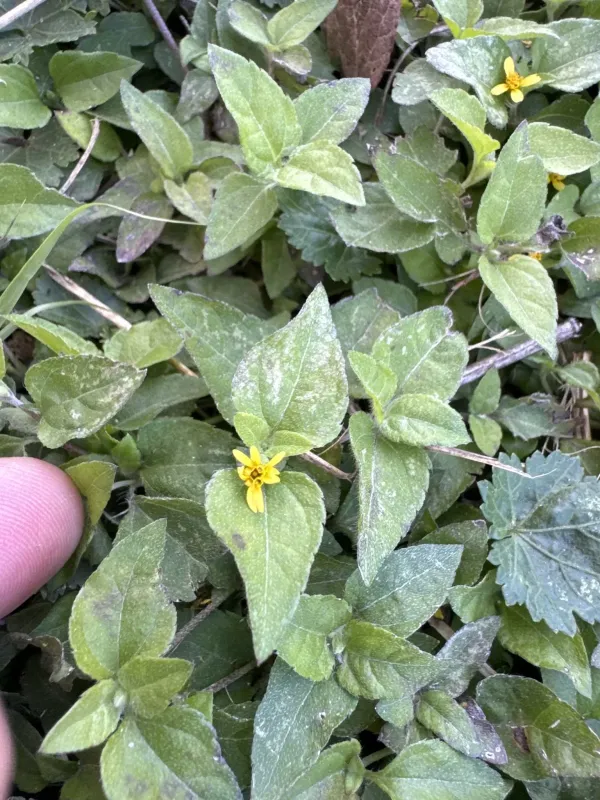
Calyptocarpus vialis, commonly known as horseherb, is a low-growing, creeping perennial herb within the Asteraceae family. It is characterized by its mat-forming growth habit and small yellow flowers, usually measuring less than 1 cm in diameter.
The leaves are opposite, ovate, and typically feature serrated margins. These leaves provide a dense green canopy that hugs the ground, allowing the plant to thrive in various light conditions, including partial shade.
Its stems are prostrate and exhibit the unique ability to root at the nodes whenever they come into contact with moist soil. This mechanism allows the weed to colonize areas rapidly and resist physical removal.
The root system is fibrous and surprisingly resilient, capable of regenerating the plant even after partial removal. This makes it a difficult species to eradicate from lawns and garden beds.
Seeds are produced in achenes that feature small, hooked appendages, which facilitate their dispersal by adhering to animal fur, clothing, or maintenance equipment.
Where it grows
Native to the tropical regions of the Americas, ranging from Texas down to South America, Calyptocarpus vialis has spread across many warm-temperate and subtropical regions globally as a naturalized weed.
It thrives in disturbed environments, including roadside verges, urban landscapes, parklands, and agricultural borders. It shows a preference for moist, nutrient-rich soils but is notably shade-tolerant.
In landscaping, it is a frequent invader of manicured lawns and golf courses. Its tolerance for frequent mowing makes it an persistent component of turfgrass that can eventually outcompete desirable species.
The weed is also commonly found in nursery settings and greenhouses, where stable moisture and warm temperatures facilitate year-round growth and vegetative propagation.
It frequently colonizes areas where the turf is thin or damaged, acting as an opportunistic species that quickly fills gaps in the landscape.
Harm it causes
Calyptocarpus vialis poses a significant challenge by suppressing the growth of desired crops and turfgrass. By forming dense mats, it competes for water, space, and mineral nutrients, ultimately causing decline in the host vegetation.
The plant's ability to withstand repeated mowing means it can persist despite standard lawn maintenance, leading to an unsightly appearance and the need for more aggressive eradication measures.
Beyond aesthetic degradation, the weed can harbor populations of insects or pathogens that may later transfer to more sensitive ornamental or food crops, complicating overall plant health management.
Its high rate of vegetative spread makes it difficult to contain, as even small stem fragments left in the soil can successfully initiate a new colony of the weed.
The species also contributes to the maintenance costs of green spaces, as constant vigilance and repeated interventions are required to keep populations at manageable levels.
How to control
Management begins with rigorous manual removal, ensuring that the entire root system is extracted. Given the plant's ability to re-root from stem fragments, careful disposal of vegetative material is necessary to prevent re-infestation.
Cultural control practices include promoting the health and density of desirable plants. A thick, healthy lawn or groundcover will often provide sufficient competition to prevent horseherb from gaining a foothold.
Chemical control involving selective broadleaf herbicides is the most effective approach for turfgrass. Products containing 2,4-D or dicamba are frequently recommended, but they must be applied according to label guidelines for efficacy and safety.
For non-crop areas, broad-spectrum herbicides such as glyphosate can be utilized to achieve complete eradication. Treatment should be performed during the active growing season when the plant is most susceptible to systemic chemical uptake.
- Manual weeding with full root extraction.
- Use of mulch to suppress seed germination.
- Timely application of selective herbicides in lawns.
Taxonomy
- Latin name
- Calyptocarpus vialis
- Family
- Сложноцветные (астровые)
- EPPO code
- BLATA