
Baccharis halimifolia
Baccharis halimifolia
Description
How to tell it apart
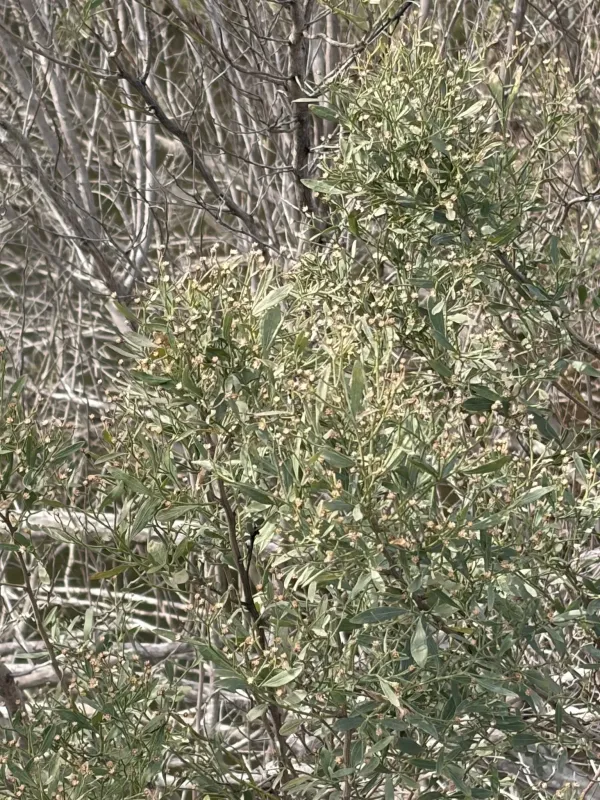
Baccharis halimifolia is a perennial shrub belonging to the Asteraceae family, capable of growing up to 4 meters tall and forming dense, impenetrable clusters.
The leaves are semi-evergreen, wedge-shaped, or obovate, often with coarse teeth near the apex, and coated with a resinous, shiny substance that helps prevent desiccation.
As a dioecious species, it produces separate male and female flowers. The female plants are particularly noticeable due to the silvery-white, feathery bristles on their seeds.
The seeds are equipped with a pappus, allowing them to travel long distances via wind, which facilitates the plant's rapid colonization of new environments.
The root system is extensive and resilient, enabling the shrub to thrive in a variety of soil types, including saline and waterlogged substrates.
Where it grows
Native to North America, the plant has become an invasive threat in many parts of the world, specifically in wetlands, salt marshes, and coastal regions.
It prefers sun-exposed areas and is frequently found along roadsides, riverbanks, drainage ditches, and abandoned agricultural land where it faces little competition.
Baccharis halimifolia demonstrates a high tolerance for salt spray and varying moisture levels, allowing it to dominate areas where other vegetation struggles to survive.
In agricultural settings, it often invades field margins, pasture lands, and fallow fields, gradually encroaching upon high-value cultivation areas if left unchecked.
The plant is highly adaptable to disturbed habitats, making it one of the most prolific invaders in areas where human activity has cleared native ground cover.
Harm it causes
The primary concern regarding this weed is its ability to reduce the productivity of pastures by replacing nutritious forage plants with dense, unusable thickets.
Baccharis halimifolia contains toxic compounds in its leaves, which can cause severe illness or death if ingested by livestock, posing a significant risk to the grazing industry.
By forming dense monocultures, it suppresses the growth of desirable native plants and crops through intense competition for light, water, and soil nutrients.
It creates physical barriers that hinder the movement of farm machinery and livestock, leading to increased labor costs for landowners and agricultural managers.
Due to its status as a fast-spreading invader, it requires significant investment in management efforts to prevent it from establishing a permanent footprint on farmlands.
How to control
Mechanical control, such as manual grubbing or using heavy machinery to remove the root crown, is effective but labor-intensive for established stands.
Chemical management involves the use of systemic herbicides applied as foliar sprays during the growing season or as basal bark treatments on individual stems.
Integrated pest management strategies often combine fire (prescribed burning) with chemical follow-ups to eliminate young seedlings that germinate after disturbance.
Monitoring field perimeters and controlling isolated plants before they reach the flowering stage is critical to preventing large-scale seed dispersal across the farm.
- Implement systematic monitoring of non-crop areas.
- Use approved herbicides during active vegetative growth.
- Prioritize the removal of female plants to stop seed production.
- Restore native vegetation cover to discourage weed germination.
Taxonomy
- Latin name
- Baccharis halimifolia
- Family
- Сложноцветные (астровые)
- EPPO code
- BACHA