
Atrichoseris platyphylla
Atrichoseris platyphylla
Description
How to tell it apart
Atrichoseris platyphylla, commonly known as the desert chicory, belongs to the Asteraceae family. It is an herbaceous plant that mimics the appearance of members of the Cichorium genus due to its inflorescence.
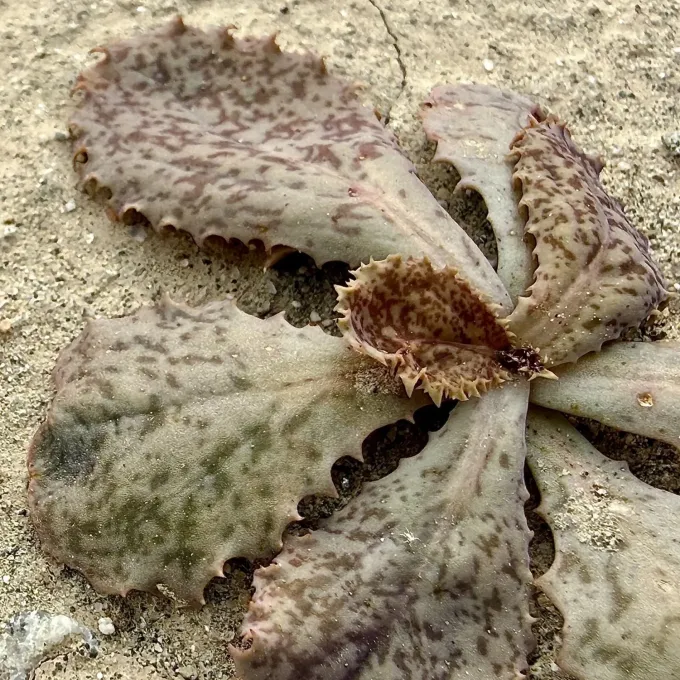
The plant is characterized by a basal rosette of broad, tooth-margined or entire leaves. The stem is generally sparsely leafy and branched in the upper portions.
The inflorescences are flower heads composed of ray florets. The color of the petals ranges from pure white to pale blue or lavender shades.
It possesses a specialized biology allowing it to adapt to extreme arid conditions. Its root system is capable of penetrating deep into the soil to locate moisture.
Upon ripening, the seeds are equipped with a pappus, which ensures effective long-distance dispersal via wind currents.
Where it grows
The distribution range is primarily restricted to the southwestern regions of the United States and northern parts of Mexico, including the Mojave and Sonoran deserts.
In its natural environment, it is found on open sandy or gravelly areas, along dry wash beds, and on disturbed lands.
As a weed, it represents a potential threat if introduced into arid zones where intensive irrigated agriculture is practiced.
The plant prefers well-drained soils with low organic content, frequently colonizing roadsides and field edges in appropriate climatic zones.
High seed viability in dry soil allows the weed to maintain a seed bank for several seasons until favorable conditions occur.
Harm it causes
The harm caused by Atrichoseris platyphylla stems from its ability to rapidly colonize open spaces where the soil cover is disturbed or crop management is inadequate.
The weed competes with crops for available moisture, which is particularly critical in regions with low soil water availability.
The development of significant vegetative mass can create shading for low-growing agricultural crops, slowing their growth and development in early stages.
High seed production intensity leads to the contamination of the soil seed bank, necessitating continuous labor for subsequent land clearing.
Additionally, the weed may act as a reservoir for various pests or pathogens common to other members of the Asteraceae family.
How to control
Mechanical soil cultivation remains the primary control method, aimed at severing the root system before the plant enters the flowering phase.
The cultivation of inter-rows is effective in suppressing young seedlings, preventing them from progressing to the generative stage.
Chemical control involves the use of systemic, broad-spectrum herbicides that are effective against broadleaf weeds during active growth periods.
An important element of agrotechnology is maintaining optimal crop density, which restricts the available space for weed emergence.
- Regular field monitoring for early detection of infestation patches.
- Timely destruction of plant residues after harvest.
- Use of crop rotations that disrupt the weed's development cycle.
Taxonomy
- Latin name
- Atrichoseris platyphylla
- Family
- Сложноцветные (астровые)
- EPPO code
- BTSPL