
Arctotheca calendula
Arctotheca calendula
Description
How to tell it apart
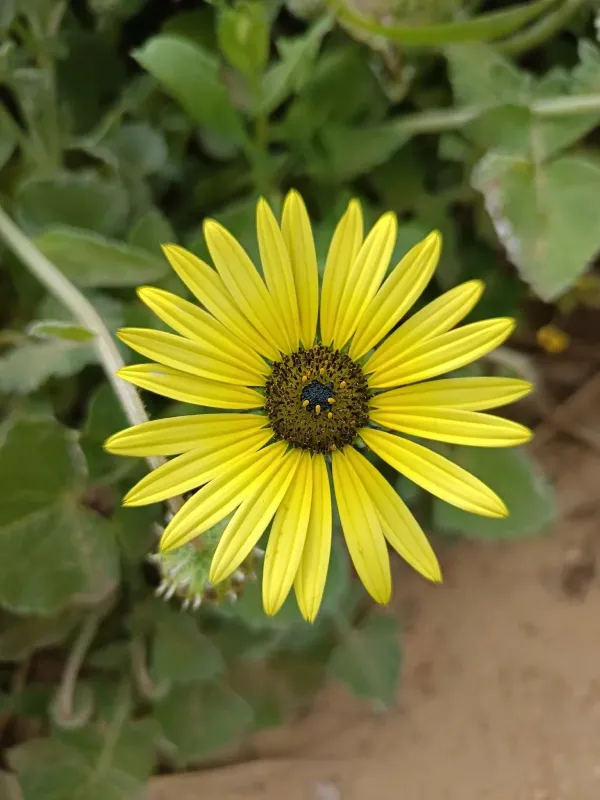
Arctotheca calendula, commonly known as Capeweed, is an annual herb belonging to the Asteraceae family. It is characterized by its rosette growth habit and deeply lobed leaves that feature a distinct white, woolly appearance on the underside.
The stems of the plant are often prostrate, creeping along the ground and rooting at the nodes, which facilitates rapid colonization. It develops a deep taproot that helps the plant endure period of low water availability.
The plant produces yellow daisy-like flowers with black centers. These blooms are highly visible and produce a massive quantity of seeds, which are equipped with small, fluffy structures that facilitate dispersal by wind and water.
Capeweed is known for its resilience and ability to recover quickly from mechanical damage. Its capacity to regenerate even when leaves are crushed makes it a persistent nuisance in cultivated agricultural fields.
During the seedling stage, Capeweed is often identified by its initial leaf rosette. As the plant matures, the contrast between the green upper surface and the white-felted underside of the leaves becomes the primary diagnostic feature.
Where it grows
While native to South Africa, Arctotheca calendula has become a problematic invasive species in various parts of the world, including Australia and parts of the United States, where it thrives in Mediterranean climates.
The plant prefers open, disturbed areas such as roadsides, orchards, and overgrazed pastures. It is highly adaptable and can grow in various soil types, ranging from sandy soils to those with higher salt concentrations.
In agricultural settings, it frequently infests winter crop fields. It takes advantage of the early season to establish a strong root system, allowing it to compete effectively with germinating cereal crops.
Capeweed is often spread by human activity, including the movement of contaminated farm machinery and vehicles. Its seeds are highly persistent, surviving in the soil seed bank for several years until favorable conditions arise.
The weed thrives in environments where competition from native or forage species is weak. Once established, it can form dense mats that cover the ground completely, preventing other plants from becoming established.
Harm it causes
The primary damage caused by Capeweed is through resource competition. It rapidly exhausts soil moisture and nutrients, which significantly reduces the yield potential of crops like wheat, barley, and oats.
Capeweed exhibits allelopathic properties, releasing chemical compounds into the surrounding soil that inhibit the germination and growth of neighboring crop plants, leading to patchy and unproductive fields.
In livestock production, it is considered a poor quality forage. Its presence in pastures reduces the overall feed value, and in some cases, it can cause digestive issues in sheep and cattle if consumed in large quantities.
The plant serves as a host for various agricultural pests and viral diseases. By harboring these threats near the crops, Capeweed indirectly increases the need for expensive pest control and chemical interventions.
Harvesting efficiency is significantly reduced in infested fields. The dense, mat-like growth of the weed clogs combine harvesters, increasing the time required for harvesting and leading to higher fuel and maintenance costs.
How to control
Effective management of Capeweed requires an integrated approach that combines preventive measures with proactive suppression. Strict field hygiene, such as cleaning machinery between fields, is essential to limit its spread.
Agronomic control involves deep plowing to bury the seeds and prevent them from germinating. Additionally, timely cultivation before the weed reaches the flowering stage is critical to prevent the replenishment of the seed bank.
- Crop rotation with competitive, dense-canopy crops.
- Strategic grazing to reduce plant vigor.
- Application of selective herbicides at the rosette stage.
- Maintenance of soil fertility to boost crop growth.
Chemical control is most effective when herbicides are applied early in the plant's life cycle. Products targeting broadleaf weeds are commonly used, but it is vital to follow label instructions to minimize environmental impact.
Long-term success depends on consistent monitoring and follow-up treatments. Because the seed bank can persist for several years, repeated control measures are often necessary to drive the population down to negligible levels.
Taxonomy
- Latin name
- Arctotheca calendula
- Family
- Сложноцветные (астровые)
- EPPO code
- AROCA