
Western ragweed
Ambrosia tomentosa
Description
How to tell it apart
Western ragweed (Ambrosia tomentosa) is a perennial herbaceous plant belonging to the Asteraceae family. It is characterized by an extensive root system that facilitates vegetative spread.
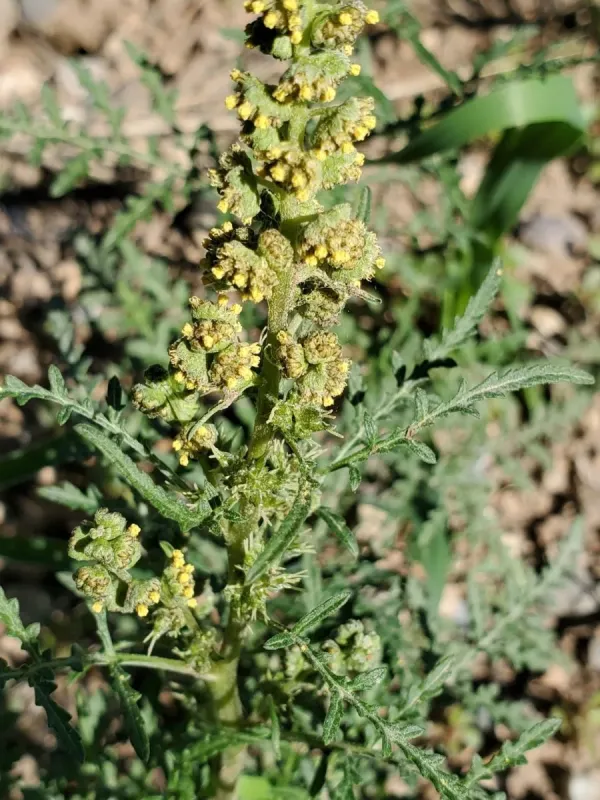
The plant is distinguished by a dense white-woolly (tomentose) indumentum on the underside of its leaves, which gives the plant a grayish or silvery appearance in the field.
The stems are erect, branched, and typically reach heights of 30 to 60 cm. Leaves are alternate, deeply lobed, or pinnately divided, contributing to the plant's distinctive foliage.
Like other species in the genus, it is monoecious. Male flowers are organized in small terminal racemes (bract-covered heads), while female flowers are located at the base of the inflorescence.
The seeds of Western ragweed possess high longevity, remaining viable in the soil for several years, which presents a significant challenge for long-term eradication.
Where it grows
This weed thrives in open, sunny habitats such as pastures, roadsides, and disturbed fields. It is an aggressive colonizer that easily invades degraded agricultural lands.
Western ragweed is particularly harmful in grain fields and row crops. It establishes rapidly in areas where soil coverage is low or where soil has been disturbed by heavy machinery.
While adapted to arid environments, it prefers fertile, moist soils. Its ability to spread through both seeds and rhizomatous root system allows it to form dense, persistent patches.
Dissemination typically occurs through contaminated seeds, agricultural equipment movement, and water runoff during heavy rainfall or irrigation events in agricultural settings.
Its capacity for clonal growth allows it to outcompete native or planted species, creating monotypic stands that reduce overall biodiversity and agricultural output.
Harm it causes
The primary damage caused by Western ragweed is intense competition for soil moisture and nutrients. Its deep root system allows it to deplete resources faster than many crops.
The plant exhibits allelopathic properties, secreting chemical compounds into the soil that inhibit the germination and growth of neighboring crops, significantly reducing yields.
In forage and hay production, the presence of this weed degrades the quality of the fodder. The plant contains bitter oils that taint livestock products, particularly affecting milk quality.
The pollen of Western ragweed is a major respiratory allergen. Mass blooming leads to outbreaks of hay fever and other allergic reactions, posing a public health concern.
Economic losses are compounded by the costs of separating weed seeds from harvested grain. Heavy infestations can lead to grain lots being rejected by processing facilities.
How to control
Agrotechnical management includes deep fall plowing to fragment and expose the root system, leading to desiccation or frost-related mortality of the plant tissues.
Crop rotation incorporating vigorous, shade-producing crops is effective in suppressing the weed. Competitive crops limit the sunlight available to ragweed seedlings.
Mechanical mowing or cultivation before the onset of flowering is essential to prevent seed set. This process effectively reduces the seed bank in the soil over time.
Chemical control involving systemic herbicides is recommended for severe infestations, especially in non-crop areas or as spot treatments within fields during active growth phases.
- Strict monitoring of fields
- Thorough cleaning of harvesting machinery
- Timely application of selective herbicides
- Restoring dense vegetation in grazing areas
Taxonomy
- Latin name
- Ambrosia tomentosa
- Family
- Сложноцветные (астровые)
- EPPO code
- FRSTO