
Ambrosia tenuifolia
Ambrosia tenuifolia
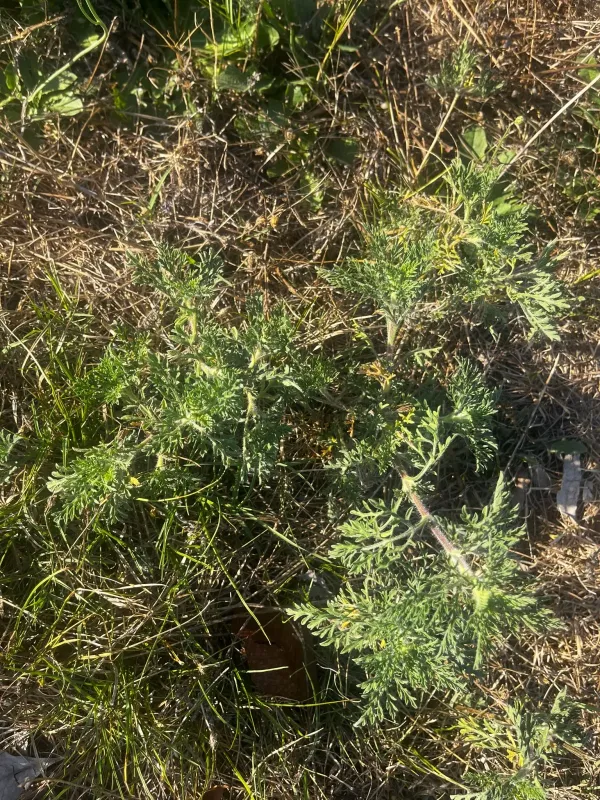
Description
How to tell it apart
Ambrosia tenuifolia, commonly known as fine-leaf ragweed, is a perennial herbaceous plant belonging to the Asteraceae family. It is distinguished by its finely dissected, fern-like leaves that have a very thin appearance.
The plant typically grows in a branched, upright form, reaching heights of 30 to 80 centimeters. It develops a robust, deep taproot system, which allows it to thrive in various soil conditions and persist despite environmental stress.
The flowers are arranged in small, spike-like clusters. Like other ragweeds, it produces separate male and female flower heads, with male flowers being the primary source of the highly allergenic pollen.
The overall morphology of the plant can be dense, creating a lush green appearance that is deceptive of its invasive nature. The foliage releases a strong, aromatic scent when crushed or damaged.
Due to its high adaptability, the plant can vary in leaf density depending on local moisture and sunlight availability, making it a highly successful colonizer in disturbed environments.
Where it grows
Ambrosia tenuifolia primarily inhabits open, sun-exposed areas. You will often find it along roadsides, railway tracks, abandoned fields, and waste grounds where the natural vegetation has been disturbed.
In agricultural settings, it is a major nuisance in row crops such as soybeans, corn, and sunflowers. It thrives in well-drained, fertile soils but is also tolerant of compacted earth, making it common in farm pathways.
The plant spreads rapidly through seed dispersal by wind, water runoff, and human activity, particularly the movement of farming equipment across infested and non-infested fields.
It occupies a wide range of habitats, from riverbanks to dry prairies, showing an impressive ability to survive under fluctuating water conditions thanks to its deep root architecture.
In regions where it has been introduced, it often displaces native plant species, changing the local ecosystem dynamics and creating monocultures that are difficult for other plants to penetrate.
Harm it causes
The primary agricultural impact of fine-leaf ragweed is its aggressive competition for limited soil moisture and essential nutrients, which significantly reduces the growth and yield of nearby crops.
Through the process of allelopathy, the plant releases biochemical substances into the soil that inhibit the germination and development of neighboring crops, causing stunted growth and lower final output.
Human health is severely impacted by this weed as it is a potent producer of allergenic pollen. Inhaling this pollen is a common cause of severe respiratory allergies and allergic rhinitis for many people.
Contamination of harvested grain with the seeds of Ambrosia tenuifolia is a significant problem. It reduces the grade and market value of the crop, necessitating expensive cleaning procedures.
On livestock pastures, the weed can displace high-quality forage grasses, leading to lower feed value and potential health issues for animals consuming the weed as part of their diet.
How to control
Effective management begins with mechanical control methods such as tillage and field cultivation. Deep plowing helps to bury the seeds and disrupt the perennial root systems before they can establish.
Crop rotation remains a fundamental strategy to disrupt the life cycle of the weed. By planting competitive cover crops, farmers can shade out the ragweed and suppress its growth significantly.
Chemical control is often necessary for large infestations. Using selective herbicides during the early growth stages of the ragweed provides the most effective control results for commercial agriculture.
- Regular mowing before flowering to prevent seed set.
- Application of systemic herbicides on young plants.
- Maintaining healthy crop density to limit weed emergence.
- Strict monitoring of buffer zones to prevent spread.
Long-term success in controlling Ambrosia tenuifolia requires a combination of integrated pest management (IPM) practices, ensuring that both mechanical and chemical interventions are timed correctly.
Taxonomy
- Latin name
- Ambrosia tenuifolia
- Family
- Сложноцветные (астровые)
- EPPO code
- AMBTE