
Ambrosia grayi
Ambrosia grayi
Description
How to tell it apart
Ambrosia grayi, known as the skeleton-leaf bur ragweed, belongs to the Asteraceae family and is a resilient perennial herb.
It is characterized by a robust and aggressive subterranean root system that facilitates vegetative propagation over large areas.
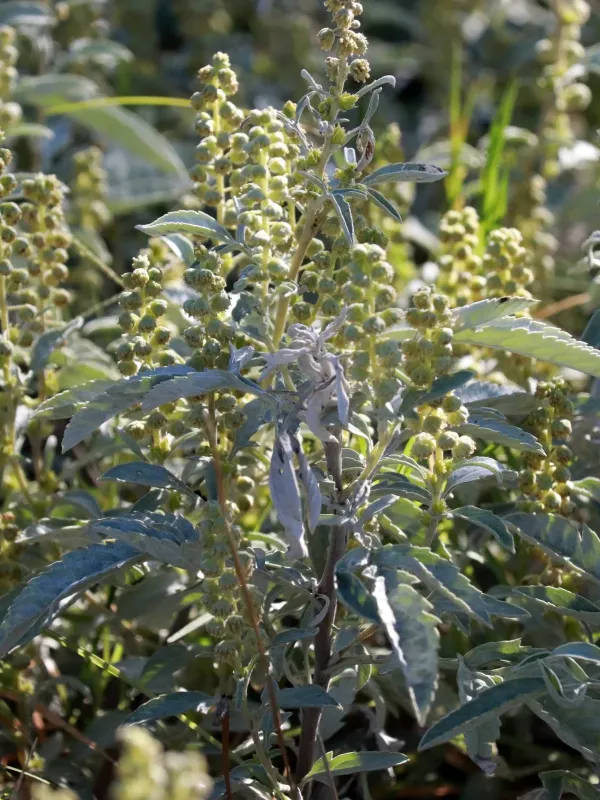
The leaves are alternate, deeply dissected, and covered with coarse hairs, which often gives the plant a distinct grayish or matte appearance.
Stems are erect and branched, typically reaching heights of 30 to 80 centimeters depending on the soil fertility and moisture levels.
Flowers appear in small heads within spiked inflorescences, located at the ends of branches or in the axils of the upper leaves.
Where it grows
This weed thrives in sun-exposed areas, commonly inhabiting roadsides, waste lands, fallow fields, and non-cultivated plots.
In agricultural settings, it poses a significant threat to row crops, particularly corn, sunflowers, and sugar beets.
Ambrosia grayi is highly adaptive to various soil types, though it proliferates most aggressively in fertile, well-drained loamy soils.
It infests not only arable lands but also pastures, where its presence reduces fodder quality due to the accumulation of bitter compounds.
The plant exhibits rapid colonization potential, making it a persistent issue in regions where phytosanitary measures are not strictly enforced.
Harm it causes
The primary damage caused by this weed is the intense competition with crops for essential resources such as water, nutrients, and sunlight.
Its deep root system extracts moisture from subsoil layers, significantly increasing crop stress during dry weather conditions.
Ambrosia grayi releases allelopathic substances into the soil that inhibit the development of beneficial soil microbes and hinder crop growth.
Heavy infestation levels directly lead to reduced yields and inferior product quality, resulting in significant financial losses for farmers.
The presence of this weed complicates mechanized harvesting operations, increasing the workload for machinery and causing harvest inefficiencies.
How to control
Integrated management is essential, involving crop rotation and the strategic use of fallow periods to deplete the plant's root reserves.
Cultural methods include deep plowing with moldboard inversion to disrupt the root systems and prevent re-establishment of the weed.
Frequent inter-row cultivation during the growing season is effective in limiting the vegetative expansion of the ragweed in row crops.
Chemical control requires systemic herbicides capable of translocating into the deep root system during the plant's active growth phase.
- Use of glyphosate-based herbicides for non-crop areas and pre-planting treatments.
- Application of selective herbicides in specific crops such as soybean or maize following guidelines.
- Timely mowing before the flowering stage to prevent seed dispersal and further spreading.
Taxonomy
- Latin name
- Ambrosia grayi
- Family
- Сложноцветные (астровые)
- EPPO code
- AMBGR