
Skeletonleaf bursage
Ambrosia confertiflora
Description
How to tell it apart
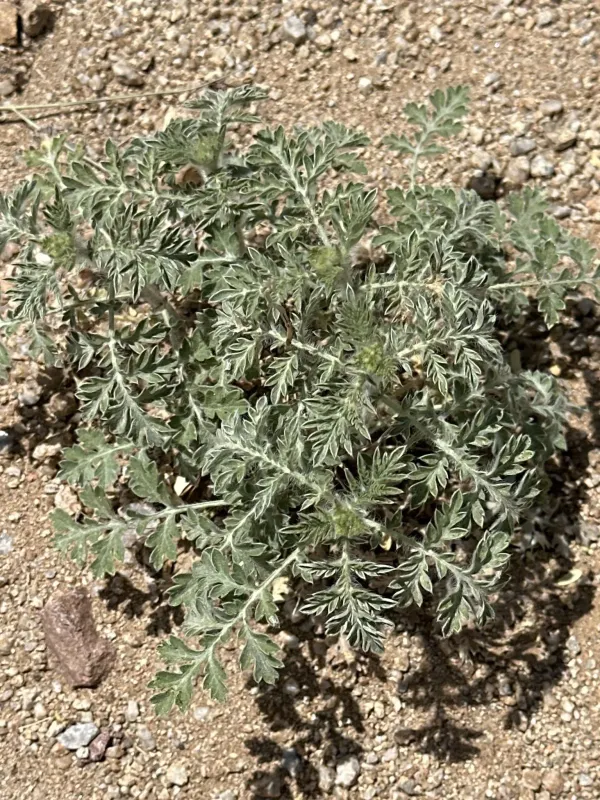
Skeletonleaf bursage (Ambrosia confertiflora), a member of the Asteraceae family, is a perennial herbaceous plant. Unlike annual species, it features a highly resilient and deep-reaching root system that makes it a persistent challenge in agricultural fields.
The stems are erect, branched, and covered with coarse hairs, typically growing up to 150 cm in height. Its leaves are pinnately lobed and have a distinct grayish-green underside, which serves as a key diagnostic feature for field identification.
Flowering occurs from July through September. The plant produces small, spike-like inflorescences. It is well-known for its potent pollen, which is a major allergen affecting humans during late summer and autumn.
Propagation is primarily vegetative, occurring through an extensive system of horizontal roots that can send up new shoots. This makes the plant exceptionally capable of regenerating even after mechanical cultivation or mowing.
As an invasive species, it thrives in a variety of environments, from fertile agricultural lands to disturbed urban areas, demonstrating remarkable adaptability and survival strategies.
Where it grows
Skeletonleaf bursage is frequently found in grain fields, row crops, orchards, and vineyards. It is often classified as a quarantine pest due to its aggressive growth pattern and ability to take over vast areas quickly.
The weed thrives in cultivated fields, particularly in corn and sunflower crops, where it competes fiercely with the main crop for limited moisture, sunlight, and soil nutrients.
It prefers well-drained, fertile soils but shows high tolerance to varied moisture conditions. It frequently invades irrigation channels, roadsides, and abandoned lands, using these areas as hubs for further spreading.
Movement between fields is often facilitated by farm machinery that carries root fragments or seeds. Once established, the colony continues to expand horizontally beneath the surface, forming dense, almost impenetrable patches.
Irrigated agriculture provides an ideal environment for this species, leading to increased yield losses and substantial management costs for affected farming operations.
Harm it causes
The primary economic impact is a dramatic reduction in crop yields due to water and nutrient depletion. Its massive root system can consume significantly more water than most cultivated cereal crops.
Dense colonies create intense shade, preventing the growth of neighboring crops and making the entire field susceptible to lower quality harvests. This competition also weakens crops, leaving them prone to secondary infections.
From a public health perspective, the plant is a major source of wind-borne pollen that triggers severe allergic rhinitis and asthma, complicating field management during the peak season.
The physical presence of the weed increases harvest time and maintenance costs, as the tough stems clog combine harvesters and lead to increased downtime for farmers.
Furthermore, it serves as a host for various pathogens and pests, which can migrate to valuable crops, necessitating additional chemical applications and reducing overall sustainable farming potential.
How to control
Mechanical control involves deep tillage and repeated cutting of the root system to exhaust the plant's food reserves. However, this method requires consistent efforts over several seasons to be effective.
Chemical control focuses on the use of systemic herbicides applied during active vegetative growth. Effectiveness is maximized when treatment occurs before the onset of the flowering stage.
Crop rotation plays a critical role in management. Rotating with competitive crops that provide dense ground cover can significantly inhibit the growth of new shoots from the root system.
Strict phytosanitary measures are essential. Cleaning machinery thoroughly before moving between fields and using certified, weed-free seeds are the best strategies to prevent new infestations.
- Deep plowing to disrupt horizontal root propagation.
- Targeted herbicide applications during the pre-bloom phase.
- Early detection and spot treatment to contain existing patches.
Taxonomy
- Latin name
- Ambrosia confertiflora
- Family
- Сложноцветные (астровые)
- EPPO code
- FRSCO