
Wingless ragweed
Ambrosia aptera
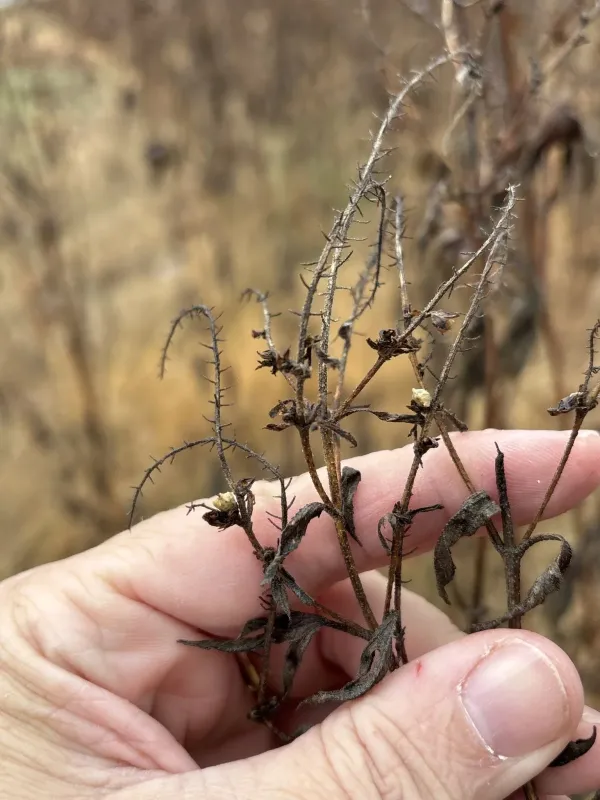
Description
How to tell it apart
Wingless ragweed (Ambrosia aptera) is an annual herbaceous weed belonging to the Asteraceae family. It is closely related to common ragweed but possesses specific morphological differences.
The plant features a sturdy, branching stem that can grow quite tall under favorable conditions. The leaves are opposite, pinnately lobed, and covered with fine hairs, giving the plant a greyish appearance.
The key identification feature is found in the seed heads. Unlike its counterparts, the fruit of Ambrosia aptera lacks the characteristic wing-like appendages or sharp spikes.
The root system is a deep taproot, which allows the plant to access water reserves from deeper soil layers, making it highly competitive even during drought.
Flowers are arranged in terminal spikes. The plant relies on wind for pollination, releasing large amounts of pollen during the late summer season.
Where it grows
Wingless ragweed thrives in open, disturbed areas such as roadsides, riverbanks, and abandoned agricultural fields. It favors nutrient-rich, moist soils.
In farming environments, it is a significant nuisance in row crops like corn, sunflowers, and soybeans, where it exploits available space and light.
The plant demonstrates high ecological plasticity, meaning it can colonize various types of environments quickly if left undisturbed.
It often enters fields through contaminated seed stock or machinery that has not been properly cleaned between different sites.
Once established, the weed rapidly builds a substantial seed bank in the soil, ensuring its presence in the field for several subsequent years.
Harm it causes
The primary damage caused by wingless ragweed is its intense competition with crops for limited resources like water, nutrients, and sunlight.
By shading out younger crop plants, it stunts their initial growth, which frequently leads to a significant decrease in final harvest yields.
The plant also utilizes allelopathic properties, releasing chemicals into the soil that inhibit the germination and development of other nearby plant species.
Health-wise, the pollen is a potent allergen that causes severe respiratory issues in farm workers and local residents during the pollination period.
The presence of ragweed seeds in grain shipments can lead to grade reductions and financial losses due to the strict requirements for seed purity.
How to control
Successful management requires an integrated approach combining mechanical, chemical, and cultural practices to keep infestations under control.
Cultural control involves maintaining healthy crop stands and using competitive crop varieties to crowd out the emerging weeds early in the season.
Mechanical methods such as deep plowing and timely inter-row cultivation are effective in removing young seedlings before they reach the flowering stage.
Chemical control focuses on applying selective herbicides at the correct growth stage to achieve maximum efficacy while protecting the target crop.
Sanitation of field borders and irrigation ditches is necessary to prevent re-infestation, as these areas often act as reservoirs for the weed.
Taxonomy
- Latin name
- Ambrosia aptera
- Family
- Сложноцветные (астровые)
- EPPO code
- AMBAP