
Ambrosia acanthicarpa
Ambrosia acanthicarpa
Description
How to tell it apart
Ambrosia acanthicarpa, commonly known as annual bursage, is a flowering plant in the Asteraceae family. Its most distinctive feature is the fruit, which is covered in sharp, stiff spines that distinguish it from other ragweed species.
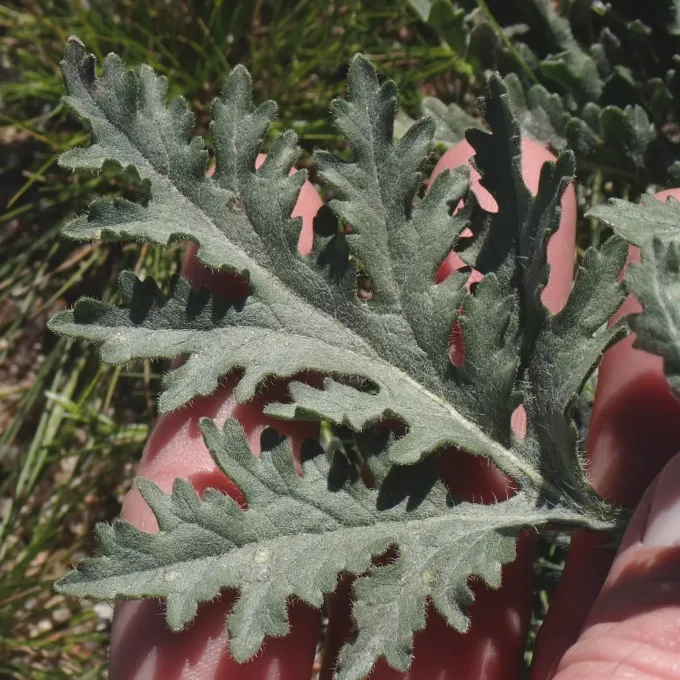
The plant typically grows as an annual herb, reaching heights of 20 to 80 centimeters. The stems are usually much-branched, and the foliage is characterized by pinnately lobed, pubescent leaves with a grayish-green appearance.
The root system is a deep taproot that allows the plant to thrive in dry, nutrient-poor soils. Reproduction occurs solely via seeds, which are highly persistent and can remain viable in the soil for an extended period.
Small, inconspicuous flowers are organized into terminal spikes. During the late summer and autumn, the plant releases significant quantities of pollen, which is a major source of seasonal allergies in humans.
Distinguishing it from common ragweed (Ambrosia artemisiifolia) requires close inspection of the burs; the acanthicarpa species features larger, more prominent, and sharper spines on its fruit clusters.
Where it grows
Native to the arid regions of North America, this plant is well-adapted to sandy soils and semi-arid environments. It has become an invasive species in many regions with similar ecological conditions.
It prefers open, disturbed sites with direct sunlight. Common habitats include roadsides, railroad embankments, abandoned agricultural lands, and areas subjected to regular human or machinery activity.
In agricultural settings, it easily colonizes fallow fields, row crops, and pastures with thin grass cover. It is remarkably tolerant of saline or alkali soils that would otherwise inhibit many other plants.
The plant is highly successful in occupying disturbed niches. Its ability to grow quickly allows it to dominate landscapes where natural vegetation has been suppressed or removed.
Seed dispersal is heavily reliant on human activity, specifically the movement of agricultural equipment, vehicles, and the transport of contaminated feed or soil across long distances.
Harm it causes
The primary agricultural impact of annual bursage is its ability to outcompete crops for limited water resources. Its deep root system allows it to extract moisture from deeper soil layers than many crops.
In row crops, the plant creates significant shade, which reduces the photosynthetic efficiency of young seedlings, leading to reduced overall crop yields and stunted development of the primary culture.
Ambrosia acanthicarpa is a potent allergen. The heavy production of pollen during the flowering season poses serious health risks to farm workers and nearby residents, often necessitating public control programs.
Contamination of harvested grain with bursage seeds lowers the market quality of the product. Processing facilities must implement rigorous cleaning procedures to ensure compliance with quality standards.
On rangelands, it reduces the value of forage. Due to its prickly nature and bitter taste, livestock often avoid the plant, which leads to the displacement of palatable grasses and decreases grazing capacity.
How to control
Effective management begins with sound agronomic practices, such as crop rotation. Utilizing competitive crops that create a dense canopy can effectively suppress the growth of bursage seedlings.
Mechanical methods, including timely cultivation, harrowing, and deep plowing, are highly effective when performed during the seedling stage, preventing the plants from establishing their deep taproots.
Chemical control is an essential component in managing large infestations. Non-selective herbicides like glyphosate are standard for treating fallow fields, fence lines, and non-crop areas.
For in-crop control, selective herbicides must be applied according to specific label instructions. Timing is critical, as applications are most effective when the plants are young and actively growing.
Biosecurity on the farm is vital. Cleaning all machinery before moving from infested fields to clean ones and using high-quality, certified seed helps prevent the reintroduction of the weed into new areas.
Taxonomy
- Latin name
- Ambrosia acanthicarpa
- Family
- Сложноцветные (астровые)
- EPPO code
- FRSAC