
Beach ageratum
Ageratum littorale
Description
How to tell it apart
Beach ageratum (Ageratum littorale) belongs to the Asteraceae family. It is a perennial herbaceous plant that often grows in a shrub-like habit.
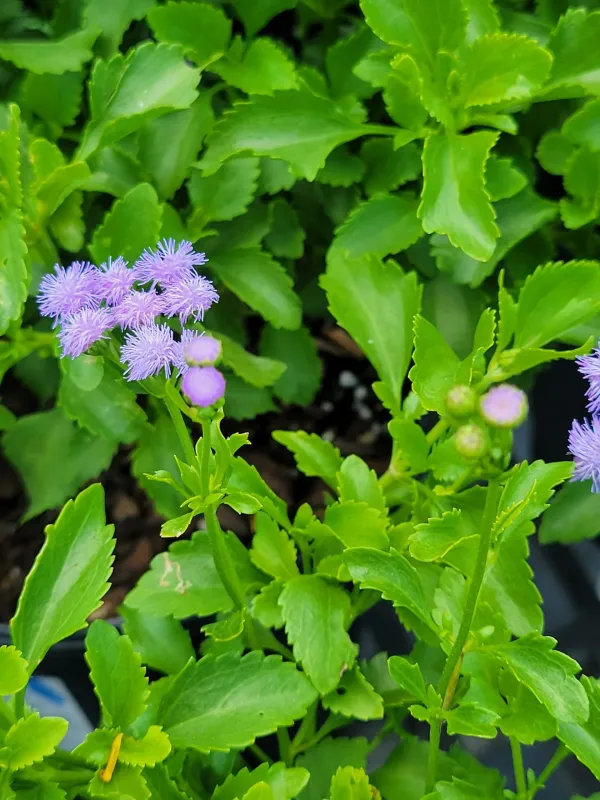
The plant is characterized by opposite leaves with distinct hairiness and glandular dots. The leaf blade is typically ovate with a serrated margin.
Inflorescences are typical heads grouped in dense cymes. The flowers are usually pale blue, lavender, or nearly white in color.
The stems are erect or ascending and often branched at the base. As the plant matures, the lower parts of the stems may become woody.
Seeds are equipped with a pappus, which facilitates active dispersal by wind across significant distances from the parent plant.
Where it grows
This species is native to coastal regions, primarily found in Florida, USA. It thrives in sandy dunes and coastal plant communities.
In an agronomic context, it poses a threat as an invasive species when new territories are brought under cultivation in tropical regions.
It prefers sunny areas with well-drained soils and frequently colonizes disturbed lands, including road verges and field edges.
Possesses high tolerance to saline soils, making it a highly competitive weed in coastal agricultural ecosystems.
Under conditions of intensive farming, it can rapidly colonize areas where competition from cultivated crops is low.
Harm it causes
The primary damage results from high allelopathic activity, which inhibits the growth of neighboring crops through root exudates.
The plant quickly forms dense mats that displace desirable species from the phytocenosis, reducing biodiversity and pasture productivity.
In fields, Beach ageratum creates significant pressure on soil resources, actively consuming moisture and mineral nutrients needed by crops.
By acting as a reservoir for certain insect pests and plant pathogens, Ageratum increases the risk of infection spread to crops.
It interferes with mechanized harvesting operations by contaminating the harvested commodity with seeds and vegetative parts.
How to control
Agronomic control includes deep plowing with moldboard inversion, which effectively destroys young seedlings and disrupts the root system of mature plants.
Regular mowing before the flowering phase prevents seed dispersal, which gradually depletes the soil seed bank in infested areas.
Chemical control involves the use of systemic broad-spectrum herbicides during the active vegetative growth stages of the weed.
The use of mulching materials between rows helps suppress seed germination by depriving the seeds of necessary sunlight.
- Implementing crop rotation.
- Application of glyphosate-based herbicides (on non-crop land).
- Manual weeding in small-scale gardens.
Taxonomy
- Latin name
- Ageratum littorale
- Family
- Сложноцветные (астровые)
- EPPO code
- AGELI