
Mistflower
Ageratina riparia
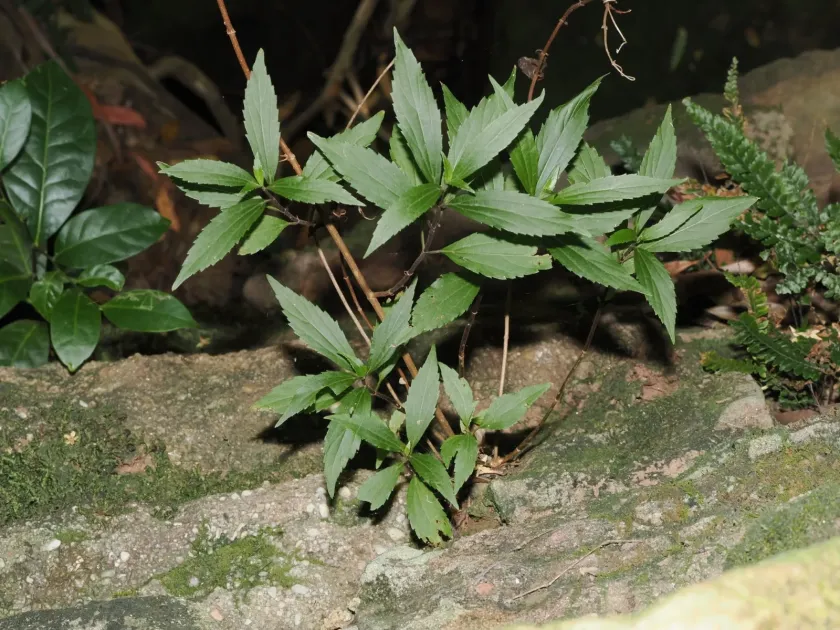
Description
How to tell it apart
Mistflower (Ageratina riparia) is a perennial herb or subshrub belonging to the Asteraceae family. It is recognized as a problematic invasive weed that can form dense, suffocating colonies.
The plant features erect or semi-prostrate stems, often exhibiting a reddish color. These stems can reach heights of 30 to 100 cm and possess the ability to root at the nodes when touching moist soil.
Leaves are opposite and lanceolate with distinct serrated margins. This serration is a key characteristic used for identification in the field during the plant's vegetative stage.
Small white flower heads are clustered into dense, flat-topped inflorescences at the ends of the branches. The bloom provides a significant amount of seed dispersal units.
Seeds are equipped with a pappus, a tuft of hairs that allows them to be carried long distances by wind or water. This enables the plant to colonize new areas rapidly and efficiently.
Where it grows
This species thrives in moist, shaded environments. It is commonly found along riverbanks, creek beds, drainage ditches, and damp forest edges where moisture is consistent.
Ageratina riparia is a major concern for agricultural lands near water sources. It frequently invades gardens, tea plantations, and low-lying pastures where it displaces desired vegetation.
The plant demonstrates high adaptability to various soil types, provided there is adequate moisture. It can successfully grow on steep slopes and embankments where other plants struggle.
In regions where it has been introduced, the weed quickly captures abandoned or unmanaged land. Its rapid growth rate allows it to become the dominant species in the understory.
Agricultural fields adjacent to infested wetlands are at high risk of colonization. The weed often spreads through irrigation systems, moving seeds from water channels to crop rows.
Harm it causes
The most significant harm posed by mistflower is its toxicity to livestock. It contains pyrrolizidine alkaloids that can cause severe pulmonary and liver damage to cattle and horses.
In pastures, its presence renders the land dangerous for grazing. Even if livestock avoid it, the weed outcompetes nutritious grasses, significantly reducing the carrying capacity of the land.
Ageratina riparia is highly competitive for nutrients, light, and water. By forming thick mats, it suppresses the growth of adjacent crops, leading to substantial yield losses.
Infrastructural impact includes the clogging of drainage and irrigation channels. This can disrupt water management on farms and lead to localized flooding or stagnant water zones.
The invasive nature of the plant disrupts local biodiversity, as it creates monolithic patches that exclude native flora. Controlling these patches is costly and labor-intensive.
How to control
Mechanical control involves cutting or slashing the plants before they reach the flowering stage. Since the plant can resprout from fragments, deep manual extraction of the root system is preferred.
Herbicides are a standard control measure, particularly systemic ones. Treatment is most effective during the active growth period, ensuring the chemical reaches the root system.
Because the weed often grows near water, extreme caution is needed when applying herbicides to prevent contamination. Use chemicals labeled specifically for aquatic or riparian areas.
Integrated weed management should include monitoring for new seedlings. If spotted early, small populations can be eradicated physically before they become established.
- Manual removal including root extraction.
- Systemic herbicide application during growth.
- Regular mowing to prevent seed set.
- Establishing competitive cover crops.
- Monitoring irrigation and riparian zones.
Taxonomy
- Latin name
- Ageratina riparia
- Family
- Сложноцветные (астровые)
- EPPO code
- EUPRI