
White snakeroot
Ageratina altissima
Description
How to tell it apart
White snakeroot (Ageratina altissima) is a perennial plant in the Asteraceae family. It is characterized by a straight stem that typically grows to a height of 0.5 to 1.5 meters.
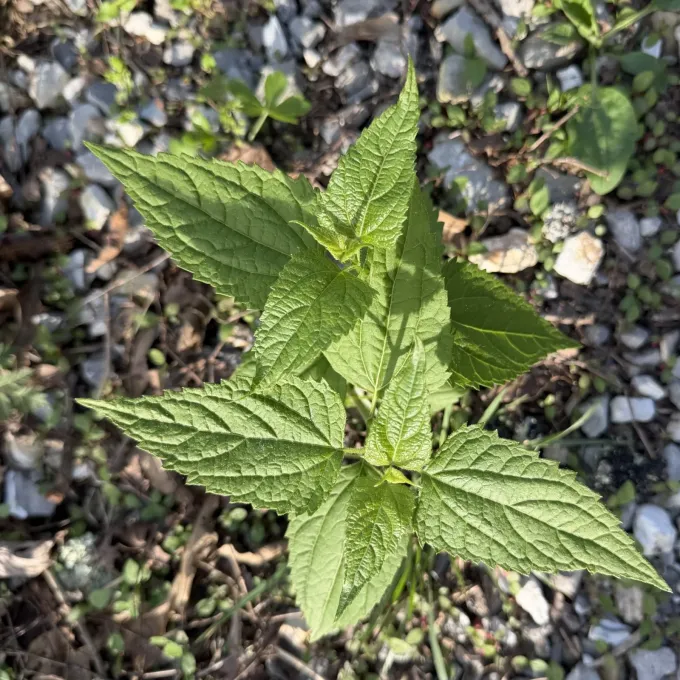
The leaves are opposite, ovate in shape, with serrated margins and pointed tips, which provides a key diagnostic feature for field identification.
During the late summer and autumn, the plant produces clusters of small, bright white flower heads arranged in loose corymbs.
The root system consists of short, tough rhizomes that allow the plant to survive harsh winters and regenerate effectively during the spring season.
When crushed, the plant tissues release a distinctive, somewhat pungent odor that helps distinguish it from other meadow plants.
Where it grows
White snakeroot primarily inhabits woodland edges, forest clearings, and moist, shaded meadows, showing a high preference for fertile, nutrient-rich soils.
However, it is increasingly found as a troublesome weed in disturbed areas, such as roadsides, pasture peripheries, and unmaintained agricultural land.
Because the plant is highly adaptable, it can colonize diverse environments, often spreading from natural forest borders into adjacent cultivated fields.
The seeds are dispersed by wind, which facilitates its rapid colonization of new areas, particularly where the ground cover is sparse or disturbed.
In agricultural settings, it is often found in sheltered or humid spots where moisture persists throughout the summer, allowing for dense stand development.
Harm it causes
The primary concern regarding white snakeroot is its toxicity; it contains tremetol, a potent alcohol that is poisonous to livestock, including cattle, horses, and sheep.
Ingestion of the plant causes a condition commonly known as "trembles" in animals, characterized by muscle tremors, stiffness, and frequently, death.
The toxin is metabolically stable and can be passed through the milk and meat of poisoned animals, posing a severe health risk to humans who consume these products.
From an agronomic perspective, the plant acts as a persistent weed that outcompetes local forage species, reducing the overall nutritional quality of pastures.
Its presence on grazing land requires immediate intervention, as the danger to livestock persists even when the plant is dry, making it a critical threat to farm safety.
How to control
Physical removal, specifically pulling the plant out by the roots, is the most effective way to prevent regrowth, as leaving rhizomes in the soil can lead to rapid re-sprouting.
Regular mowing before the plant reaches the flowering stage is essential to prevent seed production and limit its geographical expansion across the farm.
Chemical control using systemic herbicides, such as those containing glyphosate, is recommended for managing large infestations during active vegetative growth.
Land management practices should include the monitoring of fence lines and non-crop areas to eliminate secondary reservoirs of the weed before they become widespread.
- Manual grubbing for small infestations.
- Frequent mowing to exhaust root energy reserves.
- Targeted chemical application to active plants.
Taxonomy
- Latin name
- Ageratina altissima
- Family
- Сложноцветные (астровые)
- EPPO code
- EUPRU