
Crofton weed
Ageratina adenophora
Description
How to tell it apart
Crofton weed (Ageratina adenophora) is a perennial herbaceous plant belonging to the Asteraceae family, well-known for its invasive nature in many parts of the world.
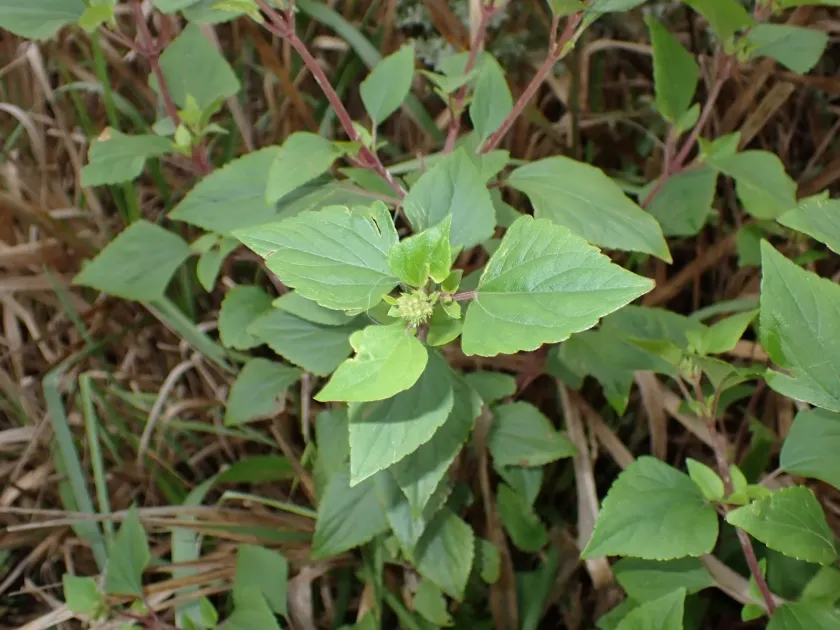
The plant features upright stems that often display a reddish tinge and are covered in glandular hairs, which make the plant feel sticky to the touch.
Leaves are arranged oppositely and have a triangular-ovate shape with serrated margins, which is a key diagnostic feature for field identification.
Flowers are arranged in small white clusters (flower heads) that group together into terminal corymbs, blooming typically from late summer through autumn.
The root system is vigorous and rhizomatous, allowing the plant to regenerate easily from small fragments left in the soil after mechanical disturbance.
Where it grows
Ageratina adenophora thrives in moist, sunny environments, often colonizing disturbed sites such as roadsides, abandoned fields, and forest clearings.
In regions where it has naturalized, it frequently invades pastures and grasslands, outcompeting native forage species and reducing agricultural output.
The plant is highly adaptable and can grow in various soil types, provided there is sufficient moisture, allowing it to form dense, impassable thickets.
In agricultural settings, it is a significant nuisance in orchards and plantation crops where it can quickly establish if fields are not properly maintained.
Its prolific seed production and wind-dispersal mechanism facilitate the rapid spread of the weed across wide areas and diverse ecosystems.
Harm it causes
The primary impact of Crofton weed is its aggressive competition with crops for nutrients, sunlight, and moisture, leading to reduced yields and plant vigor.
It is toxic to various types of livestock, causing severe health conditions such as respiratory failure and "tremors" if ingested, which limits grazing land use.
Dense thickets of this weed impede farm operations, making manual and mechanical field management significantly more difficult and expensive.
As an invasive species, it suppresses local biodiversity by creating monoculture stands that displace native flora and reduce the habitat quality for local fauna.
The toxins present in the plant remain potent even after the plant is dried, posing a risk when contaminated hay or fodder is fed to farm animals.
How to control
Cultural control methods involve frequent mowing or hand-pulling before the plants set seed, which is crucial to preventing long-term soil seed bank buildup.
Deep cultivation and soil turning are effective in uprooting the rhizomes and preventing regrowth, provided it is done before the plant reaches maturity.
Chemical control options include the use of selective systemic herbicides applied during the early growth stages of the plant to achieve maximum absorption.
- Application of glyphosate-based herbicides for non-selective control.
- Use of hormonal herbicides to target broad-leaved perennial weeds.
- Monitoring of boundary areas and buffer zones to detect early invasions.
Integrated weed management, combining soil management with appropriate herbicide application, is the most successful approach to reclaiming infested areas.
Taxonomy
- Latin name
- Ageratina adenophora
- Family
- Сложноцветные (астровые)
- EPPO code
- EUPAD