
Oxystelma esculentum
Oxystelma esculentum
Description
How to tell it apart
Oxystelma esculentum is a perennial climbing herb belonging to the Apocynaceae family. It is known for its aggressive growth habit, often behaving as a vine that wraps around stems of surrounding vegetation.
The plant features slender, flexible stems that can reach significant lengths. Its leaves are oppositely arranged, typically lanceolate or linear in shape, which serves as a primary vegetative diagnostic characteristic.
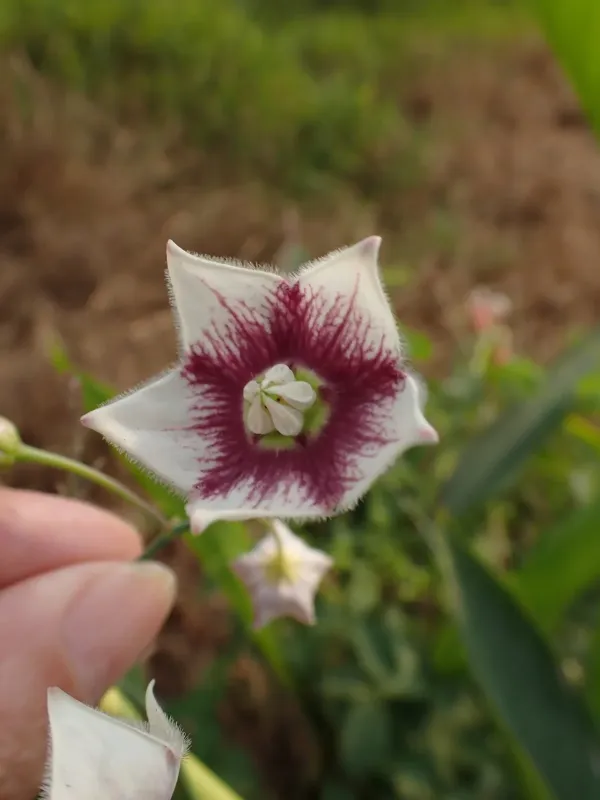
The flowers are distinctively shaped like a funnel or a wide bell, colored white or pinkish with prominent purple veins. These flowers grow in clusters, making the plant easily recognizable during the blooming season.
The fruit of the plant is an elongated follicle that splits open upon maturity. Each seed is attached to a tuft of silky hairs, facilitating efficient dispersal by wind currents over long distances.
The underground structure is characterized by a strong root system capable of vegetative regeneration. This ability to sprout from root fragments makes it highly persistent and difficult to eradicate from cultivated fields.
Where it grows
Oxystelma esculentum is native to tropical and subtropical regions of Asia. It thrives in humid environments, frequently colonizing riverbanks, irrigation canals, and marshy lands where water is consistently available.
In agricultural settings, it is a significant weed in rice paddies, sugarcane fields, and various vegetable crops. It favors fertile soils and can quickly dominate areas that lack vigorous competitive crops.
The plant is often found on fallow lands, field edges, and abandoned ditches, which serve as reservoirs for infestation. Its seeds are easily transported into production fields via water movement during irrigation or rainfall.
High adaptability allows the plant to survive in varied soil conditions, including those prone to periodic flooding. This resilience makes it a problematic species in regions where intensive agricultural practices are combined with high rainfall.
The spread of this weed is often exacerbated by human activity, particularly the movement of farm machinery that can transport root segments or seeds from infested zones to clean agricultural areas.
Harm it causes
The primary damage caused by Oxystelma esculentum is the intense competition for resources such as sunlight, nutrients, and water. By climbing over crops, it smothers the host plants and prevents adequate photosynthesis.
Severe infestation often leads to lodging, where the weight of the climbing weed causes the crop to collapse. This significantly complicates manual and mechanical harvesting, leading to substantial yield losses.
The dense foliage of this weed can create a microclimate conducive to fungal pathogens. By trapping moisture within the crop canopy, it increases the incidence of rot and other leaf diseases in the cultivated plants.
It can also act as an alternative host for various pests and viral diseases that transmit to economic crops. This creates an additional layer of phytosanitary risk, necessitating extra inputs for pest management.
When present in forage or pasture, Oxystelma esculentum may pose toxicity risks to livestock. Consumption of fresh plant material can be harmful, making it a liability in integrated crop-livestock systems.
How to control
Cultural control strategies focus on deep plowing, which helps in exposing the root system to the sun, thereby desiccating the rhizomes. Regular mechanical weeding in early development stages is crucial to limit spread.
Crop rotation incorporating competitive cover crops can suppress the growth of Oxystelma. Maintaining a dense canopy helps prevent the weed from establishing itself effectively during the growing season.
Chemical control typically involves the application of systemic herbicides applied to the foliage. These agents must be capable of translocating to the roots to effectively kill the perennial underground organs.
Integrated management is essential, combining herbicide applications with physical destruction of root masses. Timely intervention before the plant enters the reproductive phase is critical to prevent seed production.
- Regular field scouting to identify and treat early infestations.
- Hand-pulling of weeds with careful extraction of the entire root system.
- Sanitation of agricultural equipment to prevent seed and rhizome transport.
- Strict adherence to quarantine and land management protocols.
Taxonomy
- Latin name
- Oxystelma esculentum
- Family
- Кутровые
- EPPO code
- OYSES