
Echites umbellata
Echites umbellata
Description
How to tell it apart
Echites umbellata, commonly known as devil's potato or rubber vine, is a perennial flowering vine belonging to the Apocynaceae family.
It is characterized by woody, twinning stems that can grow quite long, allowing the plant to climb aggressively over vegetation and fences.
The leaves are opposite, entire, and have a thick, leathery texture. They are typically oval or elliptical in shape with a sharp apex.
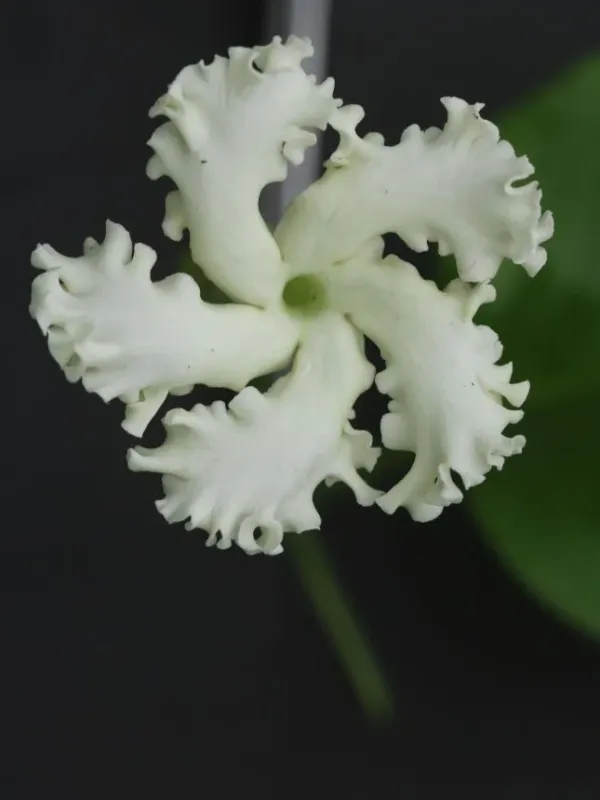
The inflorescences are umbel-like, featuring white or cream-colored, funnel-shaped flowers that appear throughout the growing season.
Like many members of the dogbane family, the plant secretes a milky white sap that is considered toxic if ingested by humans or animals.
Where it grows
This species is native to the Caribbean, Florida, and other tropical and subtropical regions where warm climates support year-round growth.
It thrives in disturbed areas, thickets, coastal dunes, and edges of tropical forests, often colonizing abandoned land or poorly maintained agricultural plots.
Echites umbellata is highly adaptable to sandy, well-draining soils and can tolerate a certain degree of salinity near coastal agricultural zones.
The plant spreads through wind-dispersed seeds, which allows it to quickly colonize adjacent fields and orchards if not properly controlled.
In agricultural settings, it frequently emerges along irrigation canals and field borders, moving into crop zones as it searches for structural support.
Harm it causes
The primary damage is caused by the vine's climbing habit, which smothers smaller plants and puts physical stress on larger shrubs and orchard trees.
By competing for sunlight, water, and nutrients, the weed significantly reduces the vigor and yields of cultivated crops in infested areas.
The milky sap makes the plant unpalatable and potentially toxic to livestock, creating safety hazards for pastoral farmers and cattle owners.
Dense thickets of Echites create microclimates that attract agricultural pests and diseases, which can subsequently spread to the main crop.
The physical presence of the vine complicates harvesting and maintenance tasks, increasing labor costs for farm management and operational upkeep.
How to control
Manual control involves uprooting the plant and ensuring the removal of the root crown, as stems left in the soil can potentially resprout.
Regular mowing or cutting of the vines prevents the plant from reaching its flowering stage and producing viable seeds for further spread.
Chemical intervention often requires the application of systemic herbicides to cut stumps, which ensures the active ingredient reaches the root system.
Cultural practices, such as maintaining cover crops or using mulch, can suppress seed germination and limit the initial establishment of the vine.
- Monitor fields frequently for signs of vine germination.
- Implement rigorous hand-weeding programs in orchards.
- Apply professional-grade herbicides to target established rootstocks.
- Maintain clear field boundaries to prevent encroachment.
Taxonomy
- Latin name
- Echites umbellata
- Family
- Кутровые
- EPPO code
- ECJUM