
Green antelopehorn
Asclepias viridiflora
Description
How to tell it apart
Green antelopehorn (Asclepias viridiflora) is a member of the Apocynaceae family. It is a perennial herbaceous plant with an extensive root system that allows for both sexual and vegetative propagation.
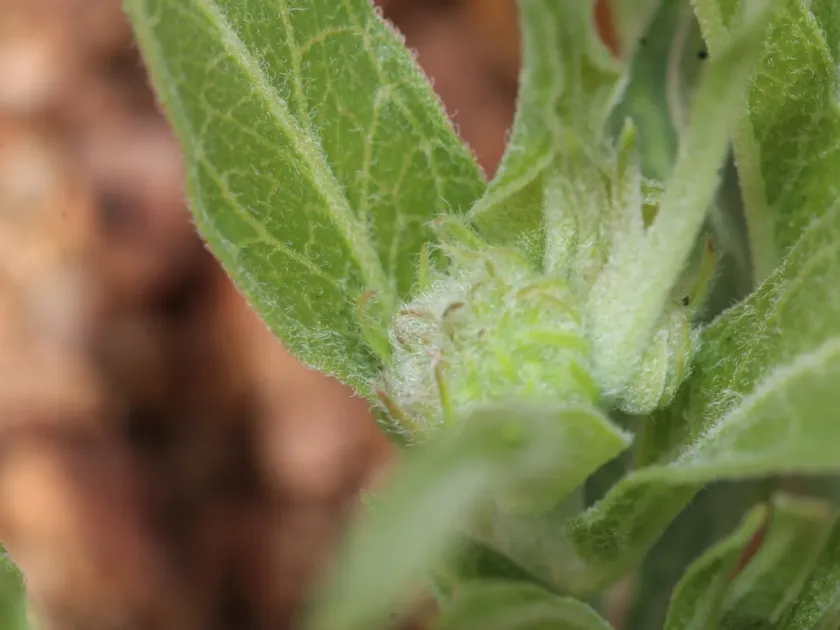
The plant is identified by its distinctive greenish flowers, which differentiate it from other common milkweed species. The leaves are opposite or alternate, lanceolate in shape, and feature prominent veining.
The stem is erect and covered in soft pubescence. When damaged, the plant releases a milky sap containing toxic alkaloids and cardiac glycosides, rendering it hazardous to livestock.
Seeds are equipped with tufts of silky hairs, or 'parachutes,' which facilitate wide-scale dispersal by wind across agricultural landscapes.
Biologically, it is a resilient weed that quickly adapts to diverse soil and climate conditions, successfully outcompeting native vegetation in both wild and cultivated settings.
Where it grows
In its natural habitat, green antelopehorn favors open areas such as prairies, dry slopes, roadsides, and disturbed ground where sunlight is abundant.
In agricultural practice, the weed poses a significant threat to row crops, small grains, as well as pasture and hay fields where it encroaches on forage production.
The plant exhibits high drought tolerance, often colonizing sandy or sandy-loam soils where other competitive species may fail to thrive.
Due to its high regenerative capacity from root buds, it rapidly colonizes fallow fields if primary tillage operations are not deep or frequent enough.
The persistent presence of this weed on field margins provides a continuous seed bank, facilitating its encroachment into actively cropped areas.
Harm it causes
The primary agricultural impact of green antelopehorn is its aggressive root system, which drains soil moisture and nutrients, severely suppressing crop growth.
Due to the toxic milky sap, the inclusion of green antelopehorn in hay or forage represents a major animal health risk, potentially causing severe poisoning in livestock.
The weed acts as a strong competitor for light, particularly during the early growing season when its rapid emergence can shade out developing crop seedlings.
High densities of this weed complicate mechanized harvesting due to the tough, fibrous nature of the stems, which can clog or damage harvesting equipment.
Additionally, the plant can serve as an alternative host for various viral and fungal pathogens, which may later spread to healthy field crops.
How to control
Mechanical control strategies involve systematic deep tillage, designed to sever and deplete the energy reserves of the perennial root system.
Timely mowing before the onset of flowering is essential to prevent seed set and limit the further spread of the weed across fields.
Chemical control is often difficult because the leaf surface is covered with dense hairs and a waxy cuticle, which impedes the absorption of systemic herbicides.
Glyphosate-based herbicides are generally the most effective choice, provided they are applied during periods of peak vegetative growth for maximum translocation.
In selective crop environments, integration of crop rotation with effective soil-applied herbicides is necessary to suppress emergence from the seed bank.
Taxonomy
- Latin name
- Asclepias viridiflora
- Family
- Кутровые
- EPPO code
- ASCVI