
Butterfly weed
Asclepias tuberosa
Description
How to tell it apart
Butterfly weed (Asclepias tuberosa) is a perennial member of the Apocynaceae family. It features upright, hairy stems that typically reach heights of 30 to 60 cm.
The leaves are alternate, lanceolate, and pointed. Their underside is covered with soft, white hairs, providing a distinctive contrast to the smooth upper surface.
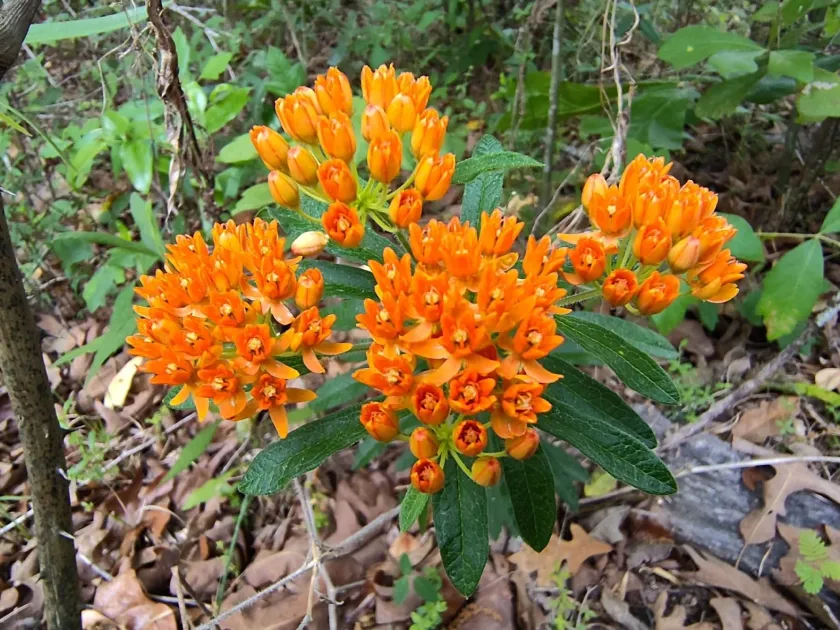
During the flowering period, the plant produces clusters of vibrant orange to red flowers in terminal umbels, making it easily recognizable in the field.
Its root system consists of thick, deep-reaching tubers that store energy, allowing the plant to survive harsh environmental conditions and rapid regrowth.
Like many milkweeds, it produces a milky latex sap when broken, which acts as a deterrent to herbivores and contains toxic glycosides.
Where it grows
This species thrives in dry, well-drained soils, often colonizing open fields, roadsides, and meadows where competition from other vegetation is minimal.
In agricultural settings, it is commonly found on neglected land, pasture margins, and along the perimeters of cultivated fields where it spreads over time.
It prefers sunny environments and can tolerate significant periods of drought, which gives it a competitive advantage over many common crops.
Seed dispersal is facilitated by the wind, allowing the plant to colonize distant areas efficiently after the pods split open in the autumn.
It adapts well to poor soil conditions, meaning it can become a persistent problem in sandy or nutrient-deficient soils where other plants struggle.
Harm it causes
The primary agricultural impact of this weed is its ability to compete aggressively for soil moisture and nutrients, severely stunting nearby crop development.
Because of its deep root system, it can effectively "rob" resources from crops, leading to significant yield losses in areas with high infestation rates.
The plant is known to be toxic to livestock; when present in forage or hay, it poses a severe poisoning risk that can affect cattle and horses.
It acts as a host for various aphids and insect pests, which may migrate to neighboring crops and cause secondary damage through virus transmission.
Infestations complicate field management and harvesting operations, often requiring specialized equipment or repeated interventions to reduce the population.
How to control
Mechanical control involves deep primary tillage to sever and expose the root system, which helps deplete the stored energy in the tubers.
Manual removal is effective for small populations but requires the complete extraction of the taproot to prevent resprouting from broken segments.
Chemical intervention with systemic herbicides during the active growth stage provides the best results, as the active ingredients are translocated to the roots.
Repeated mowing before seed production limits the spread of the weed but generally does not eradicate established perennial plants on its own.
- Integrating cover crops that canopy quickly can shade out young seedlings and reduce the establishment of new butterfly weed infestations.
Taxonomy
- Latin name
- Asclepias tuberosa
- Family
- Кутровые
- EPPO code
- ASCTU