
Common milkweed
Asclepias syriaca
Description
How to tell it apart
Common milkweed (Asclepias syriaca) is a perennial herbaceous plant belonging to the Apocynaceae family. It is known for its deep, extensive rhizome system that spreads rapidly underground.
The plant grows 1–2 meters tall with stout, unbranched stems covered in fine hairs. Leaves are large, opposite, and oblong, featuring a distinct velvet-like texture on the underside.
It produces clusters of fragrant, pinkish-purple flowers that are highly attractive to pollinators. The bloom period typically occurs in early to mid-summer.
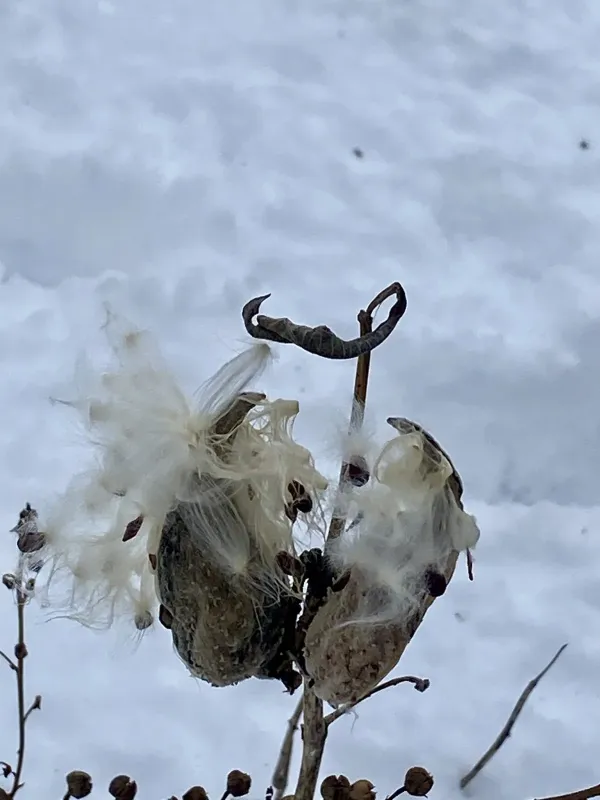
The fruit is a large, warty follicle pod that splits open to release seeds attached to silky white tufts, allowing them to be carried by the wind over long distances.
A milky, white latex sap is present throughout the plant. This substance is toxic to many animals and provides a natural defense mechanism against herbivores.
Where it grows
Common milkweed thrives in sunny environments with well-drained soils. It is commonly found in disturbed sites, roadsides, pastures, and along field edges.
In farming, it acts as a troublesome weed in row crops such as corn, soybeans, and sunflowers, where it takes advantage of open spaces between plants.
The weed is particularly aggressive in fields with reduced or no-tillage practices, which allows its perennial root system to establish and expand undisturbed.
Once established, common milkweed forms dense colonies that can crowd out native vegetation and drastically reduce the growth of agricultural crops.
It displays remarkable environmental adaptability, allowing it to survive in various soil types, ranging from sandy loams to heavier clay-based landscapes.
Harm it causes
The primary damage caused by milkweed is severe competition for essential resources including water, soil nutrients, and sunlight, directly impacting crop yields.
The dense foliage of large colonies shades out younger crop plants, suppressing their development and forcing them to compete for survival in stunted conditions.
Because of the toxic latex, the plant is a nuisance in livestock grazing areas and can contaminate hay, making it unsuitable or potentially dangerous for animal feed.
Its tall, fibrous stems can interfere with harvesting equipment, increasing mechanical wear and causing downtime in agricultural operations during peak seasons.
Common milkweed can host various viruses and pathogens that may spread to valuable crop plants, compromising overall plant health and product marketability.
How to control
Managing common milkweed requires a multi-year strategy focused on exhausting the energy stored in the rhizome system through repeated physical and chemical interventions.
Cultural methods include regular tillage and cultivation, which disrupt root development. However, these methods must be performed consistently to be effective.
Chemical control involving systemic herbicides is essential for reaching the root system. Applications are most effective during the vegetative growth phase before flowering.
In row crops, selective herbicides combined with integrated pest management (IPM) practices can suppress milkweed populations without damaging the primary crop.
- Systematic manual removal for small, initial infestations.
- Use of crop rotation to create unfavorable conditions for root expansion.
- Application of post-harvest systemic herbicides on vegetative regrowth.
- Strategic mowing to prevent seed production and dispersal.
Taxonomy
- Latin name
- Asclepias syriaca
- Family
- Кутровые
- EPPO code
- ASCSY