
Dwarf milkweed
Asclepias pumila
Description
How to tell it apart
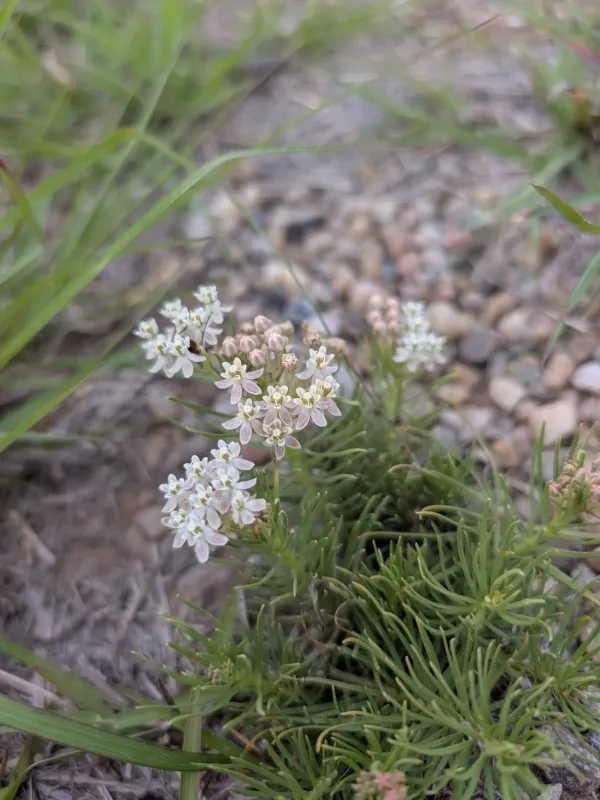
Dwarf milkweed (Asclepias pumila) is a perennial herbaceous plant from the Apocynaceae family. It is recognized by its short stature, typically reaching only 10 to 30 centimeters in height, and slender, linear leaves arranged in whorls around the stem.
The plant produces small, white or greenish-cream flowers clustered in umbels. It is characterized by the presence of a milky sap throughout its tissues, which is a distinguishing feature of the Asclepias genus.
The root system consists of a deep-seated rhizome structure that allows the plant to survive in poor, dry, and rocky soil conditions. This makes it a persistent competitor in various types of environments.
Seed dispersal is facilitated by wind, as the seeds are equipped with silky tufts called comae. These allow the plant to colonize new areas, including agricultural fields and overgrazed pastures, quite effectively.
Biological resilience is a key factor for this weed, as it can propagate through both seeds and vegetative budding from its robust underground root network, complicating traditional removal efforts.
Where it grows
Native to the plains of North America, dwarf milkweed thrives in dry prairies, sandy soils, and disturbed open sites. It is frequently found in range lands, roadsides, and abandoned fields where the soil is often nutrient-poor.
Harm it causes
Dwarf milkweed is known for its toxicity to livestock due to the presence of cardiac glycosides. Grazing animals may suffer from poisoning if they consume the plant, which often remains avoided by selective grazers.
In agricultural settings, it acts as a significant competitor for soil moisture. Because of its deep roots, it is particularly problematic in arid regions where it can outcompete crops for limited water resources during the growing season.
How to control
Control of dwarf milkweed is challenging. Cultural practices such as intensive grazing management or periodic mowing can help, but they are rarely sufficient to eliminate the deep-rooted infestation completely.
Chemical control using systemic herbicides is the most effective approach. Applications should be timed during the plant's active growth stage to ensure the chemical is translocated down into the root system to kill the plant.
Continuous monitoring and early detection are essential to prevent the spread of the weed. Integrating chemical treatments with proper soil management and competitive crop planting creates a more comprehensive and sustainable control program.
Taxonomy
- Latin name
- Asclepias pumila
- Family
- Кутровые
- EPPO code
- ASCPM