
Oval-leaf milkweed
Asclepias ovalifolia
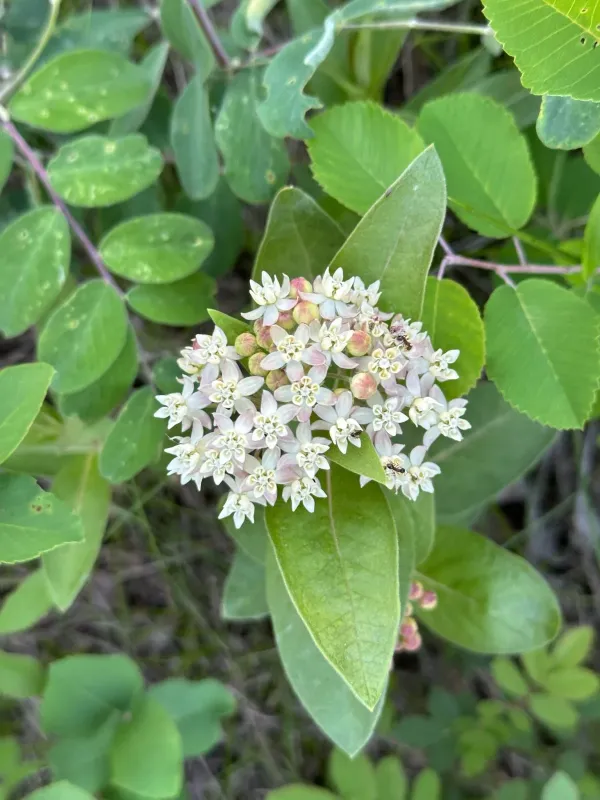
Description
How to tell it apart
Oval-leaf milkweed (Asclepias ovalifolia) is a perennial herbaceous weed belonging to the Apocynaceae family. It is characterized by a strong root system and a persistent growth habit that makes it difficult to eradicate from agricultural fields.
The plant features upright stems that typically reach heights of 30 to 60 centimeters. Its leaves are oppositely arranged and oval-shaped, often covered with fine hairs, which serves as a key morphological marker for field identification.
Its flowers are arranged in umbels, displaying a white to greenish hue. After flowering, the plant produces distinctive follicles (pods) containing numerous seeds attached to tufts of white, silky hair that allow for wind-assisted dispersal.
The root system is the most complex part of the plant, consisting of a deep, woody rhizome capable of surviving winter dormancy and regenerating after partial mechanical destruction of the aerial parts.
Like many species in the milkweed family, it contains milky latex, which acts as a chemical defense mechanism, making it relatively resistant to many common herbivores and providing some protection against environmental stressors.
Where it grows
Oval-leaf milkweed primarily inhabits open, sunny areas, including grasslands, forest edges, and roadsides. It is an opportunistic species that readily colonizes disturbed soils, such as fallow fields or construction sites.
In modern agriculture, this weed poses a threat to row crops, small grains, and pastures. Its ability to spread via underground runners allows it to create dense patches that quickly expand into productive cropland.
The plant shows a preference for well-drained, sandy or light-textured soils where its deep taproot can easily penetrate deeper soil horizons. This depth provides it with a competitive advantage during dry spells.
Human activity, particularly the movement of farm machinery, is a primary driver for its spread between plots. Seeds can be carried by wind over considerable distances, allowing it to infest new areas effectively.
While it thrives in sunny conditions, it can also tolerate partial shade, allowing it to persist in the margins of fields where crop competition might be slightly lower.
Harm it causes
The main harm caused by Oval-leaf milkweed is its high competitive potential for resources. It depletes soil moisture and nutrients significantly more than many annual weeds, directly affecting the yield of adjacent crops.
Shading is another critical issue, as the plant grows rapidly and can overtop young crop seedlings, depriving them of the sunlight needed for optimal photosynthesis and development.
The presence of this weed in pasture lands is a serious health concern for livestock. Being a member of the milkweed family, it contains cardiac glycosides, which are toxic if ingested by cattle, sheep, or horses.
Dense colonies of the weed interfere with agricultural operations, particularly harvesting. The thick stems can clog machinery, leading to downtime, increased repair costs, and higher harvest losses.
Additionally, the plant can exert allelopathic effects through its root system, potentially altering the soil microbiota and creating a less favorable environment for the germination and growth of desirable crop species.
How to control
Controlling Oval-leaf milkweed requires an integrated approach. Simple mechanical removal of the stems is often insufficient because the deep-seated root system can easily send up new shoots shortly after cutting.
Chemical control involving systemic herbicides is generally the most effective strategy. Applications are recommended during the active growth stage, prior to blooming, to ensure the herbicide is translocated into the deep roots.
Cultivation should be deep and frequent to starve the roots of energy, although this must be balanced against the risk of fragmenting the roots and potentially spreading the weed further if not managed correctly.
In fallow areas or non-crop margins, non-selective systemic herbicides (like glyphosate) are highly effective when applied thoroughly to the foliage of the weed during its peak vegetative phase.
- Cultural: Implement dense crop rotations to increase competition.
- Mechanical: Use deep plowing to disturb and dry out root systems.
- Chemical: Apply systemic herbicides at the recommended growth stage to ensure root kill.
Taxonomy
- Latin name
- Asclepias ovalifolia
- Family
- Кутровые
- EPPO code
- ASCOV