
Labriform milkweed
Asclepias labriformis
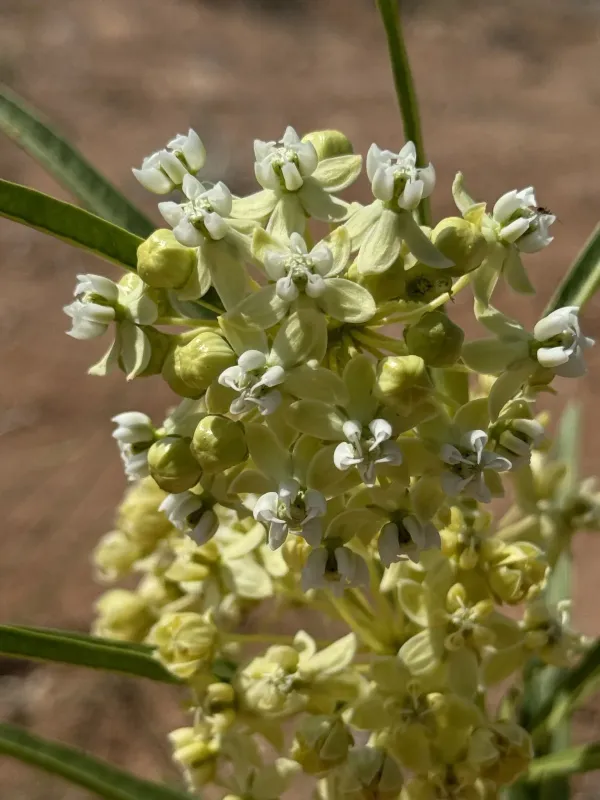
Description
How to tell it apart
Labriform milkweed (Asclepias labriformis) belongs to the Apocynaceae family. It is a perennial herbaceous plant known for its resilient root system and potential for vegetative propagation.
The plant features upright stems covered in narrow, lanceolate leaves arranged in opposite pairs. A signature characteristic of this species is the presence of white milky sap throughout its tissue.
Its flowers are arranged in umbel-like clusters and possess a unique lip-like shape, which serves as the primary identification feature for the species name.
The fruit is a follicle filled with numerous seeds, each equipped with a silken coma (tuft of hairs). This mechanism allows seeds to travel long distances via wind currents.
This milkweed species is biologically adapted to harsh environments and possesses significant drought tolerance, allowing it to survive in depleted soils where other plants fail.
Where it grows
Native to the southwestern regions of North America, Labriform milkweed thrives in dry, sandy soils, open ranges, and along road verges.
In agricultural settings, it becomes a problematic weed in pastures and rangelands, where it displaces beneficial forage species and presents risks to grazing livestock.
When established in crop fields, the weed competes aggressively for moisture and essential soil nutrients, often invading from the margins of the fields inward.
The spread is frequently facilitated by human activities, including the movement of contaminated farm machinery and the use of impure seed lots.
As an aggressive colonizer, it can quickly dominate disturbed areas, turning productive land into dense, unmanageable thickets if left unchecked.
Harm it causes
The primary hazard of Labriform milkweed is its toxicity. The plant contains cardiac glycosides, which can be fatal to cattle, sheep, and other livestock upon ingestion.
Beyond its poisonous nature, the weed acts as a strong competitor. Its extensive root system reaches deep into the soil, depleting resources that are vital for the growth of cereal and row crops.
The presence of this weed interferes with mechanized harvesting, as its tough, fibrous stems can clog machinery and reduce the efficiency of agricultural operations.
Through vigorous vegetative spread, it creates dense patches that completely suppress surrounding crop plants, leading to significant yield losses in affected areas.
Furthermore, it serves as an alternative host for various insect pests and plant viruses, creating a continuous cycle of infection that threatens crop health throughout the season.
How to control
Cultural control methods primarily involve deep tillage and mechanical cultivation, which are designed to damage and exhaust the energy reserves stored in the plant's root system.
Preventive measures include early mowing or cutting of the stems before the plant enters the flowering phase to inhibit seed production and dispersal.
Chemical control is often necessary and involves the application of systemic herbicides. Products containing glyphosate are generally effective at translocating into the roots to kill the entire plant.
- deep plowing to disrupt root growth;
- timely mowing of field edges and roadsides;
- using certified weed-free seed for planting;
- spot treatment with herbicides on early infestations;
- regular monitoring and scouting of fields.
An integrated weed management strategy, combining mechanical disruption and targeted chemical interventions, provides the best chance of suppressing the Labriform milkweed population.
Taxonomy
- Latin name
- Asclepias labriformis
- Family
- Кутровые
- EPPO code
- ASCLA