
Swamp milkweed
Asclepias incarnata
Description
How to tell it apart
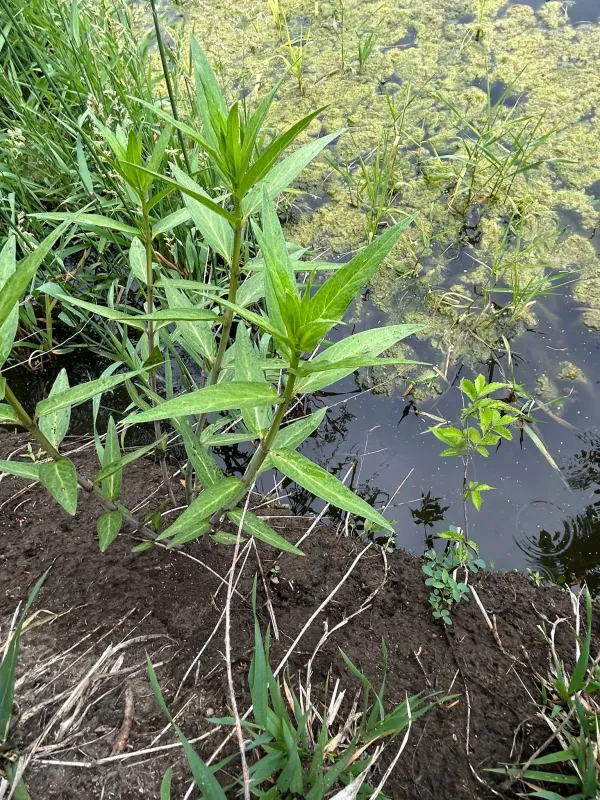
Swamp milkweed (Asclepias incarnata) is a perennial herbaceous plant belonging to the Apocynaceae family. It is characterized by sturdy, upright stems that can reach heights of up to 1.2 meters.
The leaves are lanceolate, arranged in opposite pairs, and have pointed tips. A key diagnostic feature is the milky latex sap that exudes from the stems and leaves when they are broken or damaged.
Flowers are arranged in showy umbels and typically exhibit a vibrant pink to purple hue. Blooming occurs during mid-summer, followed by the development of elongated seed pods containing seeds with silky hairs.
This species reproduces aggressively through a network of branching rhizomes. Under favorable moist conditions, it can spread quickly to form dense, impenetrable colonies in open fields or ditches.
The seeds are equipped with tufts of hair, allowing for easy wind dispersal over long distances. This adaptation makes the plant highly effective at colonizing new, suitable agricultural environments.
Where it grows
Swamp milkweed thrives in wetland environments. It is naturally found along riverbanks, marshes, floodplains, and near irrigation or drainage channels where soil moisture remains consistently high.
In agricultural contexts, it becomes a weed in fields adjacent to water bodies or in poorly drained areas. It often invades irrigated fields through water transport systems, colonizing moist depressions.
The plant demonstrates a strong preference for damp, heavy soils such as silty clays. Such soil types are often found in low-lying parts of the landscape where excess water accumulates.
It poses a significant risk to drainage management, often clogging channels and reducing water flow efficiency. Its presence in these zones creates a reservoir for further spread into crop fields.
While it prefers wetlands, it can adapt to various moisture levels in the soil, allowing it to persist even during dry periods if the root system has established deep access to water.
Harm it causes
Swamp milkweed competes intensely with crops for vital resources, including sunlight, water, and soil nutrients. Due to its rapid growth, it can easily overtop and suppress surrounding crop plants.
The presence of cardiac glycosides in the milky sap makes the plant toxic to livestock. If harvested with hay, it can significantly reduce the safety and quality of animal feed stocks.
The dense rhizome system physically displaces roots of cultivated crops and can degrade soil structure over time, leading to significant yield losses in heavily infested parts of the field.
Mechanized farming operations are hampered by the physical presence of the plant. Its tough, fibrous stems can damage harvesting machinery and cause blockages in implements during cultivation.
Its high reproductive capacity means that once it establishes a foothold, it requires continuous and costly management efforts to prevent it from dominating larger agricultural sections.
How to control
Effective agrotechnical control relies on deep plowing with moldboard inversion to expose and desiccate rhizomes. Timely intervention before the plant matures is crucial to prevent seed dispersal.
Regular discing and cultivation during the growing season are essential to deplete the root system's energy reserves, weakening the plant until it eventually ceases to regenerate.
Chemical control can be difficult due to the waxy cuticle on the leaves. The use of specialized surfactants is necessary to ensure the herbicide penetrates the plant tissue effectively.
Systemic herbicides that translocate to the root system are the most effective. These should be applied during the active vegetative growth phase to maximize absorption and ensure deep root kill.
- Deep plowing to destroy rhizome networks.
- Use of herbicides paired with high-quality surfactants.
- Clearing of irrigation and drainage ditches.
- Mechanical mowing before the flowering stage.
Taxonomy
- Latin name
- Asclepias incarnata
- Family
- Кутровые
- EPPO code
- ASCIN