
Nyssanthes diffusa
Nyssanthes diffusa
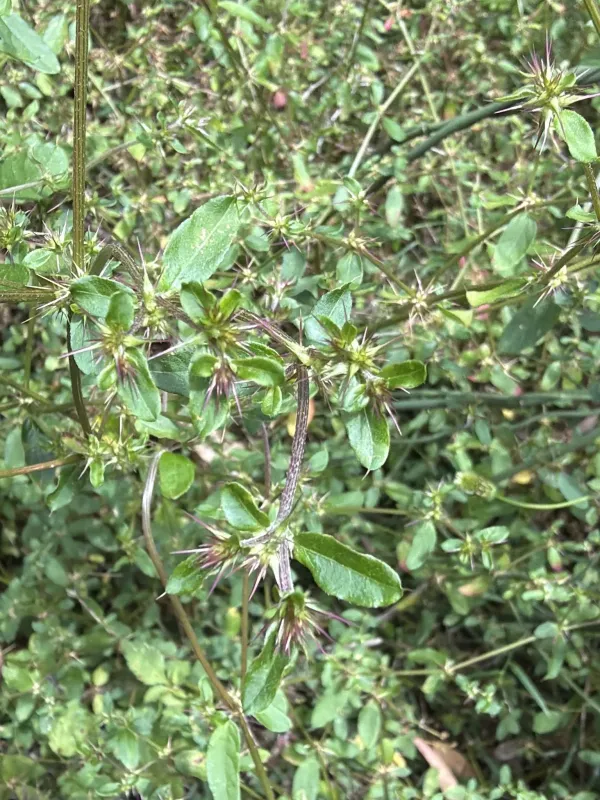
Description
How to tell it apart
Nyssanthes diffusa is a species belonging to the Amaranthaceae family. It is a distinct annual herbaceous weed characterized by a spreading or diffuse branching habit.
The stems of the plant are often prostrate or ascending, forming a dense canopy near the ground. Its leaves are alternate, simple, and typically lanceolate, which helps in field identification.
The flowers are arranged in small, dense, whitish or greyish spikes that are clustered at the tips of the branches. This structural layout supports prolific seed production.
The root system is primarily a deep taproot, which provides the plant with significant drought tolerance and competitive advantages in various field conditions.
As a warm-season annual, its lifecycle is synchronized with many major crops, starting with germination in early spring as soil temperatures rise.
Where it grows
Nyssanthes diffusa is commonly found in disturbed habitats, roadsides, waste areas, and poorly managed cultivated fields across diverse regions.
In agricultural settings, it frequently invades rows of grain crops and broad-leaved row crops like soybeans or corn, where space and light are abundant during the early stages of growth.
The weed exhibits high adaptability to various soil types, ranging from sandy loams to heavier clay soils, making it a widespread problem in many farming systems.
It thrives particularly well in areas with high soil fertility and enough moisture to support rapid biomass accumulation during its active vegetative growth phase.
Field margins and areas with irregular irrigation or uneven crop stand density are the primary hotspots for the establishment and proliferation of this species.
Harm it causes
The primary damage caused by Nyssanthes diffusa is resource competition, as the weed rapidly uptakes nitrogen and water, starving the nearby crops of essential nutrients.
By spreading its stems across the soil surface, the weed shades out the developing crop, which leads to stunted growth and reduced yields in corn and soybean production.
The weed acts as an alternative host for several pests and pathogens, complicating the plant protection strategy and often increasing the total cost of farm chemicals.
During harvest, the high biomass and seed production of the plant can significantly interfere with machinery operation, leading to downtime and increased drying costs for contaminated grain.
Persistent infestations are difficult to manage because of the long-term viability of the seeds deposited in the soil, which can lead to recurring weed pressure for multiple seasons.
How to control
Agrotechnical management starts with mechanical cultivation between rows to disrupt the weed's root system before it reaches the reproductive stage.
Implementing a diverse crop rotation is a crucial strategy to break the lifecycle of the weed, preventing the buildup of large seed reserves in the soil over time.
Chemical control usually involves the application of post-emergence selective herbicides at the early leaf stage of the weed when it is most susceptible to active agents.
In cases of severe infestation, pre-plant burndown applications with broad-spectrum herbicides are necessary to ensure a clean start for the primary crop.
Regular monitoring of field margins and buffer strips is recommended to remove escaped plants before they produce mature seeds and contribute to the permanent seed bank.
Taxonomy
- Latin name
- Nyssanthes diffusa
- Family
- Амарантовые
- EPPO code
- NYTDI