
Florida amaranth
Froelichia floridana
Description
How to tell it apart
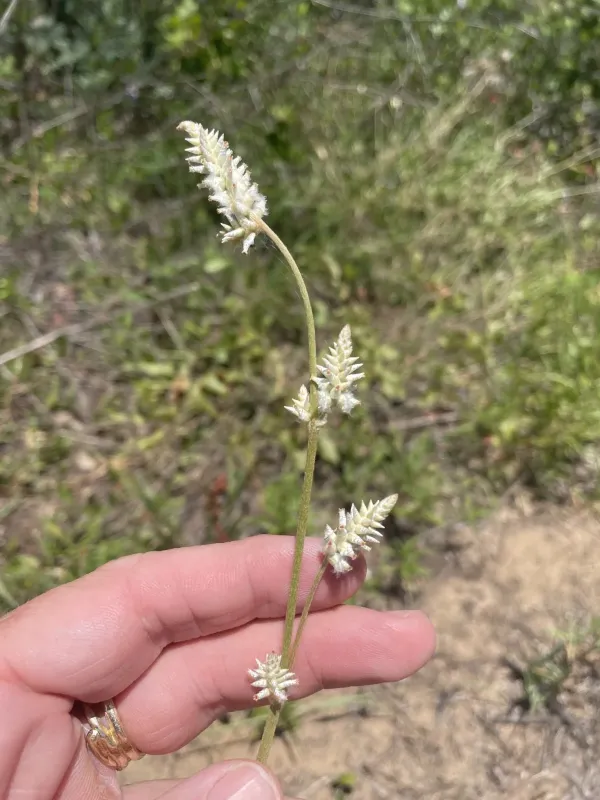
Florida amaranth (Froelichia floridana) is an annual herbaceous weed belonging to the Amaranthaceae family. It is easily identified by its erect, branching stems that can grow up to one meter in height.
The leaves are alternate, narrow, and lanceolate, typically covered in dense, silvery-white hairs. This pubescence is a key diagnostic feature that helps the plant retain moisture in dry environments.
The flowers are arranged in small, spike-like inflorescences. They are protected by woolly bracts, which give the spikes a soft, fuzzy texture that distinguishes them from other common pigweed species.
The plant features a deep taproot, which allows it to establish firmly even in sandy or nutrient-poor soils. This root structure makes the weed notably resilient during dry spells.
Seeds are small and encased within a persistent perianth, which aids in their dispersal by wind and movement across fields during harvesting operations.
Where it grows
Native to North America, Florida amaranth thrives in sandy soils, dry prairies, and disturbed areas. In agricultural settings, it is commonly found in row crops such as soybeans, corn, and cotton.
The weed frequently invades field edges, fence lines, and areas with minimal soil disturbance. It adapts well to no-till farming systems where seeds are not buried deep in the soil profile.
It prefers high-light environments and flourishes in fields where the crop canopy is not fully closed. Early season competition is critical for this species to gain a foothold in agricultural fields.
Because of its affinity for sandy, well-drained soils, it is particularly problematic in coastal plains and regions with arid climates where other weeds might struggle.
Human activity, including the movement of contaminated machinery between fields, is the primary vector for the dispersal of seeds into clean, previously uninfested cropland.
Harm it causes
Florida amaranth competes aggressively with crops for essential soil nutrients and water. In fields with heavy infestations, it can significantly reduce crop growth rates and yield potential.
By shading the ground and competing for space, the weed reduces the light available to young crop plants, which often leads to stunted growth and delays in crop development.
The plant acts as an alternative host for various agricultural pests and viral diseases, which can spread to commercial crops, increasing the need for additional pesticide applications.
During harvest, dense patches of Florida amaranth can clog machinery, leading to increased wear and tear on harvesting equipment and potential down-time during critical harvest windows.
Large infestations deplete soil moisture levels, which can be devastating for crops during dry mid-summer periods when water availability is the limiting factor for yield.
How to control
Managing Florida amaranth requires an integrated approach that combines mechanical tillage, cultural practices, and chemical herbicide programs to ensure effective long-term control.
Cultural methods, such as maintaining a dense crop canopy through proper planting populations, can help shade out young seedlings and prevent them from becoming established.
Chemical control programs often rely on pre-emergence herbicides to prevent germination and post-emergence applications to target actively growing plants. Using multiple modes of action is recommended.
- Regular mechanical cultivation in row crops.
- Applying herbicides at the correct plant growth stage.
- Sanitizing machinery to prevent the spread of seeds.
- Using cover crops to suppress seedling emergence.
Consistent field monitoring throughout the growing season is essential to detect early infestations and intervene before the weeds begin producing viable seed, thus preventing future problems.
Taxonomy
- Latin name
- Froelichia floridana
- Family
- Амарантовые
- EPPO code
- FROFL