
Dysphania pumilio
Dysphania pumilio
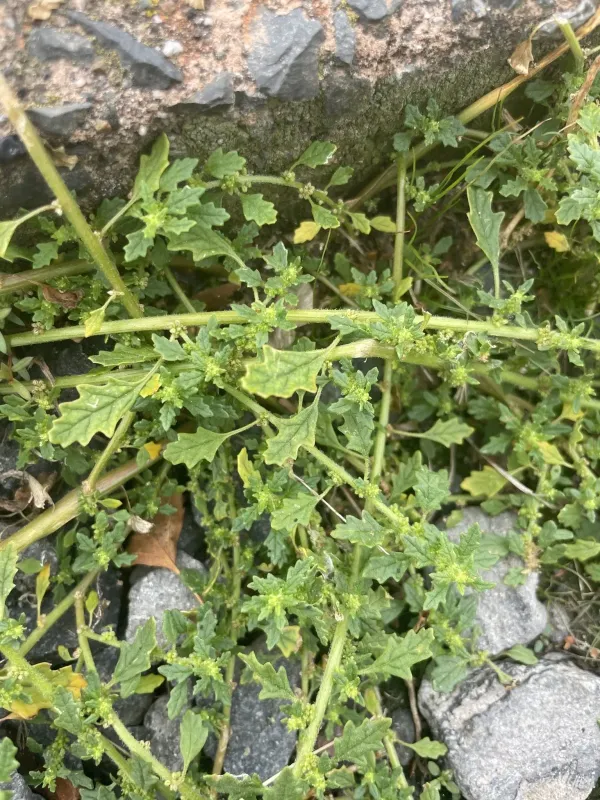
Description
How to tell it apart
Dysphania pumilio, commonly known as clammy goosefoot, is an annual herbaceous plant belonging to the Amaranthaceae family. The plant is characterized by a distinctive, aromatic scent caused by numerous glandular hairs covering its stems and leaves.
The stems are heavily branched, often prostrate or semi-erect, reaching heights between 5 and 30 centimeters. The leaves are oblong with serrated edges, covered in a powdery coating and glandular hairs that give them a yellowish-green appearance.
Its flowers are small, inconspicuous, and gathered into dense clusters situated in the leaf axils. The flowering period typically spans from early summer to early autumn, depending on local environmental factors and heat accumulation.
The root system is a well-developed taproot, which allows the plant to efficiently compete for soil moisture and nutrients, even in compacted soils. Reproduction is strictly by seed, which is produced in significant quantities.
Seeds are small, dark brown or black, and highly persistent. Once the plant sets seed, these can survive in the soil for several years, making it difficult to eradicate completely from heavily infested fields.
Where it grows
Dysphania pumilio prefers sunny, well-lit areas with sandy or loamy soil textures. It is commonly found in disturbed environments, including roadsides, construction sites, and neglected agricultural land.
In farming, it acts as a troublesome weed in row crops, particularly corn, sugar beets, and sunflowers. It frequently occupies space between rows during the early stages of crop development, competing for light and space.
The weed exhibits high tolerance to drought, allowing it to colonize fields during dry spells when other vegetation might struggle. It is often one of the first species to emerge on fallow ground after harvest.
Its prostrate growth habit can help it survive mechanical weeding efforts that target taller, more upright weeds. Consequently, it often remains in fields, setting seeds before the crop canopy fully closes.
It is easily spread across fields through farm machinery, wind, and water movement. This rapid dispersal capability makes it a persistent challenge for integrated weed management programs in various regions.
Harm it causes
The primary damage caused by D. pumilio is its intense competition for available soil moisture, which is critical during the crop establishment phase. This competition leads to reduced vigor and biomass in cultivated crops.
Large populations of this weed can create a dense mat on the ground, increasing local humidity and shading. This creates an environment conducive to the development of various soil-borne pathogens and fungal diseases.
The essential oils and chemical exudates produced by the plant may have allelopathic effects, potentially inhibiting the growth of neighboring crops and beneficial soil microorganisms, thus affecting soil fertility.
During harvest, high infestation levels can lead to contamination of the harvested grain. This increases cleaning costs and reduces the overall market quality and value of the agricultural output.
Additionally, the weed can act as a secondary host for several crop pests. By providing food and shelter, it allows these pests to thrive near crops, necessitating increased usage of insecticides and management resources.
How to control
Cultural control measures involve deep autumn tillage to bury seeds at depths where they cannot germinate effectively. Frequent inter-row cultivation during the growing season is also essential for control.
Implementing a diverse crop rotation is a highly effective strategy to break the weed's life cycle. Rotating crops that require different management practices helps to deplete the seed bank over time.
Chemical control focuses on applying selective herbicides. Post-emergence applications are most successful when performed while the weeds are in the early seedling stage (2 to 4 leaves).
Choosing the correct herbicide chemistry, such as those targeting broadleaf weeds, is crucial. Farmers should follow manufacturer guidelines regarding application rates and optimal weather conditions for the best results.
- Utilize certified clean seeds to prevent the introduction of weeds to the field.
- Clean equipment thoroughly after working in infested areas to stop seed dispersal.
- Manage fence lines and field perimeters to prevent seed sources from spreading into crop fields.
Taxonomy
- Latin name
- Dysphania pumilio
- Family
- Амарантовые
- EPPO code
- CHEPU