
Dysphania melanocarpa
Dysphania melanocarpa
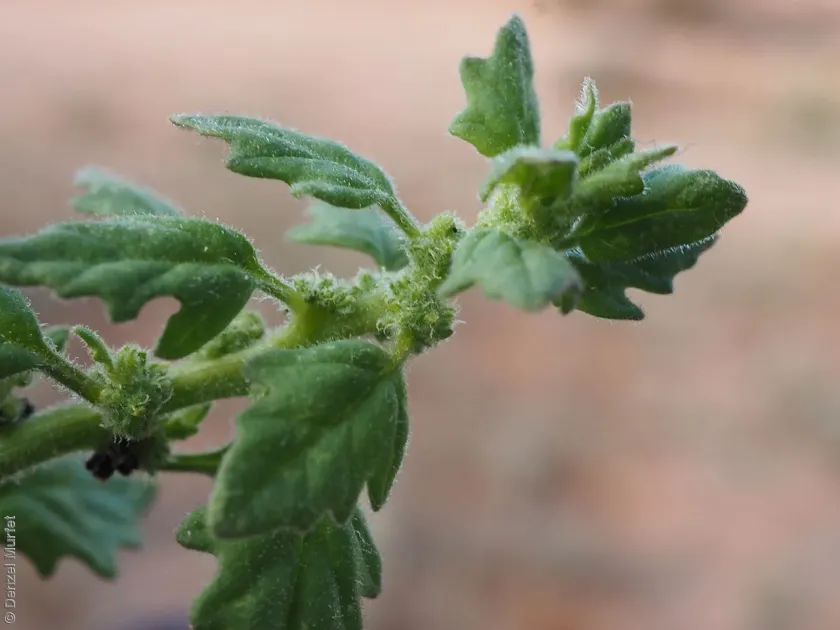
Description
How to tell it apart
Dysphania melanocarpa is an annual herbaceous plant belonging to the Amaranthaceae family, commonly recognized by its glandular hairs and distinct appearance.
The stems are typically erect or branched, characterized by a sticky, resinous texture due to the glandular hairs covering the surface of the plant.
Leaves are arranged alternately along the stem, featuring a lanceolate shape with slightly serrated or entire margins depending on the specific growth conditions.
The inflorescences consist of small clusters in the leaf axils, producing inconspicuous flowers that eventually turn into black, shiny, and highly persistent seeds.
The root system is generally taprooted and well-established, providing the plant with the ability to compete effectively for soil nutrients and moisture.
Where it grows
This weed is commonly found in disturbed sites, including waste grounds, roadsides, and agricultural areas where soil integrity has been compromised.
It frequently invades crop fields, particularly in row crops or vegetable systems where tillage practices create favorable conditions for weed germination.
Dysphania prefers areas with full sun exposure and well-drained soils, often thriving in patches where crop competition is relatively low or gaps exist.
It is capable of colonizing large areas rapidly, often appearing as a persistent opportunistic species in fields that are not properly maintained throughout the season.
The species is adaptable to various soil types and can be found in agricultural zones globally, often hitchhiking via machinery or contaminated seed lots.
Harm it causes
The primary damage caused by Dysphania melanocarpa involves severe nutrient and water competition, which significantly stunts the development of surrounding crops.
The presence of this weed complicates mechanical harvesting procedures, as the sticky resin and thick stems can clog machinery and lower the overall efficiency.
It serves as an alternative host for various agricultural pests and pathogens, facilitating the spread of diseases that can destroy valuable harvests.
Contamination of harvested grain with the dark seeds of this weed reduces product quality, potentially leading to market rejections or higher cleaning costs.
In high densities, the weed can dominate the field, reducing the sunlight available to crops and causing significant losses in total yield output.
How to control
Effective management requires a combination of mechanical cultivation, crop rotation, and the strategic application of herbicides to prevent seed bank build-up.
Mechanical tillage, specifically deep plowing followed by seedbed preparation, is crucial for disrupting the life cycle of the weed before it sets new seeds.
Chemical control depends on selecting appropriate herbicides effective against broadleaf species within the Amaranthaceae family, applied at the right growth stage.
- Timely row cultivation to uproot young seedlings.
- Monitoring field edges to prevent encroachment of the weed.
- Using herbicide regimes tailored to the crop-weed spectrum.
Integrated weed management should emphasize preventing the weed from flowering, as the high seed production capacity of this species makes it difficult to eradicate.
Taxonomy
- Latin name
- Dysphania melanocarpa
- Family
- Амарантовые
- EPPO code
- CHEME