
Dysphania glomulifera
Dysphania glomulifera
Description
How to tell it apart
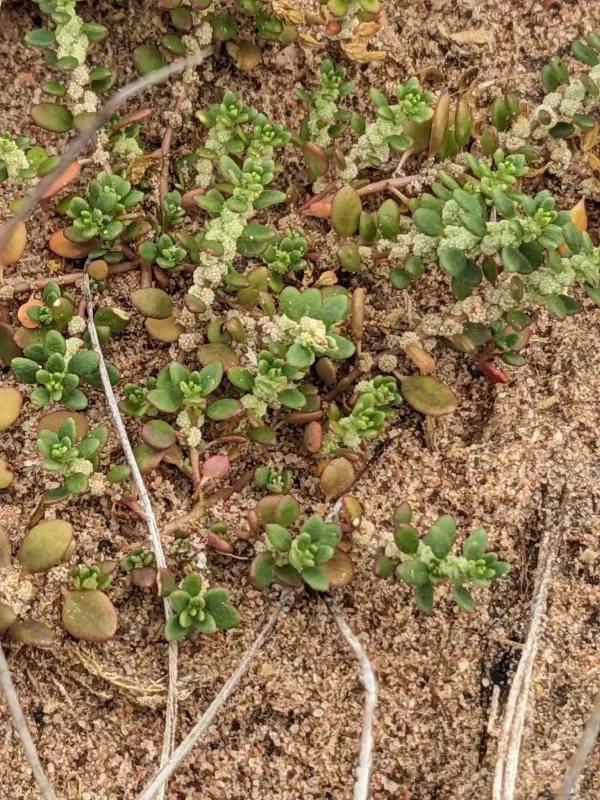
Dysphania glomulifera is an annual herbaceous weed belonging to the Amaranthaceae family. The plant typically grows between 10 and 50 cm in height, characterized by an upright or branched stem covered in glandular hairs that exude a pungent, aromatic scent.
The leaves are generally oblong with serrated edges and distinct pubescence. This sticky glandular hairiness is a primary identifying feature of the species, distinguishing it from related chenopod species found in the same habitats.
The inflorescences consist of dense, compact clusters (glomerules) pressed tightly against the stem. This specific arrangement of flowers in globular clusters is the diagnostic trait that provides the species with its specific epithet.
Biological resilience is a key feature of this species. It produces a large quantity of small seeds that can remain dormant in the soil for extended periods, waiting for optimal conditions to germinate.
The plant exhibits high ecological plasticity, allowing it to adapt to diverse agricultural landscapes and successfully compete for space even in stressed soil environments.
Where it grows
Dysphania glomulifera typically thrives in disturbed environments. It is frequently found in open areas, such as roadsides, wasteland, animal holding pens, and construction sites, where the soil is often rich in nitrogen.
In agricultural settings, this weed is a common nuisance in row crops, particularly in soybeans, sunflowers, and corn. It successfully colonizes fields where the crop canopy is not yet fully closed.
The species prefers well-lit, sunny areas. It demonstrates an ability to colonize various soil textures, including sandy and loamy soils, making it widely distributed across different climatic zones.
Seed dispersal is largely facilitated by wind, surface water runoff, and agricultural machinery. Consequently, fields that are not properly cleaned after harvest often see a higher incidence of infestation in subsequent years.
The weed typically emerges in late spring and summer, matching its growth cycle with the rapid development of warm-season row crops, which allows it to thrive in agricultural systems.
Harm it causes
The primary economic impact of Dysphania glomulifera is its role as a competitive weed. By rapidly depleting soil moisture and nutrients, it exerts significant stress on neighboring crop plants, particularly during peak growing periods.
Competition for light is another major factor. As the weed grows, it can create shade for young seedlings, resulting in stunted development and significantly lower biomass accumulation in the main crop.
The persistence of the weed in the soil seed bank leads to cumulative long-term losses. Farmers face rising costs due to the need for repeated herbicide applications or more frequent mechanical weeding operations.
Additionally, the plant's glandular secretions may affect the harvesting process or the quality of the harvested crop if the infestation is severe and mechanical cleaning is not thorough.
Like many invasive weeds, it can act as a secondary host for specific pests and pathogens, thereby increasing the overall phytosanitary risk profile of the affected agricultural field.
How to control
Control strategies for Dysphania glomulifera should be integrated, focusing on both mechanical and chemical interventions. Pre-planting tillage is essential to stimulate germination and subsequently destroy the initial flush of weeds.
In-crop mechanical cultivation, performed before the crop canopy closes, is highly effective in managing infestations. This practice suppresses young plants before they reach their reproductive stage.
Chemical control involves the use of selective herbicides. For the best results, applications should be timed during the early growth stages of the weed, specifically when plants have 2 to 4 true leaves.
Managing the margins of fields and surrounding non-crop areas is vital to prevent the secondary spread of seeds. Good agricultural practices that ensure a dense, healthy crop stand help naturally outcompete this weed.
- Implementation of crop rotation to break the weed lifecycle.
- Use of pre-emergent herbicides to reduce the initial weed density.
- Sanitation of agricultural equipment to prevent seed transport between fields.
- Timely shallow cultivation of soil to eliminate seedlings.
- Monitoring of field edges to prevent local colonization.
Taxonomy
- Latin name
- Dysphania glomulifera
- Family
- Амарантовые
- EPPO code
- DYPLI