
Dysphania atriplicifolia
Dysphania atriplicifolia
Description
How to tell it apart
Dysphania atriplicifolia belongs to the Amaranthaceae family. Previously classified within the Chenopodium genus, this plant retains many of the characteristics common to its relatives.
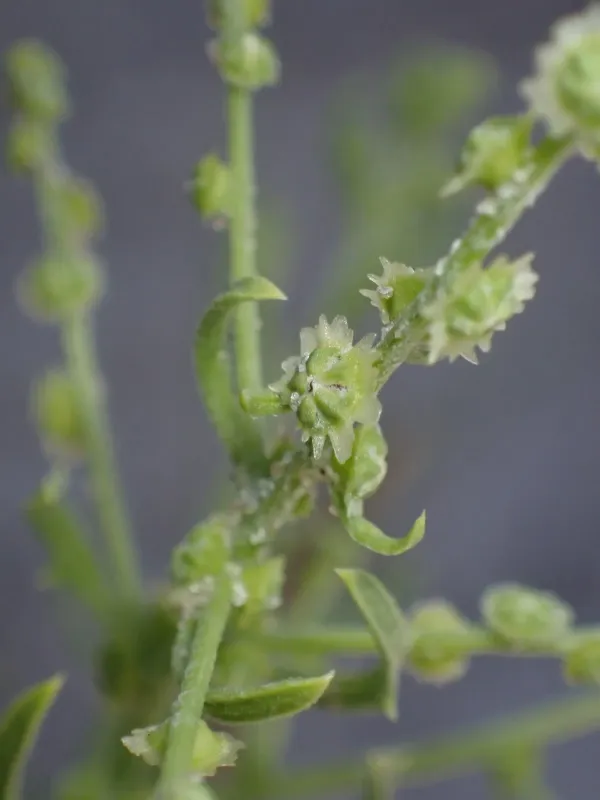
It is an annual herbaceous plant characterized by a branched stem covered with glandular hairs, which give the plant a distinct texture when touched.
The leaves are alternate, triangular-hastate in shape with serrated margins. The surface of the leaves often possesses a mealy texture, which is a key diagnostic feature.
The inflorescences consist of small, dense clusters arranged in spikes or panicles in the leaf axils or at the terminal parts of the plant, containing numerous tiny flowers.
The root system is tap-rooted and quite deep, allowing the plant to remain stable and absorb nutrients efficiently even during periods of low moisture availability.
Where it grows
This weed prefers sunny, open environments with fertile soils. It is frequently found in ruderal habitats, field borders, and disturbed areas near agricultural infrastructure.
In agricultural settings, it commonly invades row crops such as corn, soybeans, and sunflowers, taking advantage of the space between rows if canopy closure is delayed.
The plant spreads rapidly through seed dispersal, often aided by wind, flowing water, or movement of contaminated agricultural machinery across the fields.
It thrives in areas where soil tillage has been inconsistent or where pre-planting weed management strategies have been insufficiently implemented.
Once established, the plant occupies open niches in the field, making it a persistent competitor in agricultural ecosystems where biodiversity or crop management is not optimized.
Harm it causes
The primary damage caused by this weed is the competition for essential nutrients, water, and sunlight, which can lead to significant yield reductions in field crops.
By competing during the early vegetative stages, Dysphania atriplicifolia inhibits the initial growth of seedlings, which can result in uneven crop establishment.
The presence of this weed complicates harvest operations, as excessive vegetative biomass increases the amount of foreign material in the harvested grain.
It serves as a secondary host for various pests and pathogens that can subsequently migrate to commercial crops, increasing the risk of disease outbreaks.
Economic losses occur due to both the direct reduction in crop yield and the increased expenditure on herbicides and mechanical tillage required for its suppression.
How to control
Effective agricultural management includes deep autumn plowing to bury the seeds, preventing them from germinating in the following spring growing season.
Implementing a diverse crop rotation is crucial, as it disrupts the life cycle of the weed and allows for the use of different herbicide modes of action.
Inter-row cultivation during the early stages of crop growth is highly effective at physically removing the weeds before they compete significantly with the crop.
Chemical control should be performed using selective herbicides targeted at broadleaf weeds, applied when the weed is in its early seedling stage for maximum efficiency.
Spot treatment of highly infested areas is recommended to prevent the weed from setting seeds, thereby minimizing the build-up of the seed bank in the soil.
Taxonomy
- Latin name
- Dysphania atriplicifolia
- Family
- Амарантовые
- EPPO code
- CYMAT