
Cyathula tomentosa
Cyathula tomentosa
Description
How to tell it apart
Cyathula tomentosa belongs to the Amaranthaceae family. It is a perennial herbaceous plant characterized by erect stems that can reach a significant height.
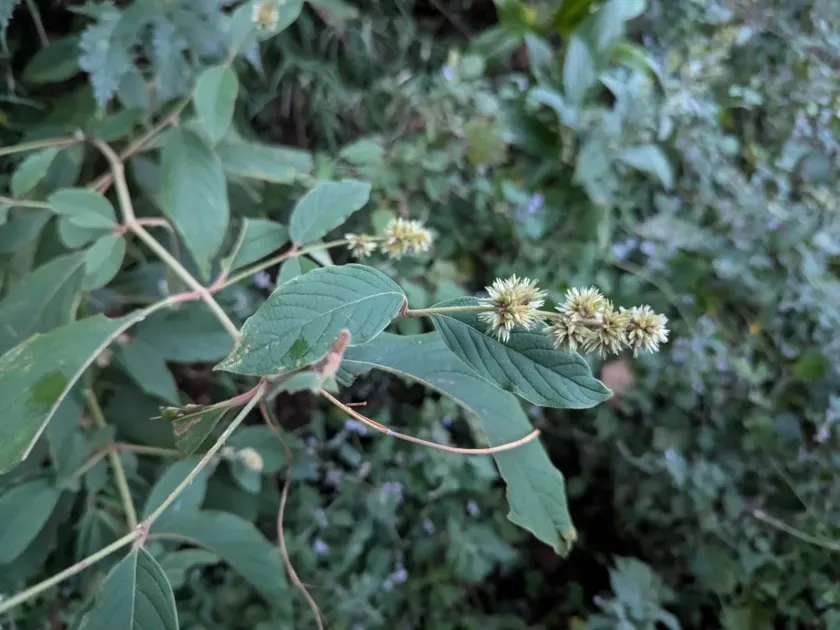
The primary morphological feature of this species is the dense tomentose (woolly) pubescence covering the stems and leaves, which is reflected in its scientific name.
The leaves are generally lanceolate or ovate in shape and are arranged in an opposite pattern along the stem.
Inflorescences are organized as spicate panicles. The flowers are small and greenish or whitish, clustered together, which is typical for the genus.
The plant possesses a robust and branched root system, providing a high capacity for regeneration after mechanical disturbance, which enhances its persistence as a weed.
Where it grows
The plant prefers moderately moist soils and is often found in mountainous regions, forest edges, and along roadsides, particularly in parts of Asia and the Himalayas.
In agricultural systems, Cyathula tomentosa frequently infests perennial grasslands, pastures, and row crops under intensive cultivation practices.
This weed adapts well to disturbed soils and fallow lands, where it quickly establishes dense thickets that outcompete native plant species.
The spread of the species is closely linked to human activity, including the transport of goods and the use of contaminated seed stock in farming operations.
While it prefers areas with ample sunlight, it demonstrates high phenotypic plasticity, allowing it to survive in partially shaded environments.
Harm it causes
The primary damage caused by Cyathula tomentosa is its strong competitive ability for nutrients, water, and light, which significantly reduces crop yields.
As it spreads, the weed suppresses young crop plants, slowing their growth and development during the early vegetation phases, leading to stand thinning.
The presence of this weed in forage areas reduces the quality of pastures, as the plant can become an undesirable component of livestock grazing.
Its deep root system actively depletes soil fertility by absorbing essential minerals required for the development of high-quality agricultural crops.
Dense infestations significantly hinder mechanical operations such as crop maintenance and harvesting, leading to increased labor and equipment costs.
How to control
Deep autumn plowing is an effective control method, as it disrupts the root system and prevents the vegetative propagation of this perennial weed.
Regular inter-row cultivation in row crops helps maintain control by exhausting the energy reserves stored within the rhizomes of the plant.
Chemical control involves the application of systemic, broad-spectrum herbicides during the plant's active growth phase, prior to the flowering stage.
Implementing crop rotation strategies that encourage dense plant canopies helps suppress Cyathula tomentosa naturally by limiting its access to sunlight.
Rigorous quarantine protocols and the use of certified, weed-free seed material are essential to prevent the introduction and spread of the weed in clean fields.
Taxonomy
- Latin name
- Cyathula tomentosa
- Family
- Амарантовые
- EPPO code
- CYHTO