
Triangular goosefoot
Chenopodium trigonon
Description
How to tell it apart
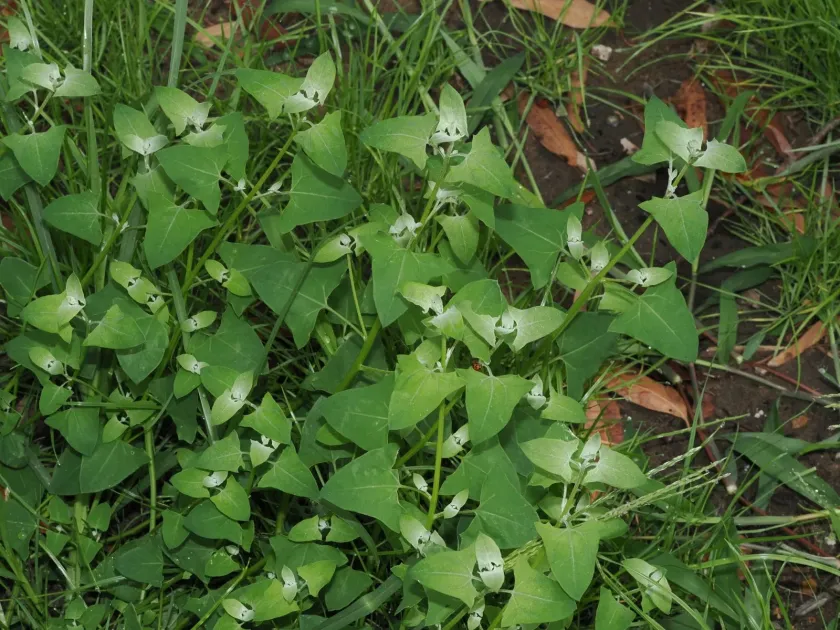
Triangular goosefoot (Chenopodium trigonon) belongs to the Amaranthaceae family. It is an annual herbaceous weed recognized by its distinctively triangular or arrowhead-shaped leaves.
The plant typically grows with branching stems, reaching a height of 20 to 50 cm. Like many species in the genus, the foliage may have a mealy or powdery appearance due to specialized trichomes on the surface.
The flowers are small, inconspicuous, and grouped in panicles or spikes located at the leaf axils or branch tips, blooming during the summer months.
It possesses a strong taproot system, which allows the plant to efficiently extract nutrients and water, making it a highly competitive species in agricultural environments.
The seeds are small and prolific, easily disseminated by wind, water, and agricultural equipment, which facilitates rapid colonization of disturbed soil.
Where it grows
Triangular goosefoot thrives in open, sunny habitats with fertile and moist soil. It is commonly found in crop fields, vegetable gardens, roadsides, and fallow land.
It is particularly problematic in row crops where wide spacing allows weeds to flourish without competition from the canopy of the main crop.
In irrigation-dependent areas, this weed frequently colonizes ditch banks and damp fields, utilizing the availability of moisture for rapid vegetative growth.
The plant exhibits high ecological plasticity, allowing it to adapt to various soil types, including those that are moderately saline or nutrient-poor.
Due to its rapid growth cycle, triangular goosefoot can complete multiple generations in a single season if environmental conditions are favorable.
Harm it causes
The main harm caused by triangular goosefoot is its intense competition for water and soil nutrients, which directly reduces the yield and quality of cultivated crops.
By shading small crop seedlings, the weed hinders their photosynthetic capacity and suppresses early growth, often leading to patchy or uneven crop stands.
Triangular goosefoot acts as a reservoir for various plant pests and viral diseases, facilitating the infection of surrounding vegetable and grain crops.
Its presence at harvest time causes significant mechanical complications, as the plant debris clogs harvesting machinery and increases the moisture content of grain.
The weed's deep root system can dry out the upper soil layer, stressing crops during critical growth stages and reducing overall field productivity.
How to control
Effective management requires a combination of cultural practices, such as proper crop rotation and the use of vigorous crop varieties that can shade out the weed.
Mechanical control through deep plowing and timely inter-row cultivation is essential to remove weeds before they enter the flowering and seed-production stages.
Chemical control involves the application of selective systemic herbicides, which are most effective when applied at the cotyledon to four-leaf stage of the weed.
Preventative measures, including the use of certified clean seeds and maintaining field margins, help to reduce the seed bank in the soil over time.
- Implement diverse crop rotations.
- Perform early-season inter-row tillage.
- Apply herbicides during the seedling growth phase.
- Sanitize machinery to prevent weed seed spread.
Taxonomy
- Latin name
- Chenopodium trigonon
- Family
- Амарантовые
- EPPO code
- CHETR