
Spiny amaranth
Amaranthus spinosus
Description
How to tell it apart
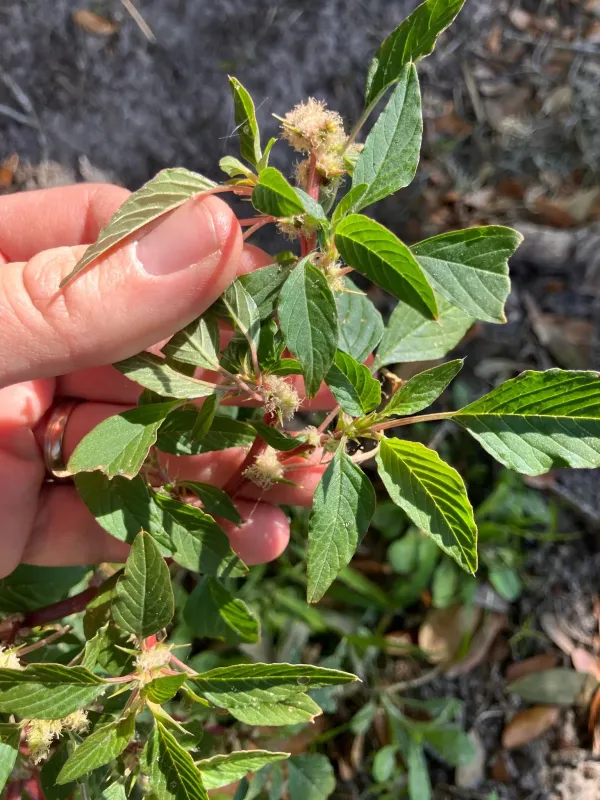
Spiny amaranth (Amaranthus spinosus) is an annual herbaceous plant belonging to the Amaranthaceae family. It typically grows to a height of 30 to 100 cm and features a branched, erect stem.
The plant is most easily identified by the presence of two sharp, rigid spines found at the base of each leaf petiole, which is a distinctive feature separating it from other Amaranthus species.
Leaves are ovate to lanceolate, alternate, and often exhibit a green color, sometimes with a slight reddish tint. The plant possesses a robust taproot system that enables it to thrive in various soil types.
Its inflorescences are dense, spike-like, and appear in both the leaf axils and at the terminal ends of branches. The flowers are small, and a single plant can produce an immense number of tiny, dark, lens-shaped seeds.
Due to its high reproductive capacity, a single plant can significantly increase the weed seed bank in a field, leading to persistent infestations over many seasons.
Where it grows
Spiny amaranth is a warm-season weed that prefers full sun and fertile, nitrogen-rich soils. It is widely distributed across tropical and temperate regions of the world.
It frequently invades row crops, vegetable fields, orchards, and pastures. It is also common in disturbed areas such as roadsides, farmyards, and fence lines where it can quickly establish dominance.
The plant is highly adaptable to various soil moisture conditions and can tolerate short-term drought, allowing it to compete effectively with crops during hot, dry spells.
Dispersal is primarily facilitated by agricultural machinery, contaminated seed lots, irrigation water, and livestock movement across infested fields.
It thrives in open spaces where competition for nutrients and light is intense, making it a prolific colonizer of bare or under-managed agricultural land.
Harm it causes
As a highly competitive weed, spiny amaranth deprives crops of essential nutrients, water, and sunlight, often resulting in significant yield losses in corn, soybean, and vegetable production.
The presence of sharp spines poses a safety risk to farm workers and makes mechanical or manual weeding operations physically challenging and time-consuming.
It serves as an alternative host for various plant viruses and insect pests, facilitating their spread into nearby cash crops and potentially leading to widespread disease outbreaks.
The plant exerts an allelopathic effect, releasing biochemicals into the soil that can inhibit the germination and development of neighboring crop seedlings.
Dense infestations can physically impede the operation of harvesting equipment, leading to increased wear and tear and reduced operational efficiency during the season's end.
How to control
Effective management requires an integrated approach starting with preventative measures such as cleaning equipment and ensuring the use of certified, weed-free crop seeds.
Cultural control includes the use of competitive crop varieties and timely mechanical cultivation between rows to disrupt the growth of the weed during its susceptible seedling stage.
Chemical control often involves pre-emergence herbicides to prevent germination and post-emergence applications using registered herbicides, ensuring rotation of modes of action to delay resistance.
Maintaining field borders and clearing ditch banks prevents the migration of seeds into production areas, maintaining a long-term strategy of weed bank depletion.
- Implement diverse crop rotations to disrupt the weed life cycle.
- Use mulching in vegetable crops to suppress seedling emergence.
- Timely removal of weeds before they reach the seed-set stage.
Taxonomy
- Latin name
- Amaranthus spinosus
- Family
- Амарантовые
- EPPO code
- AMASP