
Palmer amaranth
Amaranthus palmeri
Description
How to tell it apart
Palmer amaranth (Amaranthus palmeri) is a summer annual weed belonging to the Amaranthaceae family. It is recognized for its rapid growth rate, capable of reaching heights of over 2 meters, and a substantial taproot system.
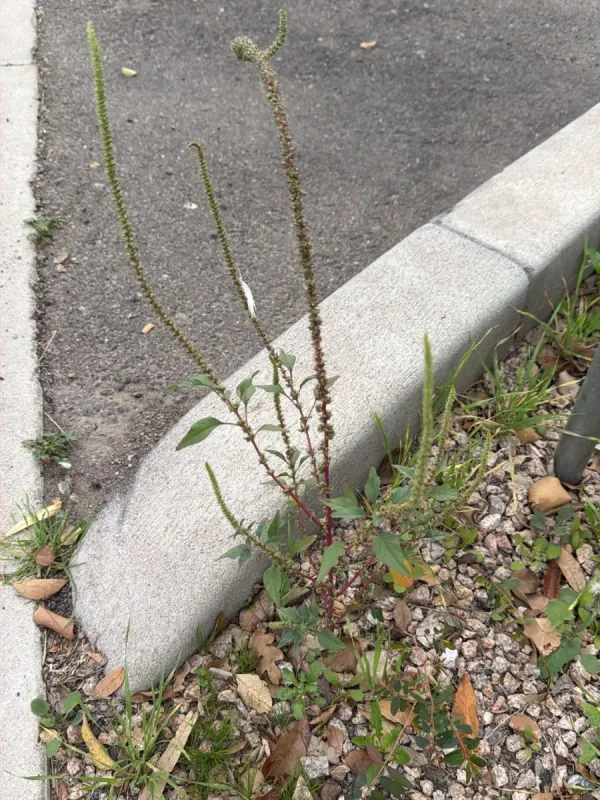
One of the primary identification features is the length of its leaf petioles, which are typically longer than the leaf blade itself. The leaves are often diamond or egg-shaped and frequently feature a distinct V-shaped whitish watermark.
The inflorescences are long, narrow terminal spikes that can reach up to 90 centimeters in length. Unlike some other amaranth species, the stems are relatively smooth and lack significant hair, which serves as a key diagnostic trait for field identification.
Palmer amaranth is dioecious, meaning male and female flowers grow on separate plants. This biological characteristic facilitates cross-pollination, leading to high genetic diversity and rapid evolution, particularly regarding herbicide resistance.
On early stages of growth, the plant can be difficult to distinguish from other pigweed species. However, its exceptionally fast vertical development usually becomes evident within the first few weeks after germination.
Where it grows
This weed thrives in open, sunny environments with nutrient-rich soils. It is particularly problematic in row crops like corn, soybeans, and cotton, where it can easily outcompete the main crop for resources during the early stages of growth.
Palmer amaranth is frequently found in disturbed areas, such as roadsides, field edges, irrigation ditches, and waste areas. Its seeds are highly mobile, being spread by wind, water, machinery, and bird movement.
The plant demonstrates remarkable environmental plasticity, allowing it to colonize diverse soil types ranging from sandy to heavy clay. It is highly tolerant to heat and periods of water stress, giving it an advantage over many crops.
While originally native to North America, the plant has successfully invaded many agricultural regions globally. Its ability to adapt to climate changes makes it a persistent threat in modern intensive agricultural systems.
The use of conservation tillage practices like No-till often leaves Palmer amaranth seeds near the soil surface, promoting higher germination rates compared to systems where deep moldboard plowing is utilized.
Harm it causes
The primary threat of Palmer amaranth is its aggressive competitiveness. It can grow up to 7 centimeters per day under optimal conditions, rapidly overtopping cultural crops and severely limiting their access to sunlight.
The plant is a heavy consumer of nitrogen and water, significantly depleting soil resources. Heavy infestations can lead to yield losses approaching 90% in some soybean and cotton fields if left unmanaged.
As a host for various diseases and pests, Palmer amaranth compromises the overall phytosanitary status of a field. This necessitates increased expenditure on pesticides to manage secondary issues caused by the weed.
A single mature female plant can produce up to 500,000 seeds. This immense reproductive capacity ensures a long-lasting seed bank in the soil, making eradication a process spanning many years.
The structural robustness of the plant poses significant mechanical issues during harvesting. Thick, woody stems can damage harvesting equipment and force operators to slow down, significantly increasing harvest time and overall operating costs.
How to control
Management of Palmer amaranth requires an integrated approach. Cultural practices such as crop rotation, use of cover crops, and narrow row spacing can help suppress the weed by limiting the light reaching the soil surface.
Chemical control is complicated by widespread resistance to several herbicide classes, including glyphosate (Group 9) and ALS-inhibitors (Group 2). Effective management necessitates the use of multi-mode-of-action herbicide programs.
Early intervention is crucial; hand-pulling or spot-treating plants before they reach reproductive stages can significantly reduce the long-term seed bank in the soil.
- Use of soil-applied residual herbicides pre-emergence.
- Rotation of herbicide sites of action to prevent resistance.
- Deep tillage where appropriate to bury seeds.
- Strict sanitation of equipment used in infested areas.
Consistent monitoring and the implementation of a proactive, multi-faceted strategy are the only reliable ways to maintain control over Palmer amaranth populations in agricultural settings.
Taxonomy
- Latin name
- Amaranthus palmeri
- Family
- Амарантовые
- EPPO code
- AMAPA