
Amaranthus macrocarpus
Amaranthus macrocarpus
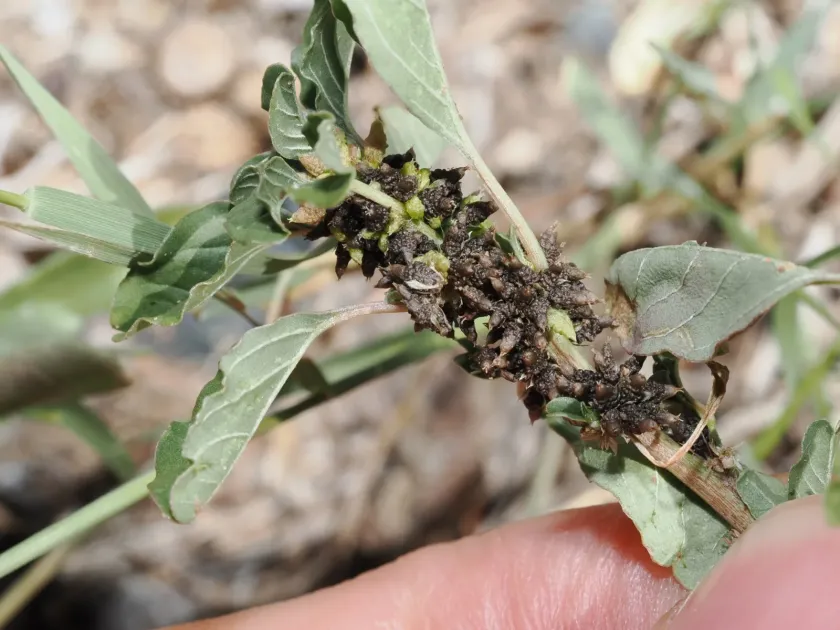
Description
How to tell it apart
Amaranthus macrocarpus, commonly known as dwarf amaranth or prickly amaranth, is an annual herbaceous plant belonging to the Amaranthaceae family. It is a persistent weed characterized by its low, spreading or erect growth habit.
The plant features branched stems and alternate leaves that are typically rhombic-ovate in shape with pointed tips. The structure of the plant allows it to remain low to the ground if crowded, or grow tall when space permits.
The most distinctive identification feature is the presence of dense, spiny clusters of flowers located in the leaf axils. The flowers are small, unisexual, and protected by stiff, sharp bracts that provide a prickly texture.
Seeds of Amaranthus macrocarpus are small, dark, and shiny. A single mature plant can produce thousands of seeds, which possess high longevity and can remain dormant in the soil for several years until favorable conditions arise.
The root system is tap-rooted and quite aggressive, allowing the plant to extract moisture and nutrients efficiently, even from dry or compacted soils where other plants might struggle.
Where it grows
This weed is native to arid and semi-arid regions but has become an invasive species in many agricultural areas globally. It thrives in open, sun-exposed sites such as arable fields, pastures, and disturbed ground.
Amaranthus macrocarpus is frequently found as a major weed in row crops, particularly corn, soybeans, and cotton. It also colonizes vegetable gardens and fallow fields, where it can spread rapidly if left unmanaged.
The plant is highly adaptable to various soil types, ranging from sandy soils to heavy clays. It is especially prevalent in fields with poor canopy closure, as it requires high light intensity for optimal growth.
Agricultural machinery is a major vector for seed dispersal. Seeds easily adhere to tires and soil-engaging tools, carrying the infestation from one field to another during seasonal operations.
It often appears in areas of high agricultural activity, such as field borders, irrigation ditches, and areas where herbicides have failed to provide complete coverage.
Harm it causes
The primary damage caused by Amaranthus macrocarpus is intense competition for water and soil nutrients. By establishing a strong root network early in the season, it can deprive the main crop of essential resources, leading to stunted development.
As a fast-growing species, it competes heavily for sunlight. When allowed to grow above the crop canopy, it reduces photosynthetic activity, significantly affecting the plant's ability to produce grain or fruit.
The weed serves as a host for various insects and pathogens, including aphids and nematodes, which can then migrate to the primary crop and cause further economic damage.
The presence of Amaranthus macrocarpus seeds at harvest significantly degrades the quality of the agricultural product. Cleaning and separating these tiny, prickly seeds from grain samples is costly and difficult.
Yield losses can be severe in cases of high infestation, with reductions of up to 40 percent reported in crops like soybean and maize due to the weed's vigorous nature and competitive strategy.
How to control
Integrated weed management starts with preventive measures, such as the use of clean seeds and crop rotation. Diversifying crops helps break the weed's lifecycle and prevents it from becoming dominant in the field.
Mechanical cultivation remains a cornerstone of control in row crops. Inter-row tillage, when performed while the weeds are in the seedling stage, is highly effective at reducing populations without chemical reliance.
Chemical control involving pre-emergence herbicides creates a barrier that prevents germination. This is often the most critical step for minimizing early-season competition between the crop and the weed.
Post-emergence herbicide applications should be timed carefully. Treating the weed while it is small, typically at the two to four-leaf stage, provides the best control results and reduces the likelihood of herbicide resistance.
Consistent monitoring and spot treatment of escaped plants help prevent the weed from setting seed, ensuring that the soil seed bank is depleted over consecutive growing seasons.
Taxonomy
- Latin name
- Amaranthus macrocarpus
- Family
- Амарантовые
- EPPO code
- AMAMC