
Alternanthera halimifolia
Alternanthera halimifolia
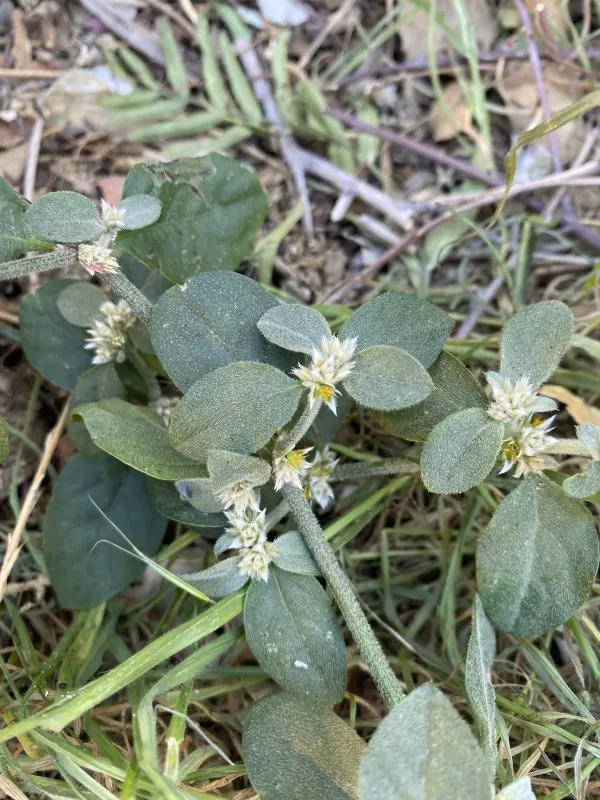
Description
How to tell it apart
Alternanthera halimifolia belongs to the Amaranthaceae family. It is a perennial herbaceous plant characterized by prostrate or ascending stems that often root at the nodes.
The leaves are generally lanceolate or oval in shape and are arranged oppositely along the stem. The leaf surface texture may vary from smooth to slightly pubescent depending on environmental factors.
The plant features dense, head-like inflorescences located in the leaf axils or at the tips of the shoots. The flowers are small, inconspicuous, and typically whitish or cream-colored, protected by bracts.
It possesses a strong, branching root system, which allows the plant to anchor effectively in various soil types and survive periods of moisture stress.
Distinguishing Alternanthera halimifolia from other Amaranthaceae species requires close inspection of the inflorescence structure and leaf arrangement, which are diagnostic features for this weed.
Where it grows
This species is primarily found in tropical and subtropical regions. It often acts as a troublesome weed in row-crop systems and on fallow agricultural land.
It prefers moist, sunny sites with fertile soils, but it is highly adaptive and can colonize degraded areas, roadsides, and irrigation ditches near cultivated fields.
The weed affects a wide range of crops by forming dense mats that compete aggressively with primary plants for essential resources.
Its ability to reproduce vegetatively is a significant advantage; even small stem fragments remaining in the soil after tillage can quickly develop into new, vigorous plants.
Seeds are easily dispersed by water runoff and agricultural machinery, facilitating rapid colonization of new areas within agricultural settings.
Harm it causes
The primary damage caused by this weed is the intense competition with crops for water, nutrients, and sunlight, which leads to significant growth retardation and lower yields.
Dense clusters of this weed create a humid microclimate that favors the proliferation of plant pathogens and pests, which can subsequently spread to the crops.
The weed rapidly consumes soil nitrogen and other nutrients, placing significant stress on young crop seedlings during their most sensitive developmental stages.
The presence of this plant complicates mechanical harvesting operations, as the biomass can clog machinery and increase post-harvest losses of the target product.
Contamination of the harvested product with plant debris lowers overall quality and marketability, often requiring additional post-harvest cleaning and processing steps.
How to control
A comprehensive approach is required for effective control, starting with deep autumn plowing to disrupt the root systems and limit vegetative regrowth.
Implementing a robust crop rotation program that includes competitive cover crops is an essential strategy for shading out the weeds and reducing their population density.
Chemical control involves the use of systemic herbicides applied during the plant's active growth phase, ideally before the onset of flowering to prevent seed bank replenishment.
Hygiene is crucial; cleaning agricultural equipment between fields prevents the spread of seeds and plant parts to non-infested areas of the farm.
Integrated management plans, combining pre-emergent and post-emergent herbicide applications tailored to specific crop requirements, offer the highest success rate in reducing infestations.
Taxonomy
- Latin name
- Alternanthera halimifolia
- Family
- Амарантовые
- EPPO code
- ALRHA