
Alternanthera crucis
Alternanthera crucis
Description
How to tell it apart
Alternanthera crucis belongs to the Amaranthaceae family and is recognized as a persistent weed species in tropical and subtropical agricultural systems.
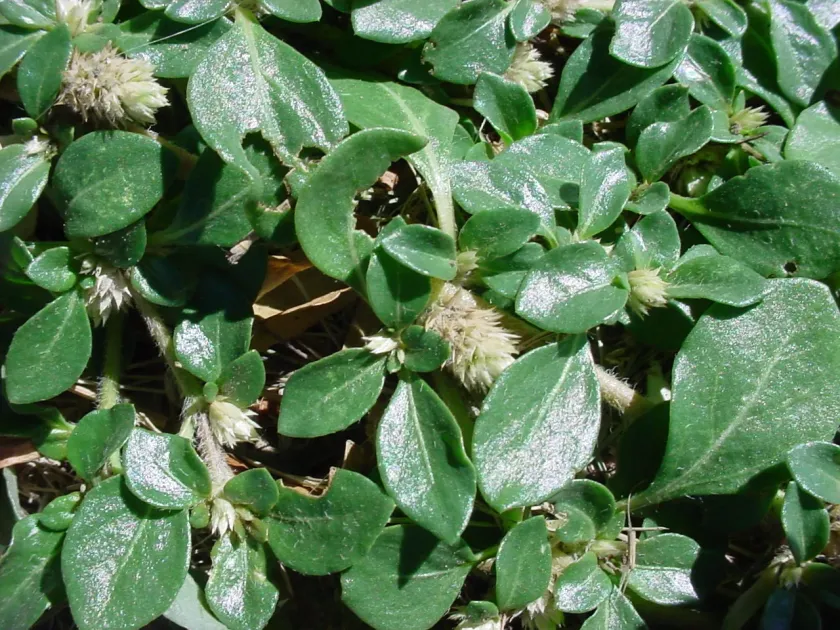
It is a herbaceous plant characterized by its prostrate or ascending stems, which often root at the nodes when in contact with moist soil.
The leaves are arranged oppositely and typically display a lanceolate to elliptical shape, which is a key diagnostic feature for field identification.
Small, white, chaffy flowers are arranged in axillary heads, which gives the plant a distinct appearance during the reproductive phase.
The root system is vigorous, allowing the plant to stabilize itself and extract moisture effectively, even in challenging environmental conditions.
Where it grows
This weed primarily thrives in wet habitats, frequently colonizing paddy fields, irrigation ditches, and areas with poor soil drainage.
It is widely distributed across regions with high annual rainfall, where it can rapidly dominate disturbed soil surfaces and moist agricultural lands.
Alternanthera crucis is highly tolerant to inundation, making it a particularly problematic weed in semi-aquatic crop systems like rice cultivation.
It prefers nutrient-rich environments, which explains its rapid growth in fields where synthetic fertilizers are applied extensively.
The plant spreads through both seeds and vegetative fragments, which are easily transported by water currents in irrigation channels.
Harm it causes
The main impact of this weed is its ability to outcompete crops for light, space, and mineral nutrients during the early stages of development.
By forming dense mats of vegetation, it inhibits the emergence and growth of seedlings, leading to significant yield reductions in affected crops.
The presence of this weed blocks water flow in irrigation and drainage channels, necessitating costly maintenance and cleaning of these systems.
Harvesting efficiency is significantly reduced due to the entanglement of the weed in harvesting machinery, which increases processing time.
As a host for various insects and pathogens, it poses a risk of secondary infection for neighboring cultivated plants, complicating pest management.
How to control
Effective management requires an integrated approach, starting with the selection of clean, certified seeds to prevent the introduction of the weed.
Mechanical control, such as inter-row cultivation, is most effective when plants are young, before they develop extensive root systems or seeds.
Chemical control involving selective herbicides is a standard practice for managing this species in established crop fields.
- Maintenance of irrigation infrastructure to prevent weed spread.
- Strategic use of crop rotation to break the weed's life cycle.
- Application of post-emergence herbicides at the correct growth stage.
Field monitoring is crucial to identify hotspots early, allowing for localized treatments that prevent the weed from establishing a permanent seed bank.
Taxonomy
- Latin name
- Alternanthera crucis
- Family
- Амарантовые
- EPPO code
- ALRCR