
Alternanthera bettzickiana
Alternanthera bettzickiana
Description
How to tell it apart
Alternanthera bettzickiana is a perennial herbaceous plant belonging to the Amaranthaceae family. It is characterized by prostrate or ascending stems that readily root at the nodes when touching moist soil.
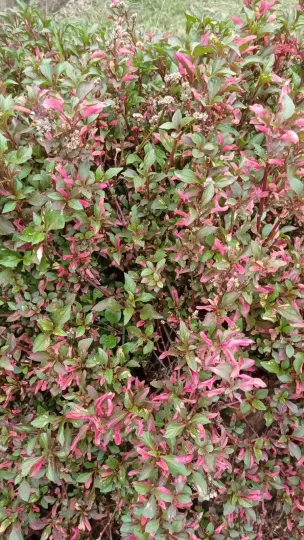
The leaves are petiolate and exhibit a variable morphology, ranging from narrow-lanceolate to rhombic shapes. Many wild forms display distinctive reddish or purplish tints in their foliage, which serves as a key identifying feature.
The flowers are small and clustered into axillary, head-like inflorescences. They lack prominent petals and are surrounded by dry, papery bracts, giving the clusters a whitish or silvery appearance upon maturity.
It possesses a fibrous root system that penetrates deep into the soil, providing high drought resistance. The plant propagates efficiently through both seeds and vegetative cuttings, as even small stem segments can regenerate.
In uncontrolled environments, this species acts as an aggressive colonizer, forming dense mats that quickly cover bare ground and suppress other surrounding vegetation.
Where it grows
Native to tropical South America, Alternanthera bettzickiana has become a global weed in tropical and subtropical climates due to its high ecological plasticity.
The weed favors humid, well-lit environments. It is frequently encountered along the edges of bodies of water, in rice paddies, irrigation ditches, and moist fallow fields.
In agricultural systems, it poses a significant threat to irrigated vegetable crops and long-term plantations where the consistent moisture creates an ideal growth environment.
It adapts well to various soil types, from sandy to heavy clay, provided the moisture levels remain sufficient. It generally avoids arid regions and areas with high soil salinity.
Human activity, including the movement of farm equipment and irrigation flow, is the primary vector for spreading its seeds and vegetative parts into new agricultural areas.
Harm it causes
The primary damage caused by Alternanthera bettzickiana stems from its intense competition for water, nutrients, and sunlight, which significantly stunts the growth of primary crops.
In rice cultivation, this weed can quickly dominate, creating a thick mat that prevents seedling establishment and interferes with the photosynthesis of the crop.
Due to its high regenerative capacity after mechanical injury, it complicates weeding operations, often necessitating multiple manual or mechanical interventions per season.
The weed serves as a reservoir for various plant pathogens and insect pests, increasing the disease pressure and requiring additional pesticide applications on the main crop.
The presence of its vegetation during harvest leads to contamination of the final product, resulting in increased processing costs and lower market value for the agricultural output.
How to control
Mechanical control strategies involve deep autumn plowing to bury the weed residues and destroy the root system, preventing the regrowth of stolons.
Crop rotation with competitive, dense-canopy crops is a recommended agronomic practice to shade out the weed and limit its spread during the initial stages of the season.
Chemical control should rely on the application of systemic herbicides during the plant's active growth phase, strictly adhering to the recommended dosages for the specific crop.
- Application of non-selective herbicides in non-crop areas and fallow lands.
- Use of selective herbicides in accordance with local regulations for specific crops like rice.
- Routine mowing of field margins and ditches to prevent seed head formation.
Ongoing maintenance of irrigation infrastructure is crucial, as clearing the weed from canals prevents the dispersal of seeds and stem fragments onto the main production fields.
Taxonomy
- Latin name
- Alternanthera bettzickiana
- Family
- Амарантовые
- EPPO code
- ALRBE