
Hygrophila polysperma
Hygrophila polysperma
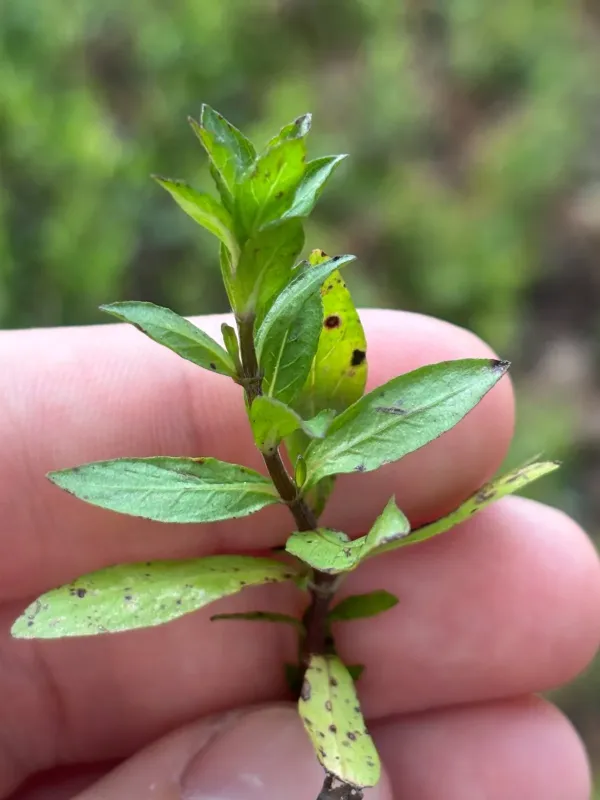
Description
How to tell it apart
Hygrophila polysperma, commonly known as Indian swampweed or carpetweed, is a perennial herbaceous plant belonging to the Acanthaceae family.
It exhibits significant morphological plasticity, growing as an emergent plant in shallow water or as a fully submerged aquatic weed in deeper reservoirs.
The stems are slender and branched, typically reaching lengths of up to 60 cm. Leaves are opposite, lanceolate to ovate, and generally bright green in color.
The plant possesses a fibrous root system that can easily anchor in muddy substrates or develop nodes at stem joints to propagate vegetatively.
Small, pale violet or white flowers are produced in the leaf axils. The plant is prolific, producing numerous tiny seeds that facilitate its rapid spread through water currents.
Where it grows
Native to tropical regions of Asia, specifically India and Malaysia, Hygrophila polysperma has become an invasive species in many tropical and subtropical areas globally.
It thrives in freshwater environments, including rivers, streams, lakes, and, most critically, in human-made irrigation canals and agricultural drainage systems.
In the context of agriculture, it is a problematic weed in paddy fields where it finds optimal conditions for rapid colonization alongside rice crops.
Its high adaptability allows it to survive in varying water depths, from saturated mud to deep-water conditions, making it a persistent nuisance in irrigated regions.
The plant frequently colonizes disturbed environments, taking advantage of nutrient runoff and the lack of competition in cleared canal systems.
Harm it causes
The primary agricultural impact of Hygrophila polysperma is its ability to outcompete crops for light, nutrients, and physical space within the flooded paddies.
Dense mats of this weed impede water flow in irrigation networks, leading to siltation, canal blockage, and increased maintenance costs for water management authorities.
The presence of this weed interferes with mechanized farming operations, clogging harvesting machinery and increasing the labor requirements for field sanitation.
By consuming large amounts of nitrogen and other fertilizers, the weed reduces the availability of essential nutrients for the rice crop, resulting in reduced yields.
As an invasive species, it disrupts the natural biodiversity of local wetlands, often forming monocultures that replace native flora and alter habitat structures.
How to control
Effective management begins with rigorous cultural practices, such as ensuring that irrigation water sources are free from plant fragments and seeds.
Drainage cycles in rice paddies can be used to stress the plant, as Hygrophila polysperma is highly dependent on continuous inundation for optimal survival.
Mechanical control, including the manual removal or dredging of irrigation canals, is necessary to prevent the plant from flowering and releasing seeds into the flow.
Chemical control involving aquatic-approved herbicides is a standard approach, though it must be carefully managed to avoid negative impacts on aquatic ecosystems.
Integrated weed management, combining routine monitoring, mechanical clearing, and judicious herbicide application, is the most successful strategy for long-term control.
Taxonomy
- Latin name
- Hygrophila polysperma
- Family
- Акантовые
- EPPO code
- HYGPO