
Fern hygrophila
Hygrophila pinnatifida
Description
How to tell it apart
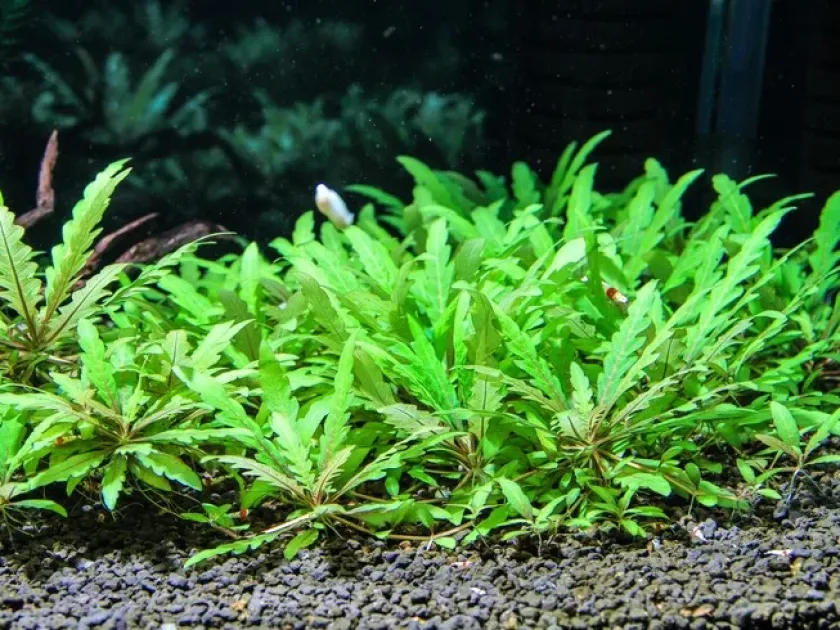
Fern hygrophila (Hygrophila pinnatifida) belongs to the Acanthaceae family. It is a perennial herbaceous plant that typically thrives in semi-submerged or fully aquatic conditions.
A distinctive feature of this species is its pinnatifid leaves, which have a specific brownish-green hue with a reddish tint, distinguishing it from other riparian vegetation.
The plant possesses a well-developed root system capable of anchoring in silty sediments, allowing it to successfully compete with local species for substrate and nutrients.
Stems of the hygrophila can reach significant lengths, forming dense mats that significantly alter the hydrodynamics of the water bodies where they grow.
During its growth cycle, the plant produces lateral shoots that ensure rapid vegetative reproduction, complicating the identification of individual specimens within dense populations.
Where it grows
The native range of the species is India. The plant prefers moist conditions typical of tropical and subtropical zones, often found along the banks of rivers and streams.
In an agronomic context, this species poses a threat near drainage systems, irrigation canals, and rice paddies, where excess water facilitates its expansion.
Hygrophila successfully colonizes stagnant and slow-flowing water bodies, making it a potential target for quarantine control in regions with suitable climates.
Active colonization of coastal zones is driven by its high adaptability to changing water levels, allowing the plant to tolerate temporary drying of the substrate.
Spread into new areas is often associated with human activity, including the aquarium trade and the accidental transport of plant fragments through waterways.
Harm it causes
The primary harmful effect of hygrophila lies in its ability to block watercourses. The rapid growth of dense stands leads to a sharp reduction in flow velocity within irrigation canals.
This negatively affects the efficiency of irrigation systems, causing siltation of channels and a decrease in the water carrying capacity to agricultural fields.
In rice farming, hygrophila can displace crop plants by competing with them for space, mineral nutrition, and sunlight availability.
The development of this weed's biomass contributes to the accumulation of organic matter, which alters the water's chemical composition and may trigger eutrophication processes.
Weed thickets create a favorable environment for the breeding of pests and disease vectors specific to humid agricultural zones.
How to control
Mechanical removal is the primary control method. Regular cleaning of canal beds to remove vegetative biomass helps temporarily reduce the weed population.
Agronomic methods include water level management in irrigation systems: periodic draining of canals can reduce the viability of hygrophila, which is not adapted to prolonged drought.
Chemical control requires the use of specialized herbicides approved for use in aquatic environments, which is restricted by strict environmental regulations.
The application of contact-action herbicides must be accompanied by monitoring the status of aquatic fauna to avoid negative impacts on the pond or canal ecosystem.
An important aspect is prevention: cleaning machinery and equipment after working in infested water bodies prevents the transfer of plant fragments to clean areas.
Taxonomy
- Latin name
- Hygrophila pinnatifida
- Family
- Акантовые
- EPPO code
- HYGPI