
Yucca glauca
Yucca glauca
Description
How to tell it apart
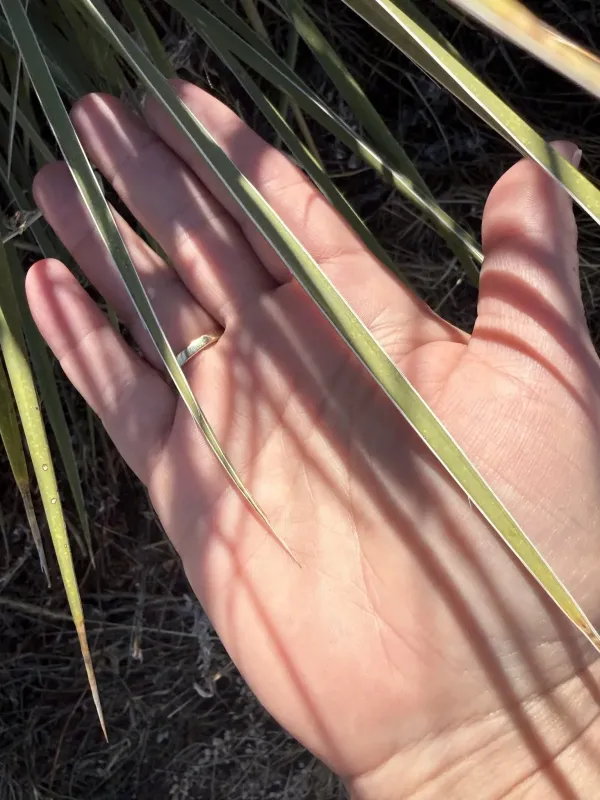
Yucca glauca, commonly known as soapweed yucca, is an evergreen perennial succulent shrub belonging to the Asparagaceae family. It features a rosette of rigid, sword-like leaves that are glaucous or greyish-green in color.
The leaf margins are fibrous and tend to peel over time, which gives the plant a distinct, shaggy appearance. During the flowering period, the plant produces a tall stalk with creamy-white, bell-shaped flowers.
The root system of Yucca glauca is exceptionally deep, contributing to the plant's remarkable resilience against harsh environmental conditions. The stem is usually short, supporting a dense basal rosette.
Reproduction occurs through both seeds and vegetative offsets arising from underground rhizomes. This method of propagation makes early detection and complete eradication difficult in field conditions.
Owing to high concentrations of saponins within its tissues, the plant is rarely affected by common pests or diseases, ensuring its survival and dominance in various agroecosystems.
Where it grows
Native to the prairies of North America, Yucca glauca has adapted to arid conditions and thrives in sandy or rocky soils. In agricultural settings, it can infest pastures and grazing lands.
It is most frequently found in abandoned or poorly managed areas, especially near shelterbelts or in semi-arid regions. The plant has the potential to displace native vegetation.
While it rarely infests primary crop rows, it can encroach upon field margins where soil disturbance is minimal or cultivation techniques are insufficient. It prefers well-drained soil environments.
The plant competes aggressively for limited soil moisture and nutrients, particularly during dry seasons. Its high drought tolerance allows it to outgrow many cultivated crops under water-stressed conditions.
Soil disturbance caused by heavy machinery can facilitate the rapid colonization of new areas by Yucca, as it establishes itself quickly in loosened or damaged soil structures.
Harm it causes
The primary damage caused by Yucca glauca involves intense competition with crops for vital space and water resources. Its deep roots extract water and nutrients from lower soil horizons.
In pastures, Yucca glauca poses a health risk to livestock. The leaves contain toxic saponins that can cause significant digestive issues or poisoning if consumed in large quantities by grazing animals.
The presence of Yucca interferes with mechanized farming operations. Its stiff, sharp, sword-like leaves can damage agricultural equipment, and dense thickets hinder the movement of soil tillage tools.
The plant creates biological interference for emerging crops by shading them during the critical early growth stages. This reduces stand density and leads to a measurable decrease in overall yield.
Furthermore, Yucca clusters act as nurseries for other weed species by providing protection from wind and sun, thereby perpetuating a cycle of secondary weed infestation in the field.
How to control
Agrotechnical control measures require deep plowing combined with the mandatory physical removal of the rhizomes. Shallow disking is generally ineffective and may inadvertently spread the plant.
When individual plants are identified, mechanical excavation that includes the entire root system is recommended. Any root fragments left in the soil possess the capability to regenerate.
Chemical control is most effective during the active growth phase prior to flowering. Systemic, non-selective herbicides, particularly those based on glyphosate, are the standard choice.
Achieving success with chemical control requires higher application rates, as the thick, waxy cuticle on the leaves serves as a barrier, limiting the absorption of the herbicide into the plant.
- Utilizing surfactants to enhance solution adhesion and penetration.
- Conducting follow-up treatments in subsequent seasons to eliminate secondary regrowth.
- Maintaining rigorous agricultural practices to outcompete and displace the weed.
Taxonomy
- Latin name
- Yucca glauca
- Family
- Спаржевые
- EPPO code
- UCCGC