
Xanthisma grindelioides
Xanthisma grindelioides
Description
How to tell it apart
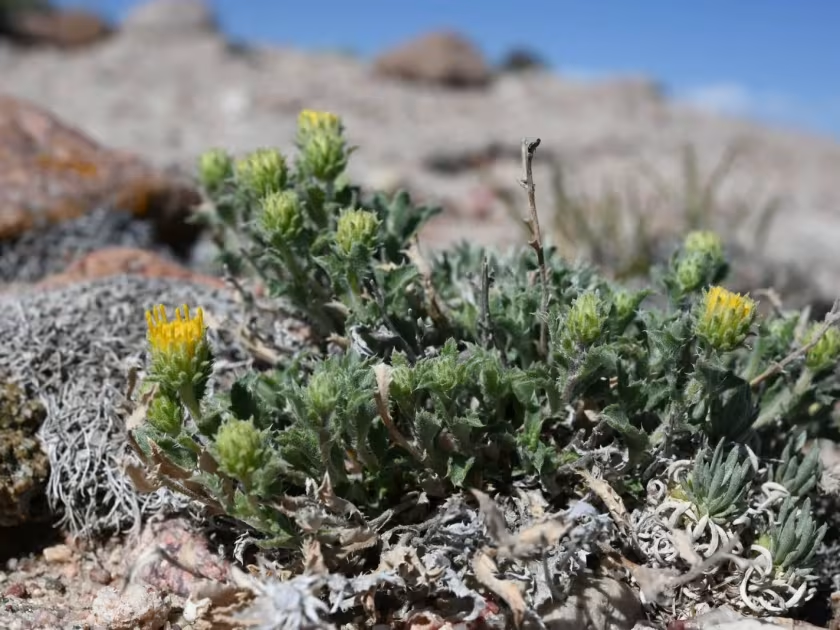
Xanthisma grindelioides is a perennial herbaceous plant belonging to the Asteraceae family. It is characterized by its rigid stems and striking yellow flower heads, which resemble those of the Grindelia genus, giving the plant its specific epithet.
The leaves are generally lanceolate or linear, often featuring fine hairs that help the plant minimize water loss in arid environments. It possesses a deep taproot, which is a key adaptation allowing it to survive in harsh, moisture-deficient conditions where other plants might fail.
This species is classified as a xerophyte, adapted to open, sunny habitats. It often grows in dense patches, with its golden-yellow blooms becoming highly visible during the peak flowering season in late spring and summer.
The reproduction strategy is primarily sexual via seeds, which are equipped with structures that facilitate wind dispersal. This efficiency in seed distribution allows the plant to colonize disturbed sites rapidly and expand its presence across diverse landscapes.
Field identification can be performed by examining the involucral bracts and the branching pattern of the stem. These morphological traits help agronomists distinguish X. grindelioides from other common asteraceous weeds that inhabit similar dry environments.
Where it grows
Xanthisma grindelioides is native to the arid and semi-arid regions of North America. It frequently occupies dry, rocky slopes, prairies, and disturbed soils where competition from other vegetation is relatively low.
In agricultural settings, it is commonly found on pastures and rangelands, particularly those that have undergone overgrazing or land disturbance. It thrives in well-drained soils, including sandy and rocky substrates where water infiltration is high but surface moisture is scarce.
The plant frequently colonizes peripheral areas such as roadsides, field boundaries, and fence lines. These areas act as reservoirs for seeds, which can later drift into cultivated fields if preventive maintenance and weed control are not consistently performed.
Soil disturbance acts as a major catalyst for the spread of this species. When the soil surface is left bare, the seeds find ideal conditions for germination, allowing the plant to quickly establish a foothold in new environments.
As climate patterns shift and regions experience more prolonged drought, Xanthisma grindelioides has the potential to expand its range, successfully outcompeting more moisture-demanding vegetation that cannot handle prolonged environmental stress.
Harm it causes
The primary economic harm caused by this weed is the reduction of forage quality in pastures. Due to its tough texture and potential chemical defenses, it is generally unpalatable to livestock, which means it occupies space that could otherwise produce nutritious fodder.
It acts as a strong competitor for limiting resources, specifically water and soil nutrients. In drought conditions, its deep taproot allows it to deplete resources in lower soil horizons, effectively starving surrounding cultural crops of essential nourishment.
The presence of the weed interferes with mechanical operations. The stiff, woody stems can dull or clog harvesting equipment, such as hay mowers, while the inclusion of its seeds in forage products degrades the overall quality and market value of the harvested hay.
In grain crops, the seeds can become contaminants. Their presence necessitates expensive cleaning processes post-harvest, increasing the labor and energy costs required to bring the commodity up to commercial standards.
Over time, the infestation can degrade the overall health of the pasture ecosystem. By outcompeting more desirable plant species, it reduces the biodiversity of the field and makes the land more susceptible to erosion due to the lack of dense, root-binding cover.
How to control
Mechanical control is effective when timed correctly. Frequent mowing before the plant enters the seed-set phase is vital; this depletes the energy stored in the taproot and prevents the weed from spreading its progeny across the field.
Maintaining a healthy, dense stand of forage crops is the best long-term prevention strategy. Proper grazing rotation ensures that native or introduced grasses remain dominant, leaving no open niches for Xanthisma grindelioides seeds to germinate.
Chemical control involving selective herbicides designed for broadleaf weeds can be successful. Application should occur during the period of active vegetative growth, which ensures systemic uptake of the chemical through the leaves down into the root system for maximum efficacy.
Spot treatment using non-selective herbicides is recommended for isolated patches. This approach quickly eliminates local infestations, preventing them from turning into larger problems that would require more intensive and costly management strategies.
A multi-modal approach is the standard for long-term success. By combining mechanical destruction of established plants with competitive re-seeding of desired forage species, land managers can effectively suppress the weed and reclaim the utility of the grazing area.
Taxonomy
- Latin name
- Xanthisma grindelioides
- Family
- Сложноцветные (астровые)
- EPPO code
- XTHGR