
Vittadinia australis
Vittadinia australis
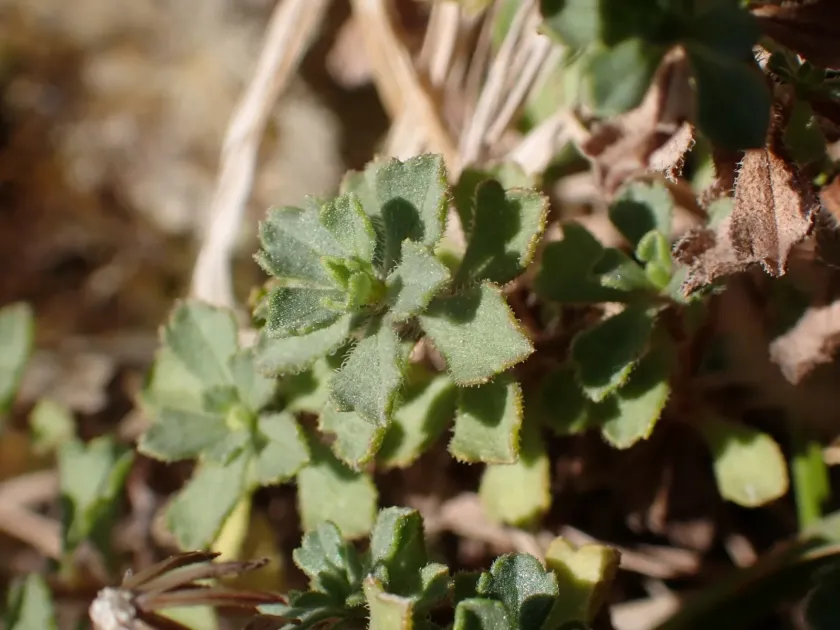
Description
How to tell it apart
Vittadinia australis is a herbaceous perennial belonging to the Asteraceae family. The plant features upright, branched stems that grow between 30 and 50 cm in height, covered in fine hairs.
The leaves are alternate, lanceolate, or linear in shape, often displaying a grayish tint due to the dense hair covering. A well-developed root system provides the plant with resilience.
The flowers are typical of the Asteraceae family, appearing as small flower heads. The ray florets are usually white or pale purple, while the disk florets are yellow.
Seeds are equipped with a pappus, a tuft of hairs that allows them to be dispersed efficiently by the wind. This adaptation makes the plant highly invasive in open landscapes.
Biologically, the plant is characterized by high phenotypic plasticity, allowing it to thrive in diverse soil types and survive under varied environmental stressors.
Where it grows
Vittadinia australis commonly occurs in pastures, neglected agricultural lands, roadsides, and waste areas. It acts as a significant weed in cereal and grassland crops.
The plant prefers moderately moist environments but exhibits notable drought resistance, allowing it to colonize fields during irregular weather patterns.
In regions with warm climates, this weed aggressively exploits gaps between rows in broad-acre crops, utilizing available nutrients and sunlight to dominate the area.
It is frequently observed encroaching into agricultural lands from adjacent fallow ground, making field margins critical monitoring zones for farmers.
The seed bank longevity ensures that the weed persists in the soil profile, re-emerging whenever environmental conditions trigger germination cycles.
Harm it causes
The primary harm caused by this weed is competition for essential nutrients, water, and space, which leads to reduced yields in cultivated crops and forage grasses.
In pastures, Vittadinia reduces the quality of feed for livestock, as it is often unpalatable and displaces nutritious plant species, lowering the overall productivity of the range.
The formation of dense patches hinders the efficiency of agricultural machinery, making tillage and harvesting operations more difficult and time-consuming.
The presence of this weed serves as a harbor for various pests and pathogens, increasing the likelihood of disease transmission to nearby crops.
Long-term infestation can lead to a significant depletion of soil fertility, requiring increased inputs of fertilizers to maintain standard crop performance.
How to control
Mechanical control includes deep plowing, which serves to disrupt the root architecture and bury seeds at depths that inhibit successful germination.
Crop rotation with competitive, fast-growing cover crops is an effective strategy to suppress Vittadinia by limiting the sunlight and resources available for its establishment.
Chemical control is best achieved through the application of systemic herbicides that are capable of translocating into the plant's extensive root system.
- Timely mowing or slashing before the flowering stage to prevent seed dispersal.
- Application of selective herbicides during the plant's active vegetative growth phase.
- Strict field hygiene to prevent the spread of seeds via agricultural machinery.
An integrated weed management approach, combining site-specific chemical treatments and robust mechanical soil management, is necessary for long-term suppression.
Taxonomy
- Latin name
- Vittadinia australis
- Family
- Сложноцветные (астровые)
- EPPO code
- VTTAU