
Giant ironweed
Vernonia gigantea
Description
How to tell it apart
Giant ironweed (Vernonia gigantea) is a perennial herbaceous plant belonging to the Asteraceae family. It is a robust weed that can grow up to 2 meters tall, making it a prominent presence in fields during mid to late summer.
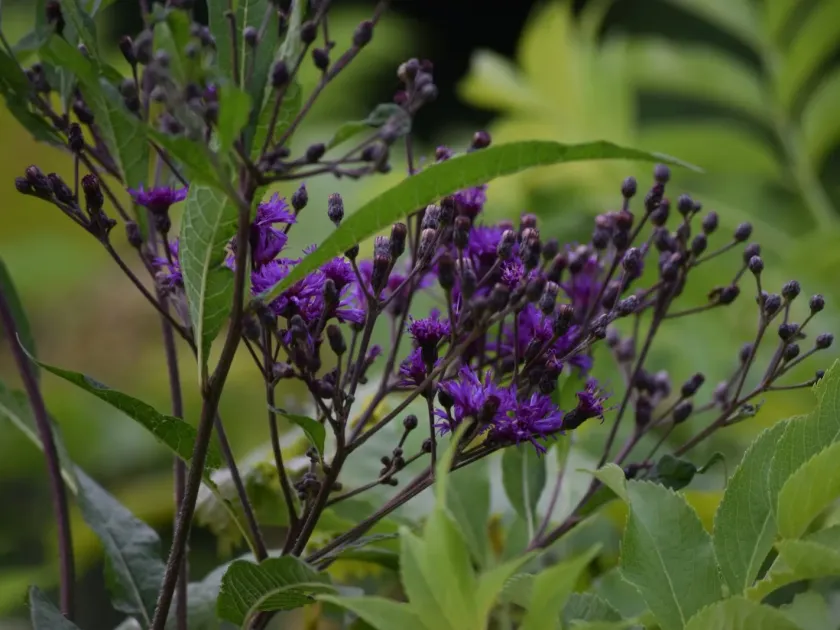
The stems are sturdy and upright, frequently displaying a deep purple or reddish hue. The leaves are lance-shaped, serrated along the edges, and typically have a rough texture that is easy to recognize upon inspection.
Its inflorescences are dense, terminal clusters of purple flowers arranged in corymbs. These vibrant blooms are highly attractive to pollinators, which ensures the plant's high reproductive success.
The root system is composed of thick, woody rhizomes that store significant energy reserves. These rhizomes allow the plant to survive harsh winters and regenerate vigorously during the following spring season.
Seeds of the plant are equipped with a pappus, facilitating wind dispersal over long distances. This adaptation makes the plant highly effective at colonizing new areas or re-infesting previously cleared ground.
Where it grows
Native to North America, Giant ironweed typically inhabits wet meadows, floodplains, and damp thickets. In agricultural contexts, it often invades poorly drained areas of fields and meadows.
The weed frequently establishes itself along field borders, drainage ditches, and fence lines. It thrives in soils that remain moist for extended periods, where it outcompetes native grasses and crops.
Giant ironweed shows a strong preference for uncultivated, rich soil sites. If left unchecked, it can spread into active pastures and hay fields, particularly those with low mowing intensity or infrequent rotation.
Human activity, such as tillage and mowing, plays a role in its distribution. Machinery can carry rhizome fragments or seeds between parcels of land, facilitating the spread of the weed throughout the farm.
While the plant is highly adaptable, it is most invasive in low-lying, fertile spots. Its presence often serves as an indicator of poor drainage or soil compaction issues within the field.
Harm it causes
The primary agricultural impact of Giant ironweed is competition for resources. Its rapid growth and height allow it to shade out smaller crops, significantly reducing their potential yield.
In grazing lands, this weed is undesirable because it is generally unpalatable to livestock due to its bitter taste and tough, fibrous stem structure. This results in decreased carrying capacity of pastures.
The extensive root systems of the weed create physical barriers in the soil. This makes tillage operations more difficult and increases the wear and tear on agricultural machinery and attachments.
Giant ironweed can serve as a host for various insects and plant diseases. By harboring these pests, it contributes to a higher risk of infestation for neighboring crops during the growing season.
It acts as a nutrient sink, absorbing significant amounts of nitrogen and phosphorus. This extraction depletes soil fertility, forcing farmers to increase fertilizer applications to maintain crop performance.
How to control
Effective management requires an integrated approach. Physical control, such as repeated deep plowing, can help shatter the rhizomes, effectively reducing the plant's ability to regenerate.
Mowing is a critical strategy for managing populations in pastures. By cutting the plants before they reach the flowering stage, the farmer depletes the root energy reserves and prevents seed production.
Chemical control with systemic herbicides is the most reliable method. Applications of glyphosate-based herbicides are effective when the plants are in the active growth phase, prior to flower set.
In broadleaf crop production, the use of selective systemic herbicides, including growth regulator compounds, can suppress Giant ironweed populations while sparing the primary crop if timed correctly.
Cultural practices, such as maintaining strong crop competition through correct seeding densities and proper fertilization, remain the best defense. Competitive vegetation reduces the light available for seedling germination.
Taxonomy
- Latin name
- Vernonia gigantea
- Family
- Сложноцветные (астровые)
- EPPO code
- VENGI